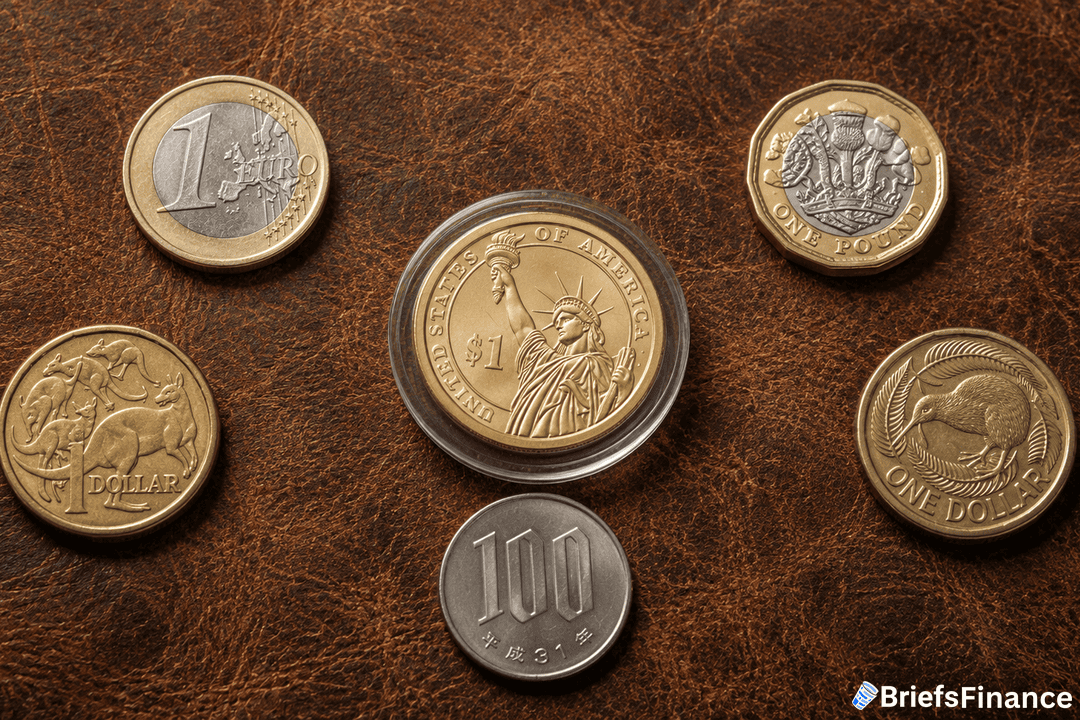
The greenback touched its strongest point in more than 12 months on Tuesday. And it is not just one currency feeling the pressure - it is basically all of them.
The dollar index - a gauge of the U.S. currency against six major counterparts - reached 101.40. That is the strongest reading since early 2025.
Currency swings ripple into everything you own, and Market Briefs explains those moves in plain English every weekday - you also get a free 45-minute investing masterclass when you join.
What is driving the rally?
Two big forces are pushing the dollar higher.
First, the Federal Reserve. Fed funds futures show the probability of a quarter-point rate increase by September has climbed above 85%. That is a sharp shift from just weeks ago, when the conversation was still about when cuts would start.
BofA Global Research and Deutsche Bank both flipped their forecasts this week. They had been calling for steady policy. Both firms now say a rate increase is coming within the next six months, pointing to an economy that keeps outperforming expectations.
Second, geopolitics. The Middle East conflict has not been resolved, and that uncertainty is sending investors into the dollar as a safe haven. As one strategist put it, the dollar is getting support from the fact that the situation there is not fully settled.
The euro is taking a hit
The euro fell to $1.1395, a level it has not touched since August 2025. ECB President Christine Lagarde tried to calm inflation fears on Monday, suggesting the central bank would take a balanced approach after its own rate hike earlier this month. That did not do much for the euro.
The pound found some footing
Sterling fell 0.5% to $1.3185 after Prime Minister Keir Starmer resigned. But the currency stabilized when Health Minister Wes Streeting threw his support behind Andy Burnham to take over. Analysts say that clarity on the succession removed a layer of uncertainty that had been weighing on the pound.
Commodity currencies got hit too
The Australian dollar dropped 0.7% to $0.6951, its weakest since April. The New Zealand dollar fell 0.4% to $0.5689.
The yen is the big story
Japan's currency is flirting with levels it has not touched in 40 years. The yen weakened to 161.93 per dollar late Monday, its lowest in two years. On Tuesday it traded around 161.56. If it breaks through 161.96, it would be the weakest the yen has been since 1986.
That has Tokyo paying attention. Finance Minister Satsuki Katayama held an online meeting with U.S. Treasury Secretary Scott Bessent late Monday to discuss the yen's slide and possible policy responses. Japanese authorities have kept markets guessing about whether they will intervene, and analysts say the government has shifted its communication strategy to avoid tipping its hand.
One strategist warned that volatility is likely when the yen gets near these levels, because the market expects Japan to either signal intervention or step in directly.
The bottom line
The dollar is winning right now because the Fed looks ready to hike again and global uncertainty is keeping demand for U.S. assets high. For investors holding foreign currencies or international stocks, the strength of the greenback is worth watching closely.
Want this kind of read on the market every morning? Join the 350,000+ investors reading Market Briefs, delivered in five minutes, with a free investing course as a bonus.