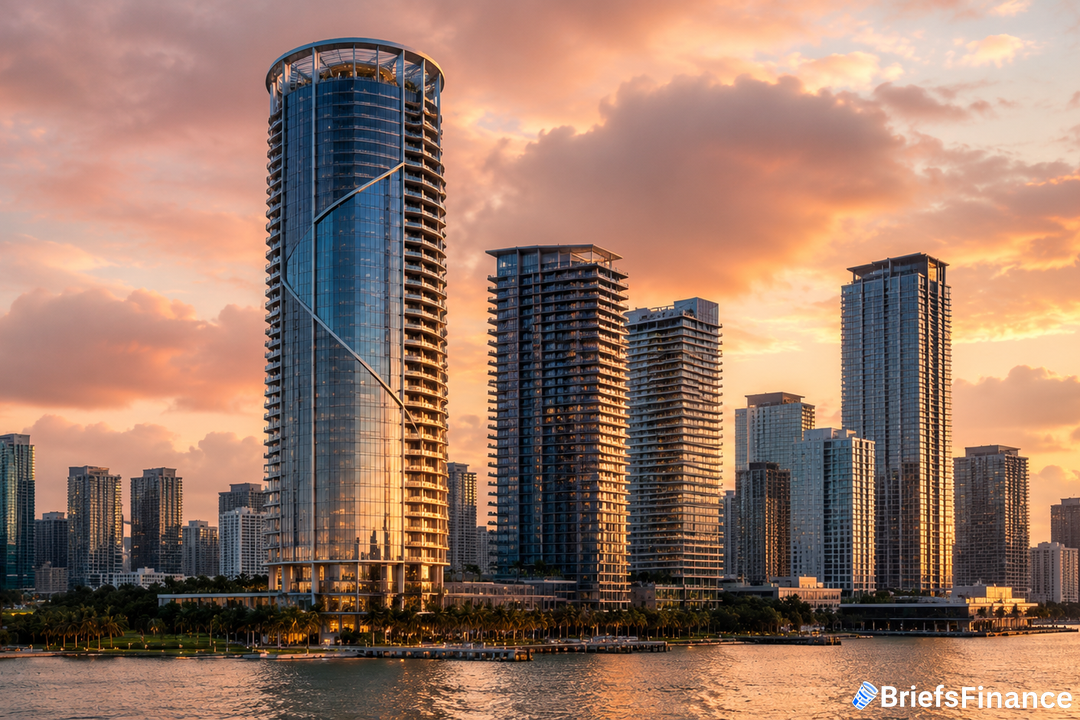
Luxury condos carrying brand names from car makers to fashion houses can command a premium of as much as 30% or more over similar unbranded units.
Planned towers include a 90-story Dolce & Gabbana-affiliated tower and a 70-story project tied to Breitling, both in Miami, with completion targets between 2028 and 2031.
Brands like Porsche, Fendi, Armani, and Bentley have already built or planned condo projects in South Florida, attracting international buyers.
Developers are using luxury brand names on condos to appeal to buyers and command premium prices. Miami has become the center of this trend. The brand acts as a trusted reference for buyers who may never set foot in the building before signing a contract.
Fernando de Nuñez y Lugones, the head of Vertical Developments - a firm that has worked on brand-linked condos for Elle, Fendi, Armani, and the yacht maker Riva - noted: "Brands are very appealing in markets where there are a lot of out-of-state and foreign buyers." He added: "The brands act like third-party endorsements for buyers and brokers."
That third-party stamp lets developers charge a premium. In New York, listings at the Four Seasons Residences in the Tribeca neighborhood start at $2.4 million for a one-bedroom, 1.5-bathroom unit. On the Upper East Side, the cheapest available unit at the Giorgio Armani Residences is a two-bedroom, 2.5-bathroom apartment asking $8.9 million.
All 10 units in that building sold out before completion, grossing nearly $170 million. The penthouse fetched more than $30 million.
A Roster of Famous Names
In Sunny Isles Beach, the Porsche Design Tower lets residents drive their vehicles up to their apartments via specially built glass elevators. The coming Bentley Residences will have apartments with parking for three or four vehicles.
Aman, the ultraluxury hotel brand, is developing projects across several states. The Riva Residenze in Fort Lauderdale is set to be the first yacht-branded condo complex, featuring a private marina. An Elle-branded building in Miami's Edgewater neighborhood offers units starting at around $600,000.
Gil Dezer, CEO of Dezer Development, the company behind the Porsche and Bentley buildings, as well as Armani- and Trump-branded towers, said: "There are only a few more prestige brands that are so prestige that they want to lend their names to buildings."
Jon Paul Pérez, chief executive of the Related Group, whose company has built South Florida condos bearing the Ritz-Carlton, St. Regis, and Rosewood names, commented: "You have the feeling of living in a hotel with all the benefits, and you don't have to worry about transient guests. "I think that's a tremendous value for residential real estate"."
What Buyers Get - and Pay
Branded condos offer more than a name. Condos linked to hotel brands target purchasers who want extensive amenities and attentive service. Buildings associated with fashion houses highlight their design aesthetics. Locations range from beachfront to downtown core.
Broker Wei Min Tan, who helps international buyers purchase Manhattan condos, said of the Four Seasons Residences: "Right now, they are transacting well. "I'm always on the lookout for the next good deal at the Four Seasons"."
Price points vary. Some high-end hotel-branded units start at $4 million to $5 million.
What to Watch
Several new branded towers are under construction or in planning. Aman has projects planned in multiple states. The supply of prestige brands willing to lend their names is limited, but demand from wealthy buyers shows no sign of slowing.
Anthropic has gone public at a valuation of about $1.5 trillion, while Amazon went public in 1997 at around $440 million. Anthropic has about $33 billion in revenue this year and no profit, and investors are paying more than 40 times its sales, against about 3 times for Amazon. Briefs Finance CEO Jaspreet Singh says nobody knows what comes next, and that long-term investors use downturns to buy instead of panic selling.
Tech stocks are selling off because investors don't know who will lead Nvidia, the company that has been funding the AI industry and selling it chips.
Inflation has the Federal Reserve planning to raise interest rates, with a hike expected in December, and that puts pressure on homebuyers, private equity and the $40 trillion national debt.
Briefs Finance CEO Jaspreet Singh says nobody has a crystal ball, so his rules are to buy when markets are low, hold long term and invest only what you're willing to lose.
The national debt is above $40 trillion, and the Federal Reserve has gone from sending Washington its profits to losing money.
President Trump's four-part plan leans on shorter-term debt, stablecoin companies buying Treasuries, a bigger balance sheet and government stakes in private companies.
The goal is to outgrow the debt, not pay it off, so Jaspreet Singh points investors to the seven industries where Washington wants growth.
The Fed makes its next rate decision on December 9 and is now talking about jumbo interest rate hikes of 0.5%, though one in December looks unlikely.
Washington will pay a record $1.05 trillion in interest this year on $40 trillion of debt, and that debt resets at higher rates as the Fed hikes.
Jaspreet Singh's five moves are to pay down variable-rate debt, earn interest on your savings, know which stocks feel the pressure, look at value and hedge.
Margin debt, the money investors borrow to buy stocks, is at a record of around 4.6% of GDP, up from 3.9% in 2021.
ETF money has more than tripled in five years to 7% of GDP, while corporate buybacks and 401(k) money sit below their earlier peaks.
Margin calls and panic selling can make the next downturn deeper, so Jaspreet Singh keeps buying broad market funds and says most investors should skip margin debt.
Jensen Huang is out at Nvidia over affairs with multiple people, and the company he founded has been the bank of American AI, with about $30 billion into OpenAI and $10 billion into Anthropic.
A hotter-than-expected inflation report has Fed officials talking about a possible 0.5% hike in December, and gold, silver, and bitcoin fell on the news.
President Trump said the US may not need a deal with Iran, keeping oil prices and inflation risk high. Jaspreet Singh breaks down what it all means for AI stocks and your portfolio.
Stocks are booming at the fastest pace in years, jobless claims just hit a 57-year low, and most investors still feel like nobody is hiring.
The Fed is protecting the dollar over the economy, oil swings on every Iran headline, and a few AI companies are carrying an S&P 500 where four of five stocks sit in a correction.
Jaspreet Singh explains why circular financing between Nvidia, OpenAI, Anthropic, and SpaceX rhymes with 2008's house of cards, and how his three investing pillars handle a stock market bubble.
The Fed has raised rates, cut them, then raised them again only twice in the last 60 years, and both times the economy fell into a recession and stocks crashed.
The same stop-and-go cycle is playing out now, with one big difference: US debt is 125% of GDP today versus about 30% in 1980.
In the 1970s gold rose roughly 24x, real estate 157%, stocks lagged, and cash lost half its value. Jaspreet Singh lays out five assets to consider before the next flip.
The IRS 2027 tax plan keeps the same seven rates but widens every bracket and lifts the married-filing-jointly standard deduction to $33,200.
The 0% long-term capital gains bracket rises to $102,100, so a household living on $135,300 of investment income could owe $0 in federal income tax.
C corporations still pay 21%, small businesses keep the 20% QBI deduction, and the 401(k) limit climbs to $25,500 with an $8,500 catch-up for investors over 50.
Make sure to check your inbox for the first email.
Before you go
We’re hosting our first ever livestream on how investors can use ChatGPT & Claude to invest like a pro. It’s on 11/17 and is hosted by our CEO Jaspreet Singh.