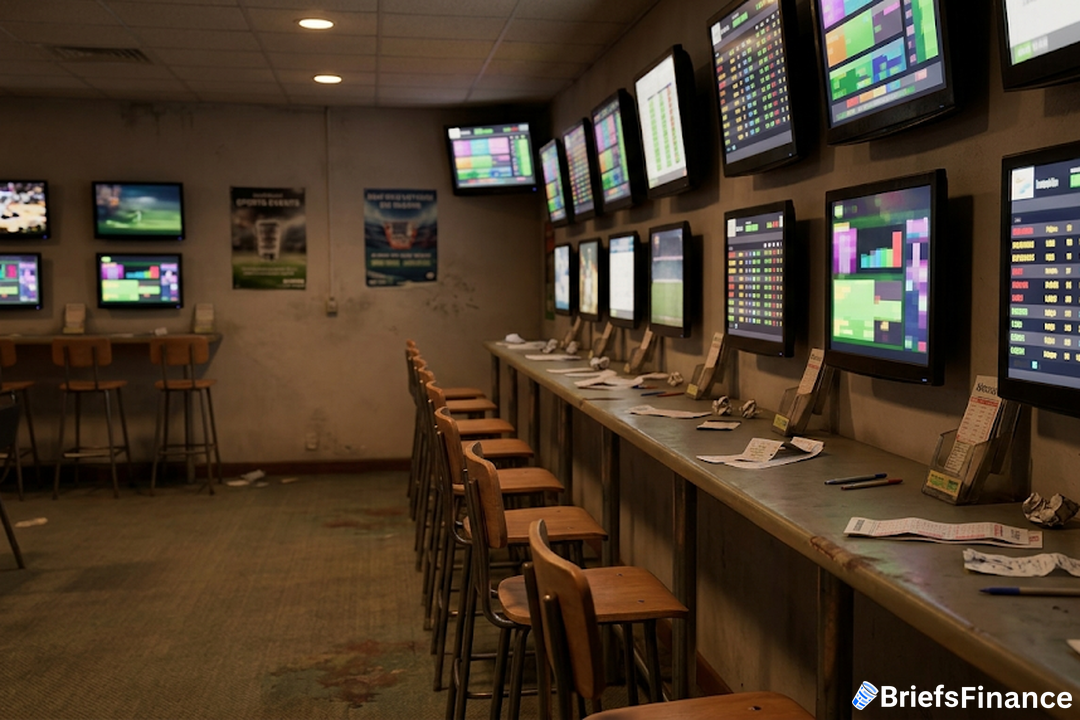
Gambling as a Paycheck
Here is the problem for a lot of South African households: the paycheck does not stretch far enough.
Why are so many people betting? Because they need the money to cover their regular expenses and pay down debt. Lower- and middle-income households are under real financial strain, and gambling looks like a quick way out.
"You see 22% of people finding themselves in financial difficulty due to gambling in 2026," said Old Mutual's brand head, Vuyokazi Mabude, while speaking at a briefing.
Where the Money Goes
The numbers get worse the closer you look at who is actually gambling.
Get the market news that matters in a five-minute read with Market Briefs, our free daily newsletter
Among workers earning between 8,000 and 15,000 rand a month, 52% say they depend on betting to manage their cash flow.
By 2025, South Africa's total gambling turnover had surpassed 1.5 trillion rand, as reported by the National Gambling Board. Per the statistics agency, gambling makes up approximately 1.6% of total household consumption spending, ranking just below beer in household expenditure.
The AI Bet on Top of the Bet
"That is all good when it works, but if it doesn't, people end up in trouble," said Izak Odendaal, chief investment strategist at Old Mutual Wealth.
Why Workers Are Turning to Quick Fixes
South Africa's economy has faced persistent challenges, including high unemployment and rising living costs, which have squeezed household budgets. Many workers find that their salaries, even at 8,000 rand per month, are insufficient to cover basic needs, pushing them toward risky financial behaviors like gambling. The survey from Old Mutual highlights this trend, showing that reliance on betting is particularly high among those already struggling with debt.
This cycle of betting to cover expenses often deepens financial instability, as losses pile up and interest on debt grows. Without accessible, affordable financial advice or safety nets, low- and middle-income earners have few alternatives to break the pattern. The growing use of AI for investment tips further compounds the risk, as automated advice may not account for individual circumstances or the dangers of high-stakes gambling.
Many workers are trapped in a debt spiral: they gamble to pay off loans, only to borrow again after a loss. With little access to financial education or low-cost credit options, these households have thin buffers against unexpected costs. The convenience of AI-driven investment guidance, while popular, often lacks the tailored risk assessment that vulnerable earners desperately need.
The trend is especially acute in major cities, where the cost of living is highest. In Johannesburg and Cape Town, gamblers are more likely to report financial stress as housing and transport eat up larger shares of their income, according to the survey data.
Join Market Briefs, our free daily newsletter, for a quick daily rundown of the markets