Free NewsletterPro Login
S&P 500 6,287 +0.42%
DOW 44,521 -0.18%
NASDAQ 21,103 +0.71%
S&P 500 +12.4%
Briefs Finance Fund +24.8%
JOIN THE FUND →

Kenya Shuts Down Tata Chemicals' Magadi Plant Over Unpaid Royalties and Regulatory Breaches

Published Jul 29, 2026
[tts_player]
Share:
Summary:
  • Kenya's Cabinet Secretary Hassan Joho ordered Tata Chemicals Magadi Ltd. to cease operations immediately due to unpaid royalties and other regulatory non-compliance.
  • Tata Chemicals claims full compliance and says it is working with authorities to resume operations.
  • Kenya is the world's fourth-largest natural soda-ash producer, supplying 1% of global output, used in glass, cleaning products, and EV batteries.

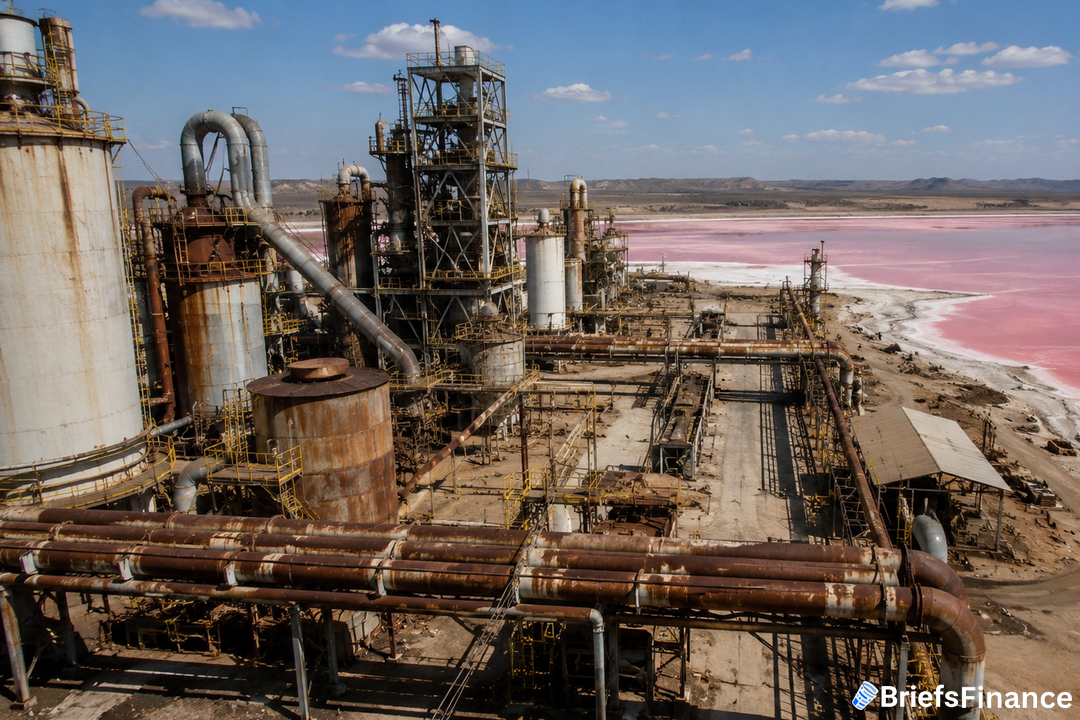
On July 29, 2026, Kenya's Cabinet Secretary for Mining, Blue Economy, and Maritime Affairs, Hassan Joho, ordered the immediate shutdown of the largest soda-ash producer in Africa. The government pointed to unpaid royalties and other unmet regulatory obligations as reasons for the shutdown.

The Magadi plant, situated along the shores of Lake Magadi in Kajiado County, has been operational since the early 20th century and serves as a major employer in the region. Its forced closure threatens local livelihoods and could strain economic activity in the surrounding area.

According to Joho's statement, the Kenyan subsidiary of India's Tata Chemicals Ltd. - operating as Tata Chemicals Magadi Ltd. - is required to provide thorough paperwork and proof that it has met all legal requirements and cleared any debts before being allowed to restart operations. Among the other outstanding concerns are shortcomings in executing value-addition and skills-transfer initiatives, insufficient hiring of Kenyan nationals, and non-compliance with export-reporting, local-procurement, and environmental-standards rules.

In a statement, a company spokesperson said, "fully compliant with all requisite regulations and continues to work with all authorities and agencies to uphold the highest standards of compliance." The company added that it is collaborating with authorities to resolve the situation.

Get the market news that matters in a five-minute read with Market Briefs, our free daily newsletter

Industry and Market Context

Sodium carbonate, as soda ash is also called, is employed in manufacturing glass, cleaning supplies, and electric-vehicle batteries. For decades, soda ash extraction has formed the bedrock of economic activity in Kenya's Rift Valley region, predominantly sourced from Lake Magadi.

The government's crackdown on royalty payments and local-hiring requirements reflects a broader push to increase domestic benefits from resource extraction. Given Magadi's position as Africa's largest producer, this shutdown could disrupt supply chains for glass manufacturers and battery producers worldwide.

The parent company, Tata Chemicals Ltd., saw its stock move 0.70% on the news, closing at 679.05.

Broader Implications for Resource Governance

The forced closure at Lake Magadi underscores Kenya's escalating enforcement of local-content and revenue-sharing rules in the extractive sector. The region has relied on soda-ash extraction for over a century, and the chemical is critical for manufacturing flat glass used in buildings, automotive industries, solar panels, and lithium-ion batteries. By demanding full compliance on royalties, hiring, and environmental standards, Nairobi signals that foreign operators must deliver tangible economic benefits to host communities or risk operational suspension.

The shutdown also threatens the livelihoods of hundreds of direct employees and thousands of indirect workers in Kajiado County, where the plant has long been a cornerstone of the local economy. Without a swift resolution, the area could face rising unemployment and reduced economic activity.

Join Market Briefs, our free daily newsletter, for a quick daily rundown of the markets
Disclosure

Recent News

1 2 3 45

Get Market Briefs delivered to your inbox every morning for free!

No fluff. No noise. No politics. Just finance news you can read in 5 minutes.

Blogs

June 29, 2026
Portfolio Diversification: Why Putting All Your Eggs in One Basket Destroys Wealth
  • Real diversification means spreading investments across all 11 economic sectors plus bonds, alternatives, and cash so no single bet can sink the portfolio.
  • Different sectors perform at different times, so a diversified portfolio captures upswings while smoothing the brutal drawdowns that wipe out concentrated bets.
  • Total market index funds offer the simplest path to diversification, and annual rebalancing is what keeps the structure working over time.
Read More
June 29, 2026
Non Taxable Income: What It Is and Why It Matters
  • Non taxable income is money you receive that you don't owe income tax on.
  • The tax code treats workers, investors, and business owners very differently, and investors often come out ahead.
  • Learning how income is taxed is a quiet superpower for keeping more of what you earn.
Read More
June 29, 2026
Semiconductor Stocks: A Simple Guide for Investors
  • Semiconductor stocks are companies that design and make computer chips, the brains inside nearly every modern device.
  • The AI boom has turned chips into one of the market's most important and most watched groups.
  • They offer big growth potential, but come with high valuations and a notoriously cyclical history.
Read More
June 25, 2026
How Stocks Work: A Simple Guide for Beginners
  • A stock is a slice of ownership in a company - buy one, and you own a piece of the business.
  • You make money two ways: the share price rising over time, and dividends paid to shareholders.
  • The simplest path for most beginners is buying into the whole market through a low-cost index fund.
Read More
June 25, 2026
Stop Loss vs Stop Limit: What's the Difference?
  • A stop loss order sells your stock once it hits a trigger price, prioritizing getting you out.
  • A stop limit order only sells within a price range you set, prioritizing price over a guaranteed exit.
  • The trade-off: a stop loss almost always executes; a stop limit might not if the price moves too fast.
Read More
June 25, 2026
Energy Stocks: A Simple Guide for Investors
  • Energy stocks are companies that produce and supply the power the world runs on, from oil and gas to newer sources.
  • They make up one of the 11 sectors of the market and tend to move with energy prices and big-picture shifts.
  • Like any sector, the key is diversification and understanding the forces driving demand.
Read More
June 18, 2026
What Is a Stop Loss Order? A Simple Guide
  • A stop loss order automatically sells a stock once it falls to a price you set.
  • It's a tool to cap losses or lock in gains without watching the market all day.
  • It works best for active strategies, and can backfire if used carelessly on long-term holdings.
Read More
June 18, 2026
Best S&P 500 Index Fund: How to Choose One
  • The best S&P 500 index fund for most investors is simply the cheapest, most established one that tracks the index well.
  • Funds like VOO, IVV, and SPY all hold the same 500 companies, so the biggest difference is the fee.
  • Pick one, automate your buys, and let time do the heavy lifting.
Read More
June 17, 2026
What Are Penny Stocks? Risks and Rewards Explained
  • Penny stocks are very low-priced shares of very small companies, often trading for just a few dollars or less.
  • They promise huge gains but carry huge risks: low liquidity, high failure rates, and wild price swings.
  • Most investors are better served by quality companies and funds than by chasing cheap shares.
Read More
June 17, 2026
Best Stocks for Beginners With Little Money
  • The best stocks for beginners with little money usually aren't individual stocks at all - they're low-cost index funds.
  • You can start with $100 or less and use small, regular investments to build wealth over time.
  • Focus on diversification and consistency, not on picking the next big winner.
Read More
1 2 3 24
Share via
Copy link













