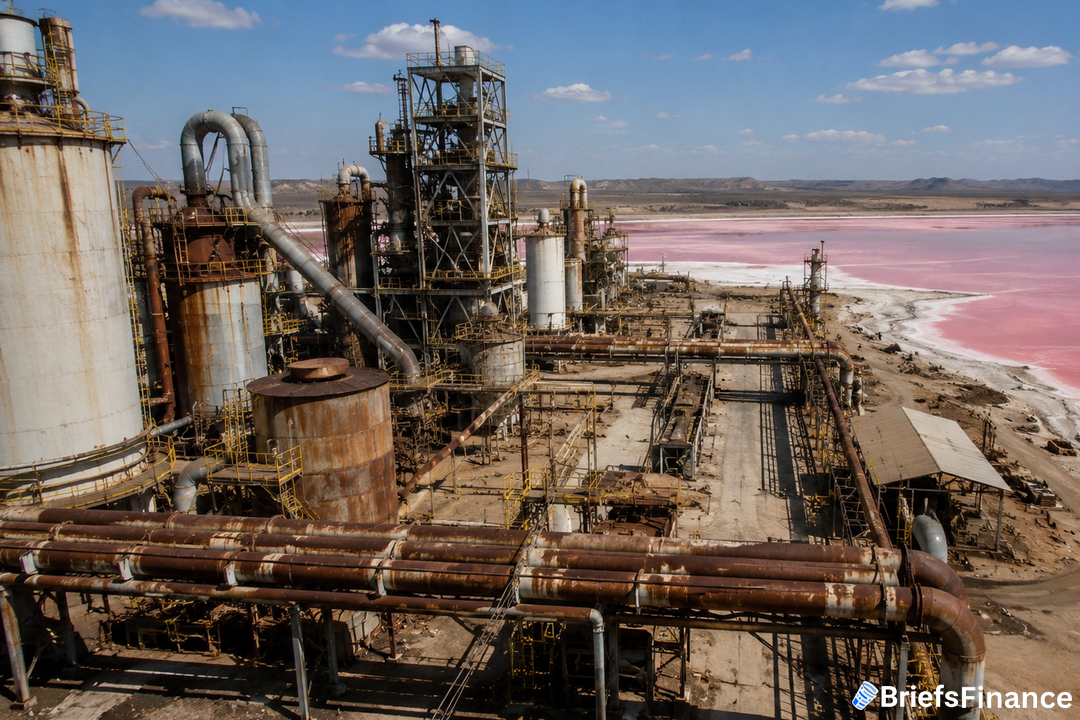
On July 29, 2026, Kenya's Cabinet Secretary for Mining, Blue Economy, and Maritime Affairs, Hassan Joho, ordered the immediate shutdown of the largest soda-ash producer in Africa. The government pointed to unpaid royalties and other unmet regulatory obligations as reasons for the shutdown.
The Magadi plant, situated along the shores of Lake Magadi in Kajiado County, has been operational since the early 20th century and serves as a major employer in the region. Its forced closure threatens local livelihoods and could strain economic activity in the surrounding area.
According to Joho's statement, the Kenyan subsidiary of India's Tata Chemicals Ltd. - operating as Tata Chemicals Magadi Ltd. - is required to provide thorough paperwork and proof that it has met all legal requirements and cleared any debts before being allowed to restart operations. Among the other outstanding concerns are shortcomings in executing value-addition and skills-transfer initiatives, insufficient hiring of Kenyan nationals, and non-compliance with export-reporting, local-procurement, and environmental-standards rules.
In a statement, a company spokesperson said, "fully compliant with all requisite regulations and continues to work with all authorities and agencies to uphold the highest standards of compliance." The company added that it is collaborating with authorities to resolve the situation.
Get the market news that matters in a five-minute read with Market Briefs, our free daily newsletter
Industry and Market Context
Sodium carbonate, as soda ash is also called, is employed in manufacturing glass, cleaning supplies, and electric-vehicle batteries. For decades, soda ash extraction has formed the bedrock of economic activity in Kenya's Rift Valley region, predominantly sourced from Lake Magadi.
The government's crackdown on royalty payments and local-hiring requirements reflects a broader push to increase domestic benefits from resource extraction. Given Magadi's position as Africa's largest producer, this shutdown could disrupt supply chains for glass manufacturers and battery producers worldwide.
The parent company, Tata Chemicals Ltd., saw its stock move 0.70% on the news, closing at 679.05.
Broader Implications for Resource Governance
The forced closure at Lake Magadi underscores Kenya's escalating enforcement of local-content and revenue-sharing rules in the extractive sector. The region has relied on soda-ash extraction for over a century, and the chemical is critical for manufacturing flat glass used in buildings, automotive industries, solar panels, and lithium-ion batteries. By demanding full compliance on royalties, hiring, and environmental standards, Nairobi signals that foreign operators must deliver tangible economic benefits to host communities or risk operational suspension.
The shutdown also threatens the livelihoods of hundreds of direct employees and thousands of indirect workers in Kajiado County, where the plant has long been a cornerstone of the local economy. Without a swift resolution, the area could face rising unemployment and reduced economic activity.
Join Market Briefs, our free daily newsletter, for a quick daily rundown of the markets