What Just Happened
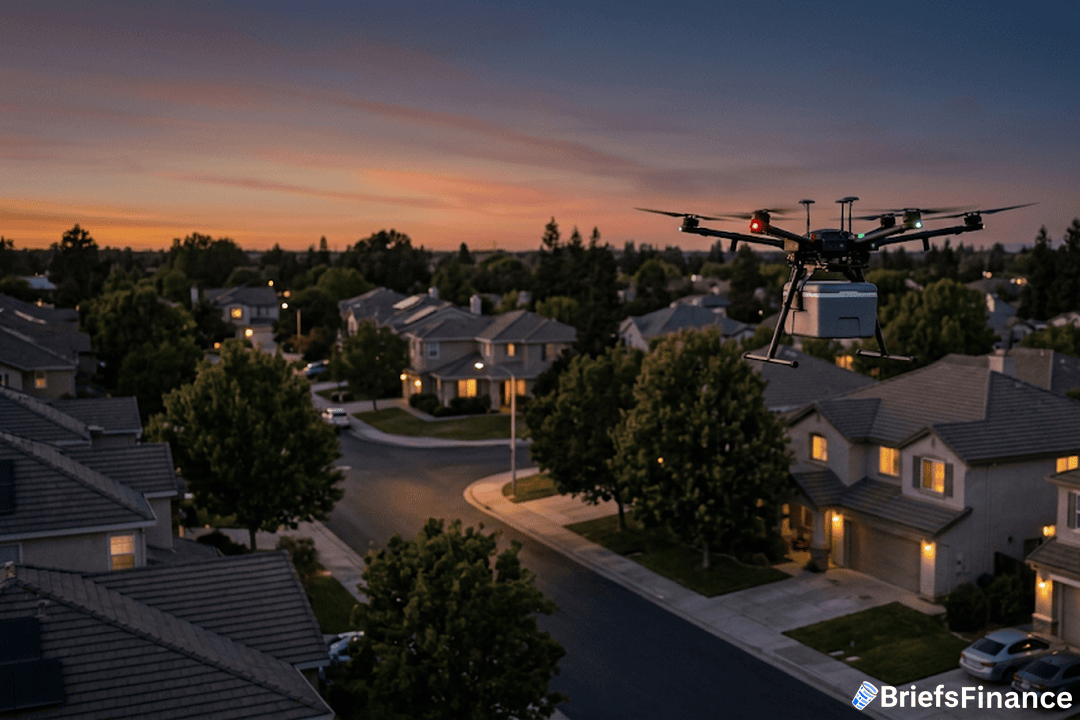
On July 29, 2026, DoorDash officially unveiled DoorDash Air, a drone delivery service built and operated by the company, following certification from the U.S. Federal Aviation Administration that allows it to run commercial drone deliveries across the country.
DoorDash Labs, the company's robotics and autonomy division, created the program. The company stated that it is constructing its own drones and related infrastructure, with future plans to incorporate the service directly into the DoorDash app. No specific date for when the service will be available to customers was announced by DoorDash.
DoorDash already works with two drone delivery companies - Wing, which is owned by Alphabet, and Flytrex. Those partnerships will continue. DoorDash indicated that it will continue collaborating with Wing and Flytrex while it builds its internal drone system.
The Drone‑Delivery Landscape
DoorDash enters a competitive landscape of drone delivery companies, such as Amazon's Prime Air, Alphabet's Wing, and Zipline. Those companies have been expanding their commercial operations in recent years.
Get the market news that matters in a five-minute read with Market Briefs, our free daily newsletter
This initiative aligns with DoorDash's broader strategy to automate deliveries, aiming to cut dependence on human drivers while growing its logistics reach. DoorDash presently operates a combined delivery network that includes people on foot or bike, the company's own Dot sidewalk robots, and external autonomous delivery services. Drones will serve as an additional fulfillment option.
With its own FAA certification, DoorDash gains greater control over its drone operations, reducing reliance on third-party providers while still leveraging their expertise. The in-house development through DoorDash Labs also allows the company to tailor drone hardware and software to its specific delivery needs, potentially lowering costs over time.
DoorDash's Broader Autonomous Strategy
DoorDash has been steadily building its autonomous capabilities through DoorDash Labs, which also developed the Dot sidewalk robot already deployed in select U.S. cities. These robots handle short-range deliveries, while drones will fill the gap for faster, longer-distance trips. This multi-modal strategy allows DoorDash to optimize delivery efficiency across different scenarios.
For example, Dot robots handle short trips in dense urban areas where sidewalks are accessible, while drones can bypass traffic for longer journeys. Human couriers remain crucial for deliveries that require entering buildings or handling complex orders. By not relying on any single method, DoorDash can adapt to varying demand and regulatory environments, ensuring consistent service.
This multi-layered approach lets DoorDash handle a wide variety of delivery scenarios efficiently. In suburban areas with longer distances between restaurants and customers, drones can significantly reduce delivery times. Meanwhile, in dense urban cores, sidewalk robots navigate pedestrian pathways to avoid traffic congestion.
By developing its own drone technology, DoorDash aims to lower per-delivery costs over time, potentially offering reduced fees to consumers while maintaining profit margins.
Join Market Briefs, our free daily newsletter, for a quick daily rundown of the markets