A quiet new spigot for overdue bills
China's central bank has begun offering a new relending facility that provides low-cost cash to commercial and policy lenders, according to people familiar with the setup. The intention is to prod those lenders to extend credit mainly to local government financing vehicles - LGFVs - and other companies tied to local authorities.
Unlike many of the PBOC's earlier structural tools, this one has no preset ceiling. Funds will be released as demand emerges, rather than being constrained by a fixed cap on how much qualifying banks can draw. Banks are already able to submit applications.
The PBOC has not formally unveiled the tool and does not list it among its targeted lending programs. Bloomberg sought comment from the central bank, but no prompt response was provided.
Why it matters: cash flow, confidence and investment
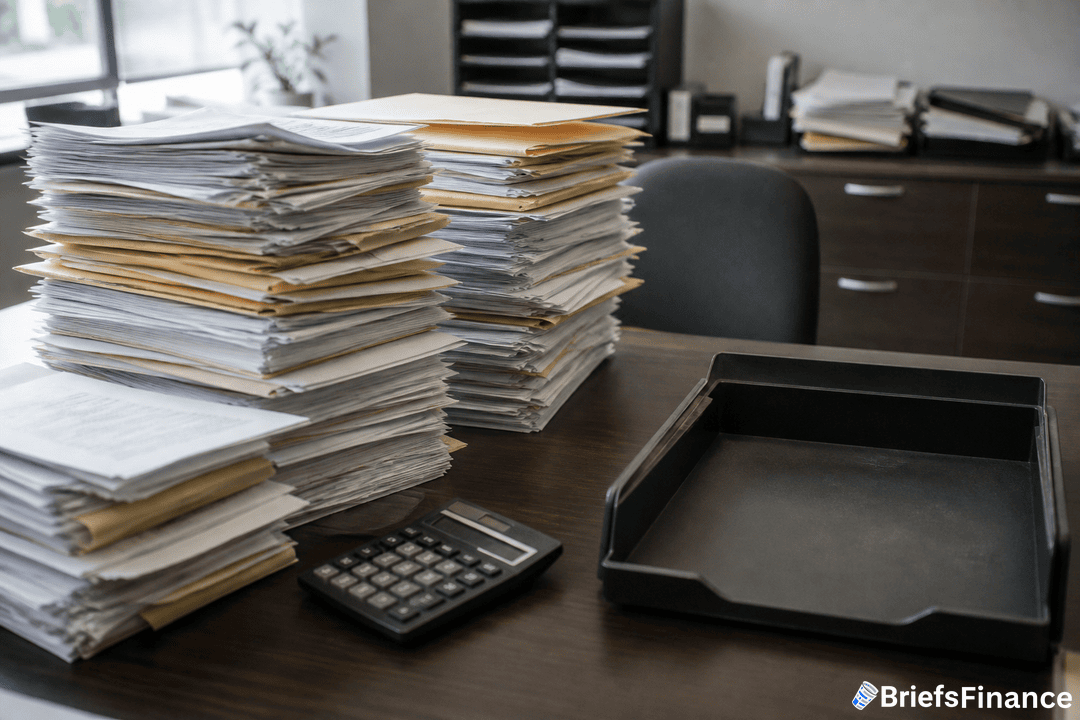
The program is designed to help firms settle overdue balances owed to their contractors and suppliers, the people said. That backlog has jammed up corporate cash flow and eroded trust in doing business with government-related counterparties.
How big is the pile? Analysts at China Chengxin International Credit Rating Co. last year put the tally of unpaid obligations tied to local governments and their affiliates at 4.5 trillion yuan - about $670 billion - surpassing 3% of China's GDP. Nomura Holdings estimated property developers alone had around 7.8 trillion yuan of bills in arrears, highlighting how the housing slump and slower growth have strained finances across the economy.
Policy shifts remind investors that steady planning protects and grows long term savings. Join Briefs Finance CEO Jaspreet Singh on September 29th for a FREE live investor workshop, How to Profit From A Dollar That's Losing its Value, where he shows how we're spotting investment opportunities as the dollar falls. Save your spot.
Companies already wrestling with excess capacity and bruising competition have seen margins squeezed and working capital trapped, making them even more reluctant to invest.
The policy signals around the facility
Beijing has been laying the groundwork. In August, the State Council led by Premier Li Qiang briefly noted that local authorities could use a targeted relending tool as the government pledged to "accelerate and intensify" the push to clear corporate arrears. A month earlier, the Politburo urged officials to tackle the issue "on a regular basis."
CSCI Pengyuan Credit Ratings senior research and development director Wu Zhiwu wrote last October that officials had identified roughly 1.8 trillion yuan of past-due liabilities at self-funded entities and partially government-backed public institutions, at local state-owned enterprises, and at LGFVs, and intended to resolve them through dedicated bank loans. Wu also said that local bond proceeds would be directed to clear arrears of regional governments as well as fully state-backed public institutions, though there was no official total for that group. By Wu's estimate, local administrations had at least 2.8 trillion yuan of arrears tied to construction projects at the end of 2024.
The backdrop: investment slump and the cleanup case
The investment picture has darkened. Fixed-asset investment contracted in 2025 for the first time since the data series began nearly 30 years ago. In January through August 2026, it fell 7.2% from a year earlier, and private investment slid by more than 10% over the same period, putting it on course for a fourth straight annual decline.
Nomura economists led by Lu Ting argue the cure starts with clearing the IOUs. Calling it "the key to rejuvenating China's economy," they wrote, "Given the unique systemic importance of trade credit and the severity of current inter-firm arrears, we strongly believe that cleaning up these arrears is the prerequisite for a genuine recovery in China's domestic demand and the stabilization of the property sector."
What this could mean for your money
If the relending facility helps unlock payments to suppliers and contractors, it could ease the cash squeeze that has been holding back production and investment. It also suggests tighter teamwork between China's fiscal and monetary arms to jump-start spending. For anyone with exposure to firms that sell to local governments or build their projects, watch for signs that receivables are finally getting paid and whether order books - not just policy headlines - are turning into cash.
Access to responsible lending shows why a diversified plan can safeguard your capital. Our CEO Jaspreet Singh is hosting a FREE live investor workshop, How to Profit From A Dollar That's Losing its Value, on September 29th. Sign up free to join him live.