What's changing and why it matters
Ahead of its investor day in Seattle on Tuesday, Alaska laid out a sweeping cabin revamp across its own fleet and Hawaiian's, plus fresh lounges, all designed to lean into what customers are still willing to pay extra for. Executives will field questions on the rollout, how they are managing this year's jump in jet fuel costs, and progress toward that $1 billion profit lift targeted for the 2024 to 2027 window.
The strategy is to tilt more of the business toward richer revenue streams: premium seating, international flying, the loyalty ecosystem, and cargo, which the airline notes carries better margins than the main cabin. By 2030, Alaska expects these higher-yield buckets to be close to 60% of total revenue, up from 53% today. Investors are likely to connect the dots to the company's co-branded credit card and loyalty program, a category that has minted billions across the industry.
Even with the interior upgrades, Alaska says the Alaska and Hawaiian brands will continue to operate independently following their September 2024 merger close.
Seats, suites, and spaces
Alaska's Boeing 787s will debut 34 lie-flat suites in a new product dubbed Aurora. Those jets will also add a premium economy cabin called Premium Reserve with 35 seats on the 787-9 and 787-10, beginning in 2028. Looking at narrowbodies, at least 25 of the not-yet-certified Boeing 737 Max 10s are slated to feature 12 Aurora lie-flat suites along with premium economy seating, aimed squarely at high-revenue coast-to-coast routes.
Over at Hawaiian, each of the airline's 24 Airbus A330s will be outfitted starting in 2028 with 22 brand-new first-class suites that include sliding doors, plus the carrier's first premium economy section with 28 seats. Shane Jones, Alaska's head of fleet, said the A330 interiors are "aging interiors" and that the refresh will bring the total seat count down to 254 from 278. He added that teams spent months under different lighting conditions reviewing fabrics at headquarters in Seattle, trying to capture a tropical feel without going too bright or too dull, and settled on seats with a stitched wave motif after deciding how many waves looked right without being dizzying.
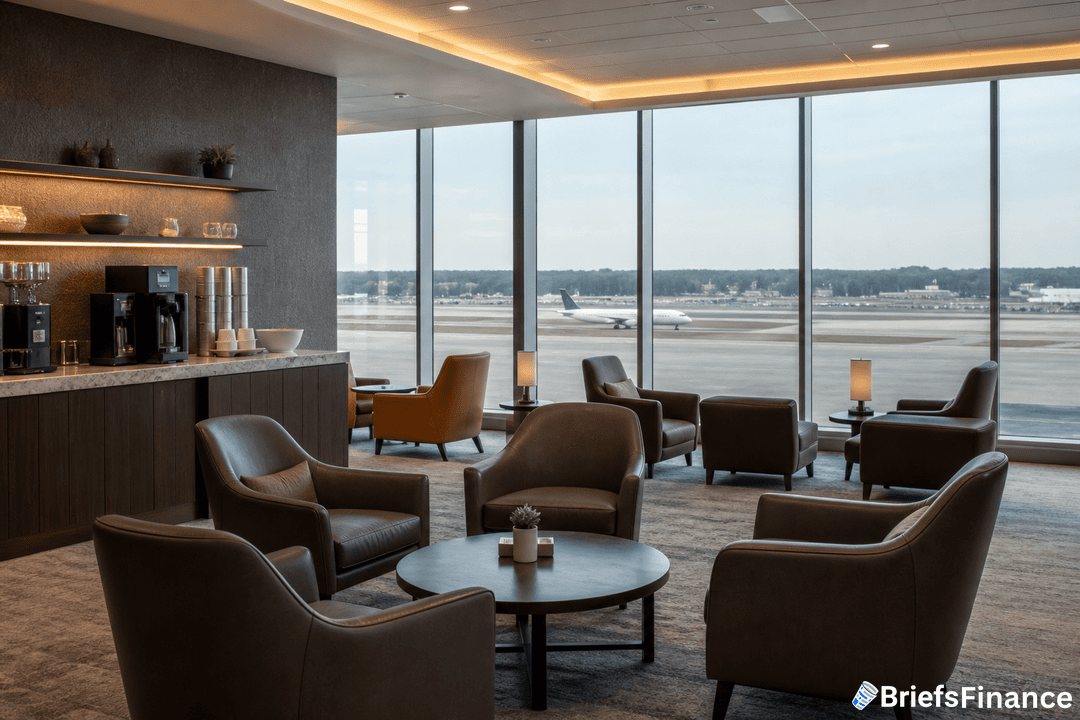
On the ground, Alaska plans a roughly 41,000 square foot Alaska Lounge at Seattle-Tacoma International Airport that will include a dedicated area for Aurora-suite travelers, similar to the tiered lounge concepts at Delta, United, and American. Hawaiian is also constructing a lounge of nearly 13,000 square feet in Honolulu's Terminal 1, aiming to open in early 2028.
"There is an advantage to being the last mover in that you've seen what your competitors have and if you want to you can try to one-up them," said Henry Harteveldt, founder of Atmosphere Research Group.
Thoughtful investors balance seeking opportunity with protecting the core of their savings. Join Briefs Finance CEO Jaspreet Singh on September 29th for a FREE live investor workshop, How to Profit From A Dollar That's Losing its Value, where he shows how we're spotting investment opportunities as the dollar falls. Save your spot.
Loyalty, cards, routes, and demand
Alaska is adding more international flying from Seattle to places like London, Iceland, and Italy, with additional destinations planned to launch this fall. Despite pricier fuel, airline leaders say demand for trips abroad has stayed resilient.
Early next year, Alaska plans to roll out a rewards debit card tied to its Atmos loyalty program, expanding its lineup with Bank of America. The airline says the debit product targets younger customers and newcomers to the U.S., widening access beyond traditional credit cards. Other U.S. carriers, including Southwest and United, have also moved into bank-linked rewards cards with JPMorgan Chase.
Starting Thursday, Atmos members will pick how they earn miles: by distance flown, by fare paid, or by flight segments.
Hawaiian Airlines CEO Diana Birkett Rakow underscored the revenue logic for the Honolulu-heavy network, noting that more than half of Hawaii visitors come from the U.S. West Coast, a group she called "valuable to us from an economic perspective, just in terms of their income, their travel budget, their spending patterns, their flying patterns. And so this gives us an opportunity to elevate the experience."
What this could mean for your money
This is a classic mix-shift play: add more seats people will splurge on, build lounges that nudge customers into the ecosystem, and deepen loyalty ties with new earning options. If Alaska gets premium, international, loyalty, and cargo to nearly 60% of revenue by 2030 from 53% now, that is a very different earnings engine than one riding mostly on coach seats. The timelines matter too: a lot of the cabin hardware lands in 2028, while new routes arrive this fall and the debit card is slated for early next year. And the company says it is already most of the way to its 2024-2027 profit uplift target.
However you feel about airline stocks, this plan shows where the money could flow inside the business: closer to the front of the plane, into lounges, and through the loyalty checkout line.
A steady plan helps your money weather change and pursue steady growth. Our CEO Jaspreet Singh is hosting a FREE live investor workshop, How to Profit From A Dollar That's Losing its Value, on September 29th. Sign up free to join him live.