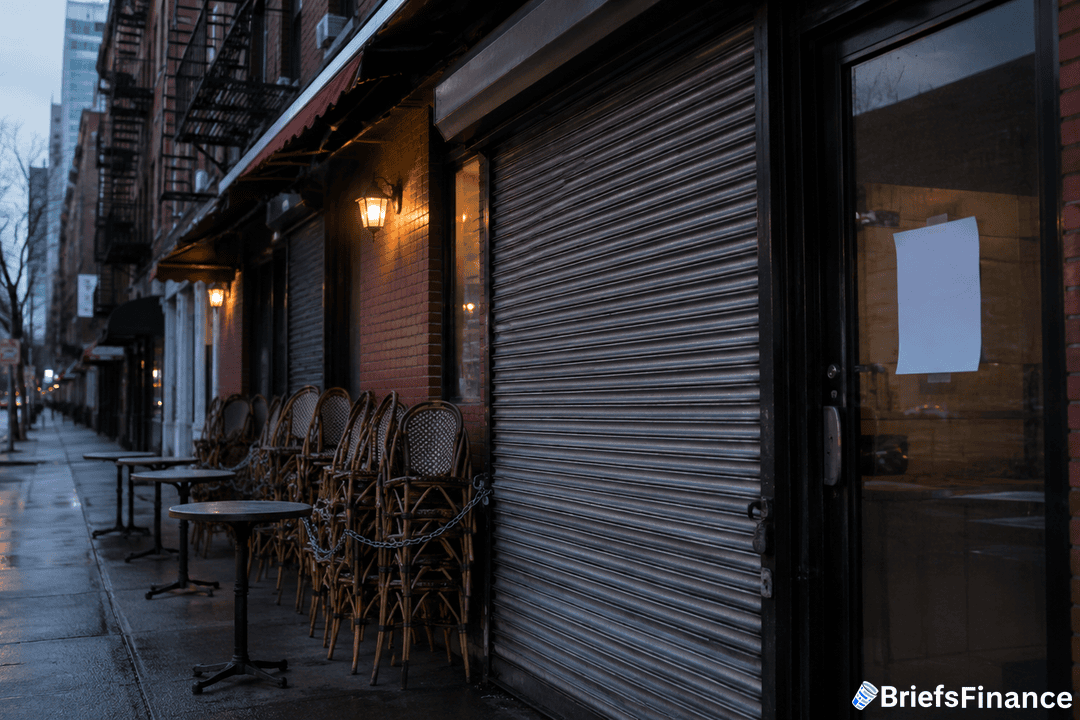
Kiki's spent a decade as one of the hardest tables to book downtown. This week, the state padlocked it.
A packed dining room, it turns out, doesn't mean the bills got paid. The tax man had the final say.
What Happened To Kiki's
Kiki's opened in 2015. It built its name on cheap, home-style Greek food.
The crowd was loud, young, and downtown-cool. For years the spot drew lines and out-of-towners.
It became a fixture of the Dimes Square dining scene. Regulars treated it like a neighborhood club.
It sat at 130 Division Street. That's where the Lower East Side meets Chinatown, in a few blocks locals call "Dimes Square."
Then came the sign in the window. It blamed unpaid taxes for the closure, in a photo that spread on X.
The owner had not commented as of this week. It's unclear if the spot reopens.
For an investor or any small-business owner, the takeaway is simple. A full house and a clean balance sheet are not the same thing.
Market Briefs breaks down money stories like this in about five minutes each morning. Start reading here, and you'll get a free investing masterclass when you sign up.
What Kiki's Owed In Taxes
Bloomberg reported the size of the bill. The restaurant and its owner, Pavlos Sierros, owed more than $1 million in taxes.
The state stepped in on Tuesday. A seizure is the state's strongest tool here.
It locks the doors and can sell what's inside to cover the debt. State tax records told a slightly different story on the amount.
They showed more than $200,000 in unpaid sales and withholding taxes as of earlier this month. That detail came from the newsletter Feed Me.
The gap likely comes down to what each number counts. The smaller figure covers two buckets, while the larger total can add penalties, interest, and older bills.
Why Sales And Withholding Taxes Matter
Sales tax and withholding tax are the two the state chases hardest. The reason is simple.
Sales tax was never really the restaurant's money. It's collected from customers at the register and held for the state.
Withholding tax works the same way. It's taken from workers' paychecks and owed to the government.
So when a business spends that cash, the state doesn't see a late bill. It sees missing money, which is why the doors get locked fast.
Worth Noting
The state rarely moves this fast on a tax debt. It does when the unpaid money was collected from other people first.
New York seizes businesses over tax debt from time to time. Kiki's is just the latest, and the story is still moving.
The closure hit one of downtown's busiest dining strips. Few regulars saw it coming.
A decade of full tables wasn't enough. The tax man got there first.
If you want this kind of plain-English read on money every morning, join 350,000+ readers of Market Briefs. You'll get a 45-minute investing course thrown in for free.