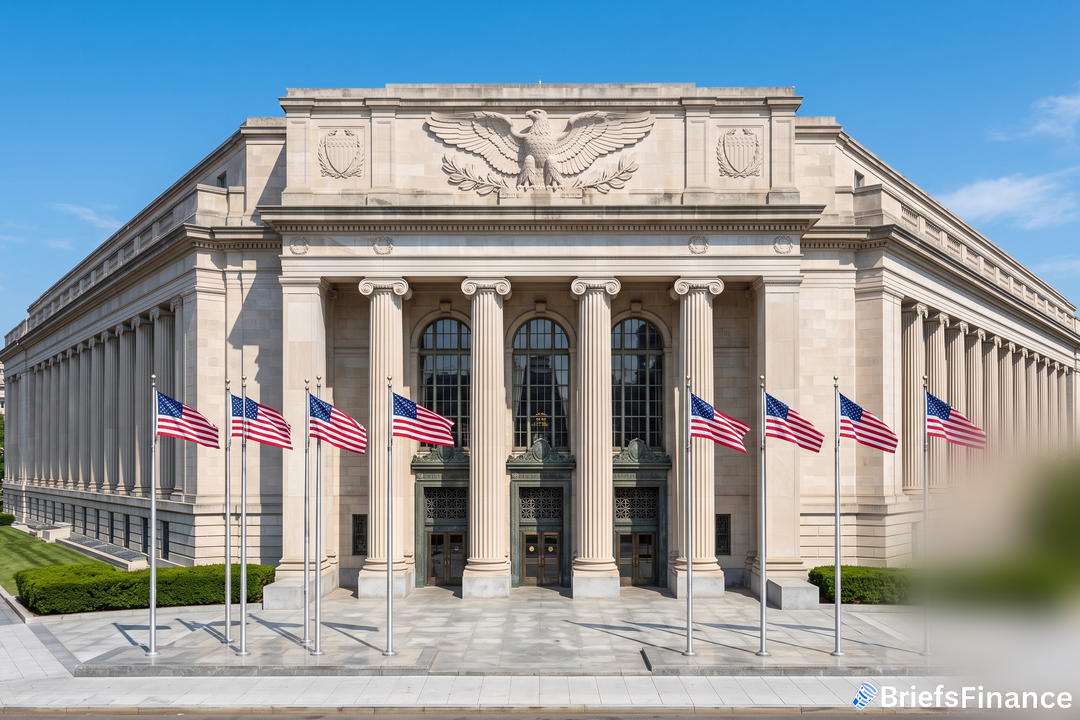
The United States now has a federal stablecoin law, but the rules are not finished yet. Federal agencies must publish implementing regulations by July 2026, and the Federal Reserve has not even proposed its own rules as of May 2026. If the Fed misses the deadline, enforcement could be pushed to January 2027 - leaving a gap for the industry to navigate.
Reserve Requirements and the Yield Ban
The law demands that every fiat-backed stablecoin be backed 1:1 by qualifying assets.
Issuers are also prohibited from paying yields on stablecoins. The Office of the Comptroller of the Currency (OCC) published a proposed rule on this prohibition. More than four dozen banking groups, spearheaded by the American Bankers Association, jointly wrote to Congress asking that the yield prohibition be applied to affiliates and exchanges as well, citing arrangements such as Coinbase earning compensation from Circle for USDC held on its platform. The OCC's rule is still being finalized.
State vs. Federal Oversight and the Growth Thresholds
Smaller stablecoin issuers can stay under state regulation - but only up to a point.
Get the market news that matters in a five-minute read with Market Briefs, our free daily newsletter
A Stablecoin Certification Review Committee (SCRC) is established by the law, comprising the Treasury Secretary, the Fed Chair, and the FDIC Chair. This committee certifies state stablecoin regimes within 30 days of an application. If a state's standards are "substantially similar" to federal rules, its issuers can operate without federal charter. Treasury published a proposed rule on that "substantially similar" test in April 2026.
Several major players already moved to the federal side. During December 2025, the OCC awarded conditional national trust bank charters to Circle, Paxos, Ripple, BitGo, and Fidelity. Circle received its charter as "First National Digital Currency Bank" and is also pursuing a New York trust charter. Paxos and Fidelity converted their New York state trust charters to OCC charters.
Foreign Issuers, Bankruptcy Risks, and Unresolved Questions
Foreign stablecoin issuers can serve US businesses only if Treasury issues a reciprocity determination. As of May 2026, Tether - which operates from El Salvador - has not received such a determination. Tether announced plans to use the Act's foreign issuer pathway and separately introduced USAT, a stablecoin tailored to meet GENIUS Act requirements and focused on the US market.
The law also includes "superpriority" language that aims to protect stablecoin holders in bankruptcy. But Georgetown Law professor Adam Levitin argued that this language may actually place holders behind secured creditors. A Georgetown Law analysis noted that the Act "bets that these reserve forms, even in the hands of new or inexperienced issuers, cannot be mismanaged in ways that harm consumers." That bet may be tested if an issuer fails.
What to Watch
The three-year safe harbor for existing stablecoin offerings runs until July 18, 2028.
Join Market Briefs, our free daily newsletter, for a quick daily rundown of the markets