Free NewsletterPro Login

A Wyoming Data Center Pause Helped Trigger A Record Tech Sell-Off

Published Jun 13, 2026
Share:
Summary:
  • A builder stopped work at a giant 1.8-gigawatt data center in Wyoming, and the news rattled tech stocks.
  • Investors pulled $10.8 billion out of tech shares in one week, the most Bank of America has tracked since 2008.
  • The project was never canceled, since Google lined up a new builder and the site still aims to open in early 2028.

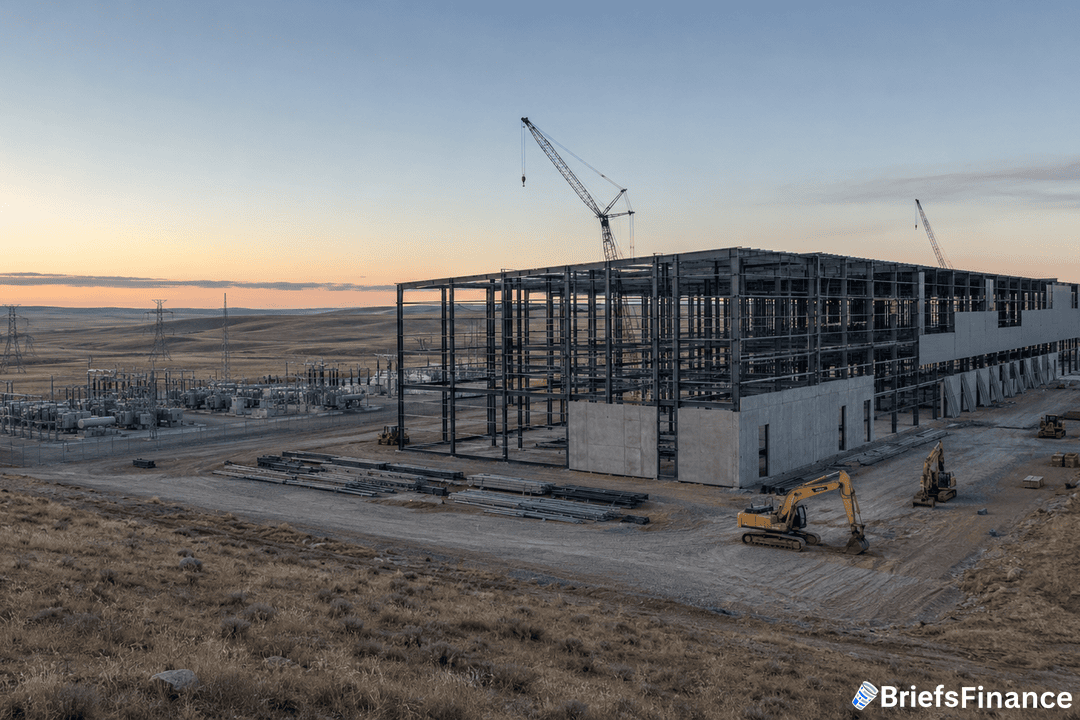
A building site in Wyoming went quiet this week. Wall Street treated that silence like a fire alarm.

The pause then helped fuel a record week of tech selling. Yet the project behind it never stopped.

What Happened In Wyoming

A computing firm called Crusoe paused its work on a huge data center. The site, called Project Jade, is built to use 1.8 gigawatts of power.

That is enough to run a small city. So the pause felt like a big deal.

Wall Street read it as a warning sign. Maybe the AI building boom was running low on money or demand.

That fear turned out to be wrong. The real customer is Google, and it just swapped in a new builder.

The county planning chief, Justin Arnold, explained the change. He said Google has lined up a new firm to file a fresh plan.

A local leader put it more simply. She said the project is moving ahead at full speed.

We track which AI buildout stories are real and which are just noise in Market Briefs - five minutes each morning, plus a free investing masterclass when you join.

Why The Market Sold Off Anyway

Tech stocks were already shaky before the news hit. Chip stocks had run up fast through the spring.

That run left traders ready to sell. The pause in Wyoming gave them a reason.

It got worse after Broadcom held its chip sales outlook flat last week. Many had hoped for a bigger number.

In one week, investors pulled $10.8 billion out of tech shares. That was the most Bank of America has tracked since 2008.

The exit was huge in another way too. As a share of the tech sector's value, it was the largest since 2014.

The chip index fell almost 2% on Tuesday. It dropped another 3.6% on Wednesday.

Then it bounced back nearly 8% on Thursday. The panic faded as fast as it came.

Swapping the builder on a half-built house doesn't stop the house. The market sold first and checked the facts later.

The Bigger Picture

Crusoe's pause was first reported on Tuesday. Its CEO said the customer asked for it, not any permit problem.

The power hub is a separate job from the data center. A builder called Tallgrass is still putting it up.

A Tallgrass rep said that work is on track. So only the data center piece changed hands.

A power company called Black Hills weighed in as well. On June 10, it said Crusoe is off the project, but the work still moves ahead.

Bank of America says the project was never paused. Crusoe now says it holds deals for nearly 5 gigawatts of data center space.

Google also just raised more than $84 billion for its buildout. So the money is still flowing.

The shake-up itself looks small. It is tied to these firms, not the whole market.

What To Watch

The big question is when the new builder files its plan. Local officials expect that update soon.

One paused contract scared the market more than the facts justified.

Want this kind of read before you react to a headline? Join 350,000+ investors reading Market Briefs and get a 45-minute investing course thrown in as a bonus.

Disclosure

Get Market Briefs delivered to your inbox every morning for free!

No fluff. No noise. No politics. Just finance news you can read in 5 minutes.

Blogs

May 30, 2026
Financial Literacy Books That Actually Build Wealth
  • The best financial literacy books don't just teach budgeting, they shift how you think about money.
  • Two classics stand out: The Intelligent Investor for valuing investments, and Rich Dad Poor Dad for the owner's mindset.
  • Reading is only step one. The real wealth comes from acting on what you learn.
Read More
May 30, 2026
What Is a Roth Conversion? A Simple Guide
  • A Roth conversion moves money from a traditional retirement account into a Roth account.
  • You pay taxes on the money now, in exchange for tax-free growth and withdrawals later.
  • It can pay off if you expect higher taxes or more income in the future, but the timing and tax hit matter a lot.
Read More
May 30, 2026
Trailing Stop Loss: How to Protect Your Gains
  • A trailing stop loss is an order that automatically sells a stock if it falls a set percentage from its recent high.
  • As the stock rises, the sell point rises with it, locking in gains while capping losses.
  • It's most useful for active strategies like momentum investing, not for long-term buy-and-hold.
Read More
May 30, 2026
5 Types of Wealth: Why Money Is Only One of Them
  • Real wealth is more than a bank balance. It spans your finances, health, mind, purpose, and freedom.
  • Money is powerful, but it amplifies the life you already have rather than fixing a broken one.
  • True financial wealth means your cash flow covers your expenses, so your money works while you live.
Read More
May 30, 2026
How to Invest in Private Equity: A Beginner's Guide
  • Private equity means investing in companies that aren't listed on the stock market.
  • Traditional private equity is built for experienced, high-net-worth investors with large amounts to invest.
  • New rules have opened more accessible paths, like startup crowdfunding and real estate deals, often starting around $100.
Read More
May 30, 2026
What Is a Call Option? A Simple Guide With Examples
  • A call option gives you the right to buy a stock at a set price by a set date.
  • Investors buy calls when they expect a stock to rise, using less money than buying the shares outright.
  • The most you can lose buying a call is the premium, but time works against you, so it's an advanced tool.
Read More
May 30, 2026
EBITDA Formula: How to Calculate It Step by Step
  • EBITDA stands for Earnings Before Interest, Taxes, Depreciation, and Amortization, a measure of a company's core profit.
  • The formula adds those four items back to net income to show what the underlying business earns.
  • Investors use EBITDA to compare companies and to judge how many times earnings a stock is selling for.
Read More
May 30, 2026
What Is a Stock Option? A Plain-English Guide
  • A stock option is a contract giving you the right, but not the obligation, to buy or sell a stock at a set price by a set date.
  • There are two types: calls (the right to buy) and puts (the right to sell).
  • Options are powerful but risky, so they suit investors who already have the basics down.
Read More
May 30, 2026
Put Option: What It Is and How It Works
  • A put option gives you the right to sell a stock at a set price by a set date.
  • Investors use puts to bet a stock will fall, or as insurance to protect shares they own.
  • The most you can lose buying a put is the premium you paid, which makes it a defined-risk tool.
Read More
May 30, 2026
Operating Margin: What It Is and How to Calculate It
  • Operating margin shows how much profit a company keeps from its core business after paying its running costs.
  • The formula is operating income divided by revenue, shown as a percent.
  • A strong, steady operating margin signals a well-run business that controls its costs.
Read More
1 2 3 22
Share via
Copy link












