Something is brewing on Wall Street.
JPMorgan CEO Jamie Dimon warned in October 2025 that "You have a lot of assets out there which look like they're entering bubble territory."
He added that a big correction could hit within two years.
Goldman Sachs strategists say today's AI boom mirrors the late-1990s dot-com bubble.
Even Federal Reserve Chair Jerome Powell called the stock market "fairly highly valued” in 2025.
In short - finance's biggest leaders are warning that stock prices might not make sense right now.
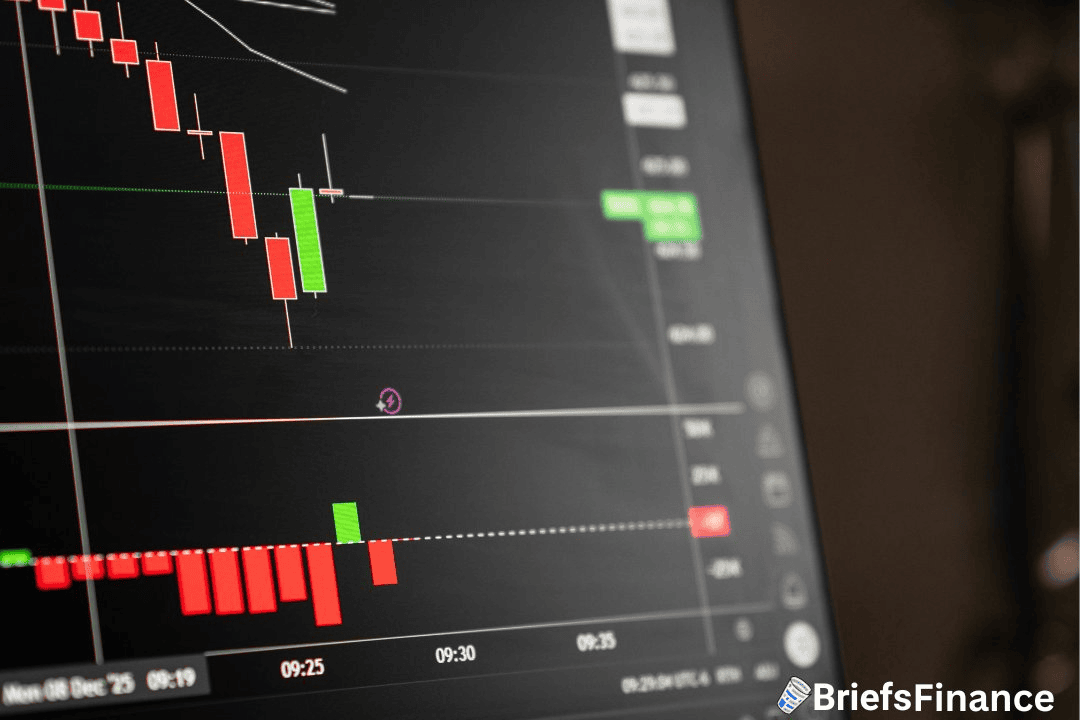
Between November 12 and November 18, 2025, the Dow and Nasdaq both fell over 4%.
This isn't a crash - but jitters are building that stocks could fall further.
Why? AI valuations have some investors worried.
Gartner estimates AI investment could reach $1.5 trillion by the end of 2025.
Combined with a slowing job market, tariffs, and underlying U.S. economic concerns, uncertainty is rising.
No one can predict a crash with certainty. But you don't have to choose between protection and performance if markets do fall.
Here's the opportunity: As stocks reach high valuations and market leaders warn of corrections, bonds may offer investors protection and potential profit during a downturn.
Let's break down how to invest if there is an AI bubble that eventually bursts - starting with what usually happens when stocks decline.
Before you go: Whether ther's an AI bubble or not, you need to staying ahead of Wall Street is how you profit.
Our CEO Jaspreet Singh is hosting a free live investor workshop this April where he'll teach you how to spot market shifts & potential investment opportunties.
Click here to register for free.
Is There An AI Stock Bubble Right Now?
Not all investors believe the markets are in a bubble right now.
Charles Urquhart, former VP of Fixed Income Sales & Strategy at Fidelity Investments, told our analysts in an exclusive interview:
"I'm not seeing it. I have a number of different indicators that I look at in terms of the overall credit market in the world. With credit spreads being the single largest, single most important indicator. That's green for me right now."
But here are the facts:
The S&P 500 normally trades at a price-to-earnings ratio between 12 and 15.
As of late 2025? It's above 30.
That means investors are paying more than double the historical norm on average for every dollar of corporate profit.
History shows no bull run lasts forever.
While we don't know when markets will crash, we know that during a crash, investors usually sell stocks to buy safer investments.
That’s creating opportunities for investors to not only protect their portfolio’s, but to actually profit as well.
Where To Consider Investing If AI Is A Bubble
When stock markets fall, investors typically move their money into bonds.
Bonds are like IOUs. You lend money to a government or company, and they pay you back with interest.
When bond demand rises during a crash, prices go up. Bondholders make money while stock investors lose.
Look at the two most recent crashes:
2008 Financial Crisis: The S&P 500 fell 37%. Investors holding 10-year Treasury bonds made money.
2020 COVID Crash: Stocks plunged 20% in four months. Treasury bonds rallied as investors fled to safety.
But here's what makes this strategy different from traditional crash protection:
The bonds we're highlighting yield between 4-6% annually as of December 2025.
That means even if the crash doesn't come for years, you're still earning competitive returns - not just sitting in cash waiting.
Charles Urquhart agrees: "I think directionally people feel that interest rates will be coming down. So I think to get some exposure into treasuries right now makes some sense."
What Will Happen When The AI Bubble Bursts?
History gives us a clear picture.
During the 2008 crash, falling interest rates pushed long-term Treasury bond prices up by double digits - even while stocks were crashing.
When stocks crash, the Federal Reserve typically cuts interest rates to help the economy recover.
When interest rates fall, older bonds that pay higher rates become more valuable.
Here's why: People will pay more to own a bond paying 4% when new bonds only pay 2%.
New bonds pay less in interest because they have an inverse relationship with interest rates. When interest rates fall, bond prices rise, and vice versa.
So, investors can make a profit by buying these bonds now while interest rates are high and selling them later during a crash when rates are low again.
| Event | S&P 500 Performance | Treasury Bond Performance |
| 2008 Financial Crisis | -37% | Positive returns (double-digit gains on long-term bonds) |
| 2020 COVID Crash | -20% in 4 months | Rallied as safe-haven demand increased |
| Typical Market Correction | Significant losses | Historically outperforms during downturns |
U.S. Treasury Bonds: The Foundation
U.S. Treasury bonds are considered one of the safest investments in the world.
Why? Because they're backed by the U.S. government. The government can print money to pay you back, so the risk of not getting paid is extremely low.
As of November 13th, Treasury bond yields are:
- 2-year Treasury: about 3.57%
- 10-year Treasury: about 4.07%
- 30-year Treasury: about 4.66%
This is the highest bond yields have been in roughly 20 years.
What does that mean? If you buy a 10-year Treasury bond, the government will pay you about 4% interest every year for 10 years, then give you all your money back.
During the 2008 crash, falling interest rates pushed long-term Treasury bond prices up by double digits - even while stocks were crashing.
TIPS: Protection Against Inflation
Treasury bonds can help investors gain steady income during times of market volatility.
But there's a problem: Those traditional Treasury bonds do not adjust for inflation.
So your money buys less stuff.
What can investors do?
TIPS (Treasury Inflation-Protected Securities) automatically adjust for inflation. So if prices go up 3%, the value of your TIPS goes up 3%, too.
As of November 2025, 10-year TIPS are yielding about 1.8% above inflation.
If a stock market crash leads to economic problems, we could see both falling interest rates and inflation concerns.
What About Emerging Market Bonds?
Now let's look beyond U.S. bonds for higher-yield investment opportunities.
Some emerging market countries issue sovereign debt backed by their governments.
These bonds typically pay much higher interest rates than U.S. Treasuries.
As of late 2025, some emerging market sovereign currency bonds are yielding around 8%.
Why the higher yield? Many of these emerging markets are growing faster than the U.S. right now and attracting record foreign investment.
Their economies are expanding and their governments are increasingly stable.
If the U.S. stock market crashes but these economies keep growing, their bonds could hold up better than U.S. stocks while paying you 5-6% annually.
There are more opportunities our analysts discovered in this shift - join our CEO in April for a free workshop to learn how to spot them.
Risks: What Could Go Wrong?
The biggest risk? Stocks could keep climbing for years, and this defensive strategy would underperform equity gains.
If that happens, you'd still earn 4.5-5.5% annually - but you'd miss bigger stock market returns.
Emerging market bonds carry currency risk if the dollar strengthens unexpectedly, and political instability could impact individual countries.
Corporate bonds could fall if recession fears trigger downgrades, and TIPS only outperform if inflation actually rises.
Lastly, government stimulus or delayed Fed rate cuts could extend the bull market, causing bonds to underperform stocks longer than expected.
AI Stock Bubble: Frequently Asked Questions
Where should I invest if AI is a bubble?
U.S. Treasury bonds, TIPS, and emerging market bonds offer protection during market corrections while still earning 4-6% annually.
Ultimately, it’s up to you to decide where to invest based on your goals and risk tolerance.
What makes sense for one investor might not make sense for you, so always do your own due diligence before investing.
Where to invest to avoid the AI bubble?
Avoid overexposure to tech-heavy index funds.
Instead, invest in bonds that move differently than stocks.
Direct ownership of Treasury bonds and TIPS provides safety, while emerging market bonds offer higher yields without AI exposure.
What is AI bubble passive investing risk?
The S&P 500 and other index funds are heavily weighted toward tech stocks.
If the AI bubble bursts, your "diversified" portfolio is actually concentrated in the sector most at risk. Bonds provide true diversification away from tech.
Is there an AI stock bubble?
Market leaders including JPMorgan's Jamie Dimon, Goldman Sachs, and Morgan Stanley warn that assets are entering bubble territory.
The S&P 500 trades above a P/E ratio of 30 - more than double the historical norm of 12-15. However, some indicators like credit spreads remain healthy.
What will happen when the AI bubble bursts?
Historical crashes show stocks fall while bonds rise.
During the 2008 crisis, the S&P 500 fell 37% while Treasury bonds gained.
In 2020, stocks dropped 20% in four months while Treasuries rallied. The Federal Reserve typically cuts rates during crashes, making older bonds more valuable.
Can I still earn returns with defensive investing?
Yes. Treasury bonds currently yield 3.5-4.6%, TIPS yield 1.8% above inflation, and emerging market bonds yield 5-8%.
There are always risks to investing, and you are never guaranteed to get a return, ever.
But some strategies are designed to help you protect your money, while also potentially earning while the rest of the market is losing.
The Bottom Line: Profiting From The AI Bubble
Wall Street's biggest leaders are warning of a potential correction.
Some assets are trading beyond their fundamentals, which could trigger the bubble to burst in the near future.
You'll want to create a defensive portfolio as a result - but one that also helps you to profit at the same time.
This is defensive positioning that doesn't drag down returns.
Charles Urquhart believes that the bond market can be summed up in one word: Math.
"Know what you own. Bonds are about math. If you own a portfolio in that 5 to 10 year segment and you have positive real net of inflation returns, then what you have done is to the best of your ability, you have immunized yourself against interest rate risk as best as you possibly could within your fixed income sleeve."
Investors may want to consider building this bond strategy now - before a market selloff happens.
That way you're earning when and if a crash comes, rather than watching on the sidelines.
But here’s the thing: This article only scratches the surface of this shift - our market analysts dove even deeper into the opportunities, data, and research.
And they discovered even more opportunties.
Which ones? Our CEO Jaspreet Singh is hosting a free live investor workshop in April that shows you how to spot market shifts and potential investment opportunties.
Save your spot by clicking here - act fast, space is limited.