What's coming and why it matters
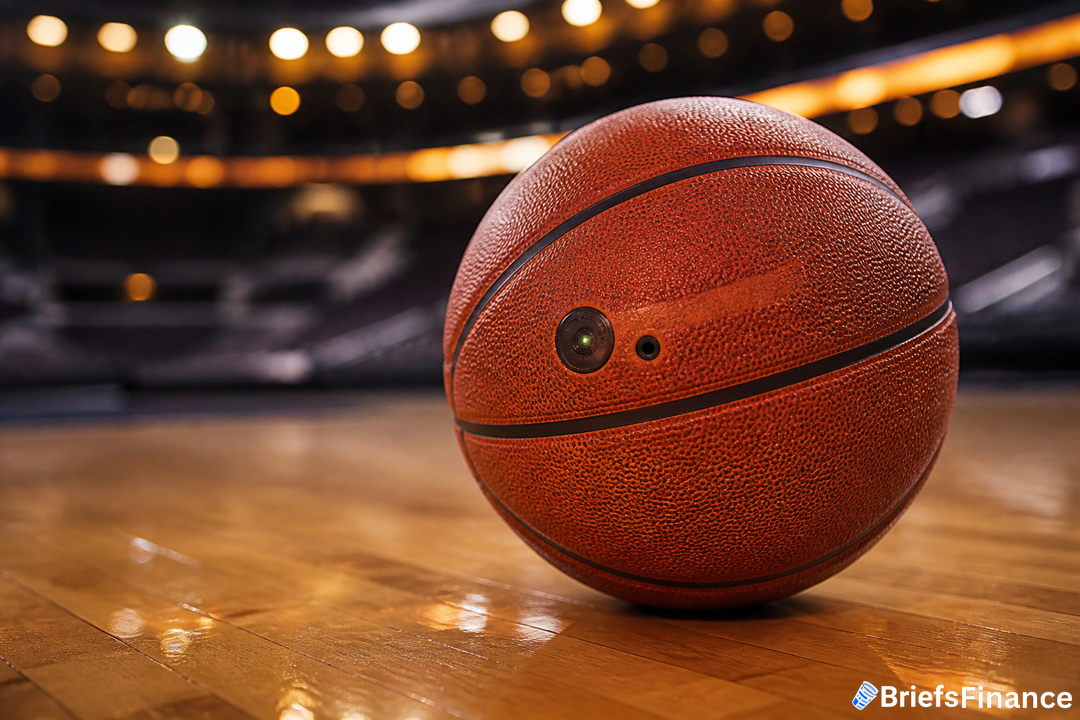
Adam Silver told CNBC's Contessa Brewer the league is working with Wilson on a ball that houses a tiny Bluetooth sensor to capture how it moves, spins and changes flight. "We're experimenting with putting a small chip in the ball that weighs roughly a gram," he said. For context, an official ball is roughly 620 grams, or about 1.4 pounds.
The NBA has already put versions of the ball through its paces in the G League, the Summer League and a handful of preseason games, swapping in chipped and standard balls to compare. Players liked the experience, according to Silver, who added, "Nobody could tell the difference. So that's a good sign." The goal is zero change in feel or bounce even for the most seasoned hands.
The first big use: cleaner calls, then consumer tools
Silver sees officiating as the first place the tech shows up. The data could flag subtle spin changes to help rule if a player grazed a ball before an out-of-bounds call, and it could indicate whether a shot's path was altered. "I think you could see as soon as next year us using it for officiating in our games," Silver said.
He also pointed to a broader market beyond the pros: everyday players breaking down their own shots. Think of someone putting up hundreds of attempts and using the readings to pinpoint which release angles and spins tend to fall through. "You'll then see the graph, and you'll see for which the angle of the shots that went in, they're more likely to go in," Silver said. While officiating uses could show up sooner, "I think the consumers version [of the smart ball] is a few years away, but it's a really exciting opportunity."
Technology in sport creates data rights worth real money. Market Briefs covers the business of sport free every morning.
Wearables in games hit a negotiation wall
Separately, the NBA is exploring in-game wearables. Officials piloted wrist devices in select Summer League and preseason contests this year, which the league called a "successful pilot program," though it will not carry into the regular season. The devices let referees link up with the replay center to handle reviews, scoring updates and clock issues.
Players already use trackers off the court for sleep and performance, but the union wants clarity on how any in-game data could be used by teams. The sticking point, Silver said, is whether it could affect contracts: "If you could see a player was slowing down or something like that, they're worried that that could get used in bargaining, and I get that." He added that today's pros are "essentially wearing wearables 22 hours a day, and the only time they're not wearing them is when they're playing in the game," concluding, "So that can't make sense." On a deal with the NBPA, Silver said, "We'll work something out with them."
What this means for your wallet
If the league rolls out the smart ball for officiating next year and broader use by 2027, expect broadcast replays and on-screen data to get sharper, with consumer training tools following later. That can reshape how fans watch and how hoopers practice, but the business end hinges on union agreements and product timelines. Translation: intriguing upgrades ahead, but the revenue ripples for teams, media partners and gear makers will likely build over years, not overnight.
New data streams become new revenue streams surprisingly fast. Get the free Market Briefs daily newsletter and follow it.