Why Carney is moving fast
President Donald Trump's trade war with Canada has given Prime Minister Mark Carney cover to run a far more muscular industrial strategy than would have flown a few years ago. The former central banker is unwinding rules from his predecessor and arming Ottawa with new tools to speed big builds, centering on energy and trade infrastructure.
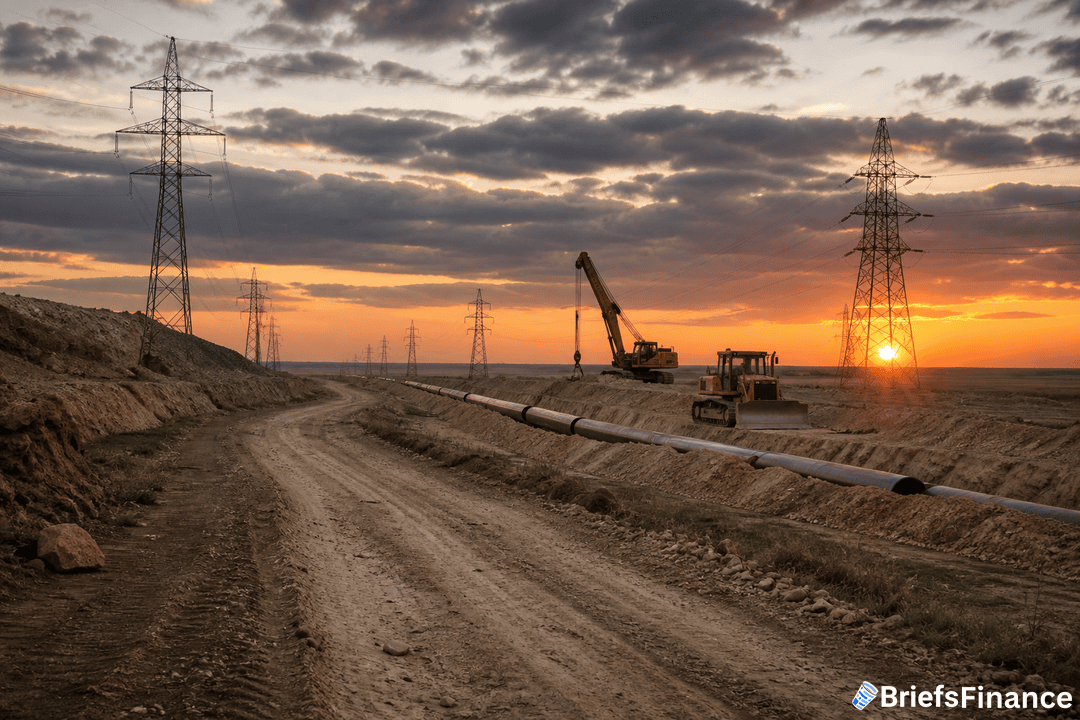
His highest priority is a new oil pipeline to the Pacific, tagged last week as a project of national interest. That label effectively puts it in the pre-approved column, with conditions. At the same time, Carney is pitching a sweeping reset of how Canada gets projects done, calling it the most ambitious upgrade to the country's building capacity in a generation.
"Decade after decade, year after year, we built less. We added more and more restrictions," Carney said last month. "We identified that issue at a time of great risk for our country, when our sovereignty was threatened and to some degree continues to be threatened."
What Bill C-39 would actually do
Over a period of under two weeks, Carney convened the country's first investment summit, rolled out a major new tax incentive for capital spending, and tabled legislation to overhaul the project-approval system and ease the ending of labor strikes. Heather Exner-Pirot of the Macdonald-Laurier Institute put it this way: "I called it 12 days of Christmas for the oil and gas sector."
Bill C-39, the Building Canada Strong Act, would cap federal decisions for all projects at one year. Departments would evaluate proposals at the same time rather than one after another, with tighter coordination so each project goes through a single federal review. It builds on Bill C-5, enacted last year to accelerate major projects that are classified as being in the national interest.
The bill goes further by letting Ottawa designate regions of national interest, where projects could receive conditional pre-approval. According to the government, a region would receive that designation only after a study lays out which activities are permitted and which mitigation steps are required. Ministers would also gain more case-by-case flexibility, including the ability in some situations to instruct work to start before a final approval and to change or waive environmental requirements.
Not everyone likes the direction.
Pipeline approvals determine where energy investment goes for decades. Market Briefs covers infrastructure free every morning.
Pipelines, timelines and the pushback
Carney's strategy leans heavily on energy and trade routes to reduce reliance on the US, which took 85% of Canada's energy exports last year. Canadian oil shipments to Asia are climbing, and an expanded west-coast pipeline opened in 2024.
C-39 would give the federal cabinet earlier influence on pipelines too. If cabinet gives the go-ahead, the regulator would keep working to determine the conditions. The government could also extend a review if more time is needed for consultations with Indigenous communities.
Skeptics are vocal about the clock. George Vegh, who previously chaired the board of the Canada Energy Regulator, said, "I just don't think you can actually have an effective review of a proposal within six months." He noted that a shorter review poses a key hurdle: consulting Indigenous communities can be time-consuming, and those communities often seek to hire their own experts.
Politics, business mood and what it means for your money
Carney is moving from a position of strength: his approval ratings reached record levels this fall, and polling indicates broad backing for his agenda, at least for the moment. He took over the Liberal Party from Justin Trudeau last year and has overhauled its energy posture.
There is real resistance too. Critics warn the plan could strain relations with Indigenous communities, weaken environmental safeguards, and inject more politics into approvals by letting the government of the day pick which projects advance. Environmental groups are zeroing in on specific clauses.
The bill would allow project backers whose activities damage fish to contribute to a fund rather than offset the impacts directly. It would also require decision makers to consider the "technical, economic and practical feasibility" of any conditions they add. At Ecojustice, the environmental law charity, the director of climate, Charlie Hatt, said, "Bill C-39 is not thoughtful reform." "This bill helps clear the way for massive oil and gas projects that will only worsen the extreme weather already harming our health and threatening our communities."
Public opinion shows a similar split: research conducted by Abacus Data and Vantage found that two-thirds of Canadians support speeding up major project construction, but support drops when it involves shorter environmental assessments or approving projects without Indigenous consent.
One more driver here: higher commodity prices. Exner-Pirot credits US trade tensions for jolting Canada out of complacency and says natural resources are the "lowest-hanging fruit for diversifying trade relationships." She adds that geopolitical strains and the data center boom are lifting energy demand, a trend already benefiting Canadian producers.
Bottom line for your wallet: Ottawa is leaning into faster timelines, richer writeoffs for capital spending and tighter coordination, while legal and political risks around environmental rules and Indigenous rights remain very real. If Canada really does build more, quicker, it could speed up the energy and infrastructure you depend on day to day, not just the projects traders track.
Permitting speed is becoming a competitive advantage between countries. Get the free Market Briefs daily newsletter and follow it.