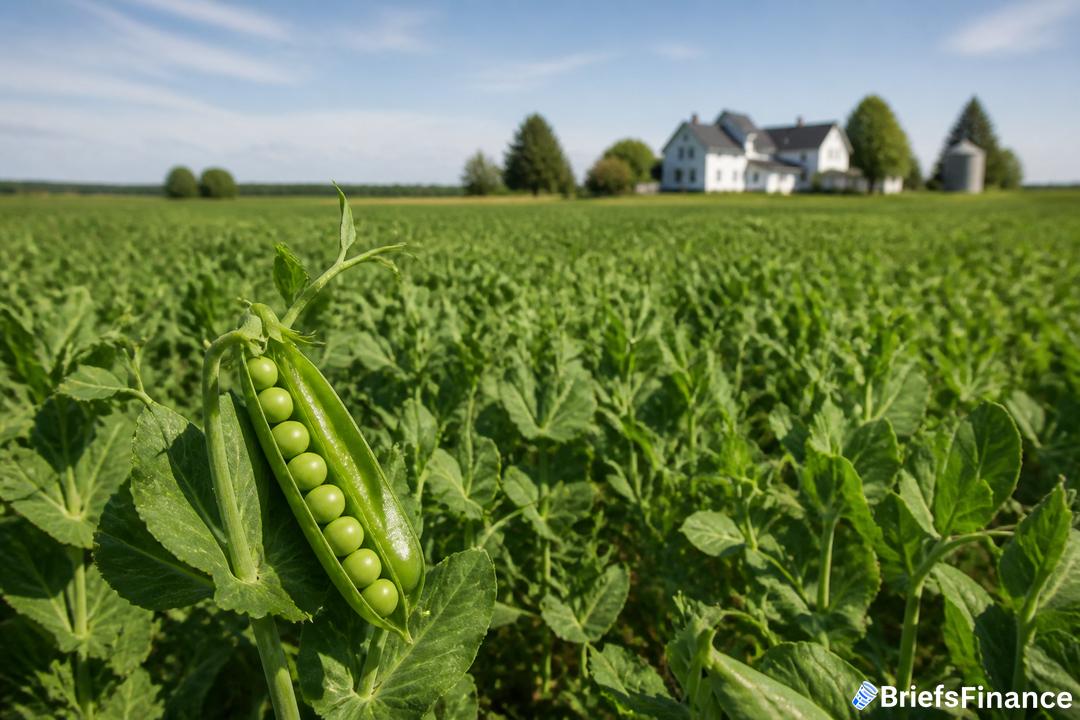
Why whey is suddenly a problem
Whey has long been the go-to add-in for packaged foods and gym shakes because it mixes well, digests easily and is everywhere. In the US alone, output of whey - produced as a byproduct when making cheese - tops nearly 7 million tons annually. But the push to cram protein into everything from chips to cold brew has outrun supply, leading to shortages and higher prices.
Whey protein concentrate prices climbed to roughly $13 per pound earlier in the summer, then cooled to about $11 to $12 per pound, still well above the below-$10 readings from earlier in the year, the US Department of Agriculture reports. Blue Yonder's July survey reported that about 20% of consumers would opt for other proteins - including soy and other plant-based options - if whey prices climbed substantially.
As Sean Torbati, co-founder of the Ambrosia Collective, put it, "Whey protein has been the incumbent for 30 years, nearly," and "It's the perfect moment, because you have this surge in demand that's been brewing for years."
Who is scaling alternatives now
Startups and incumbents are racing to fill the gap. Leaft Foods makes a concentrated protein shot extracted from alfalfa leaves and currently runs a single demonstration-size facility inside a Canterbury business park. Sales rose 600% in the year through June, and Milne says demand has blown past expectations, pushing Leaft to plan an expansion that could include a new factory.
In the Bay Area, the Every Co.'s fermented egg protein powder caught fire on Reddit last December. The company says it sold out its entire 2026 production in the first half of this year, and adds that demand from customers is now 10 times the level of a year earlier. Founder Arturo Elizondo says companies have rapidly shifted focus to diversifying protein sources and shoring up supply chains, a realization he calls a major tailwind. The Every Co. is partnering with Archer-Daniels-Midland Co. to boost output roughly fivefold by around this time next year.
The buildout spans the globe. In Canada, Louis Dreyfus Co. has recently launched its debut pea protein isolate facility. In August, DSM-Firmenich AG announced plans to manufacture its fermented single-cell protein at industrial scale in Europe as a rival to whey. Solar Foods - the company behind Solein, a protein produced by fermenting a microbe first discovered in Finnish bogs - said over the summer that it had secured financing for a second, larger plant in Finland, intended to meet demand.
Big food is also nurturing newcomers. Alpine Bio, a soy protein brand, was selected for Mondelez International Inc.'s 2026 accelerator, an eight-week program that offers connections to the Oreo maker's partner network and mentorship.
Even when industries shift, a steady approach helps build wealth, so get the free Always Be Buying E-Book today
How brands and products are changing
Smaller brands and would-be product launches are feeling the squeeze most. "I can't tell you how many small brands have reached out to us saying they literally cannot source" whey, says Magi Richani, CEO of Alpine Bio. BHU Foods, headquartered in Pennsylvania, used a broader refresh of its bar lineup to switch to peas, rolling out vegan bars in April.
The company wanted an organic protein but found organic whey would come in at nearly triple the price of organic pea protein. "We don't want to make our prices higher by trying to compete in that space," says Chief Commercial Officer Amanda Iampietro.
Labeling can be a bonus for the new players. Leaft's ingredients show up as "leaf proteins," and many of these products can skip stabilizers and other additives that consumers side-eye. Some of the first waves of plant-based milks and meat alternatives suffered from long, fussy ingredient lists, and today's protein producers are trying not to repeat that.
Not every alternative is ready for the mainstream. Sarah Schlafly, founder of Mighty Cricket, says demand for cricket-based protein powder has grown gradually but hasn't "hit that inflection point where it's just really taken off." The product sells for $33 per pound today; broader adoption, she says, would take scale big enough to match whey on price and a consumer base more comfortable with eating insects. "There's a lot of room for different types of protein."
What this means for your portfolio
Land O' Lakes Inc., a US farmer-owned cooperative, together with the Netherlands' FrieslandCampina NV and other major dairy firms, are putting money into milk and whey proteins to increase supply. Still, Guus Aerts, who leads FrieslandCampina's marketing and product strategy worldwide, said, "for the coming years the market will be undersupplied with protein,".
For everyday investors, that mix of tight supply, rising prices and new production lines could ripple across dairy suppliers, alt-protein upstarts and ingredient makers. Watch who is adding capacity, which labels are changing and how pricing sticks as the protein landscape gets reshaped.
Download the free Always Be Buying E-Book and start putting your money to work today