What's happening and why it matters
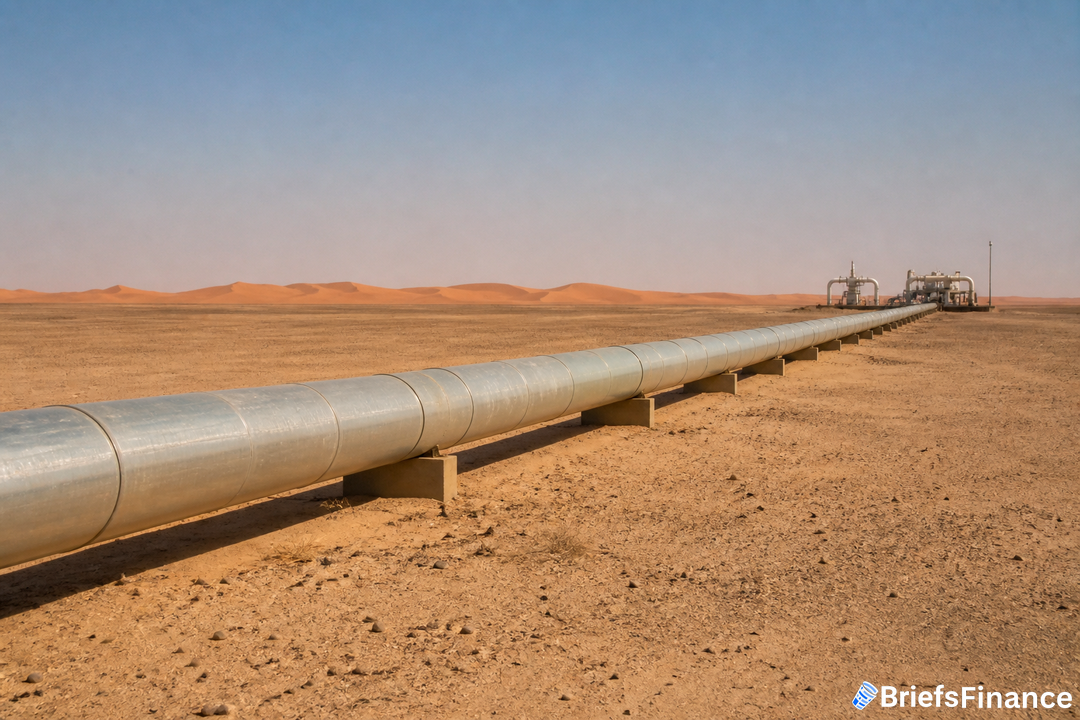
Saudi Arabia has begun the early work to bring its East-West pipeline back after a shutdown earlier this month, with the goal of getting substantial volumes moving by Saturday. People with knowledge also say the kingdom is aiming to restart exports later this week. Several trading houses say vessel traffic suggests tankers are already positioning near Yanbu, the terminal where the line offloads.
Aramco and the Saudi energy ministry did not reply to requests for comment. Oil prices eased as supply worries cooled, with Brent falling toward $99 a barrel after four straight down sessions and trading below $100 on Tuesday.
How flows were rerouted
When the line went offline, Saudi exports swung back to the Persian Gulf, and in recent days millions of barrels were seen loading at Ras Tanura. A restart would let Aramco resume lifting from Yanbu, a route it leaned on for most shipments during the Iran war when the Strait of Hormuz was heavily disrupted.
Traders say Aramco has informally told some Asian refiners they should soon be able to collect cargoes at Yanbu again. For Asian customers in the meantime, Aramco has been pushing more supply through Hormuz, selling tens of millions of barrels for this month and next with buyers taking cargoes just outside the chokepoint. Over the weekend, satellites spotted supertankers in the Gulf with capacity to load about 14 million barrels.
Capacity, damage, and repair timeline
The East-West system can transport about 7 million barrels of crude each day. Roughly 2 million of that capacity supplies refineries on the kingdom's western shore, with the balance available for export. After any shutdown, operators typically rebuild pressure and test the line's integrity and equipment like valves before switching flows back on.
On Sept. 10, drones launched from Iraq hit the pipeline and damaged a pumping station. Since then, Aramco has been working to bypass the station to restore partial flows and has aimed to return the link to full capability in about six weeks, according to prior reporting. The ramp-up pace depends on how quickly the damaged station can be repaired.
Energy flows remind investors that steady strategies help preserve and grow personal wealth. Join Briefs Finance CEO Jaspreet Singh on September 29th for a FREE live investor workshop, How to Profit From A Dollar That's Losing its Value, where he shows how we're spotting investment opportunities as the dollar falls. Save your spot.
Security threats and the market fallout
Risks to the Red Sea route persist. This isn't new territory: an April strike hit a pumping station, yet throughput persisted and full volumes were restored within days. In 2019, the pipeline and major Saudi fields were also targeted as tensions with Iran and the Houthis flared. Yanbu has faced attacks, and the Jazan refinery in the south was knocked out in July.
The disruption has reshaped crude flows and prices. In August, Saudi Arabia's total oil exports fell to about 3 million barrels a day, a nadir not seen in at least nine years. According to people familiar, Aramco informed at least two European refiners that no crude would be supplied in October under long-term contracts. Poland's Orlen SA has already been searching for replacements, helping lift European grades, with Dated Brent topping $130 at one point.
What this could mean for your wallet
If Yanbu loadings resume, more barrels via the Red Sea could take some heat off tight physical supplies. Watch for hard signs like actual departures from Yanbu and steady repair progress. Those details are likely to matter more for near-term prices than a single headline, and they filter straight into what you pay at the pump and how energy costs ripple through your monthly budget.
When supply routes change, keeping a long term plan safeguards your financial future. Our CEO Jaspreet Singh is hosting a FREE live investor workshop, How to Profit From A Dollar That's Losing its Value, on September 29th. Sign up free to join him live.