What happened
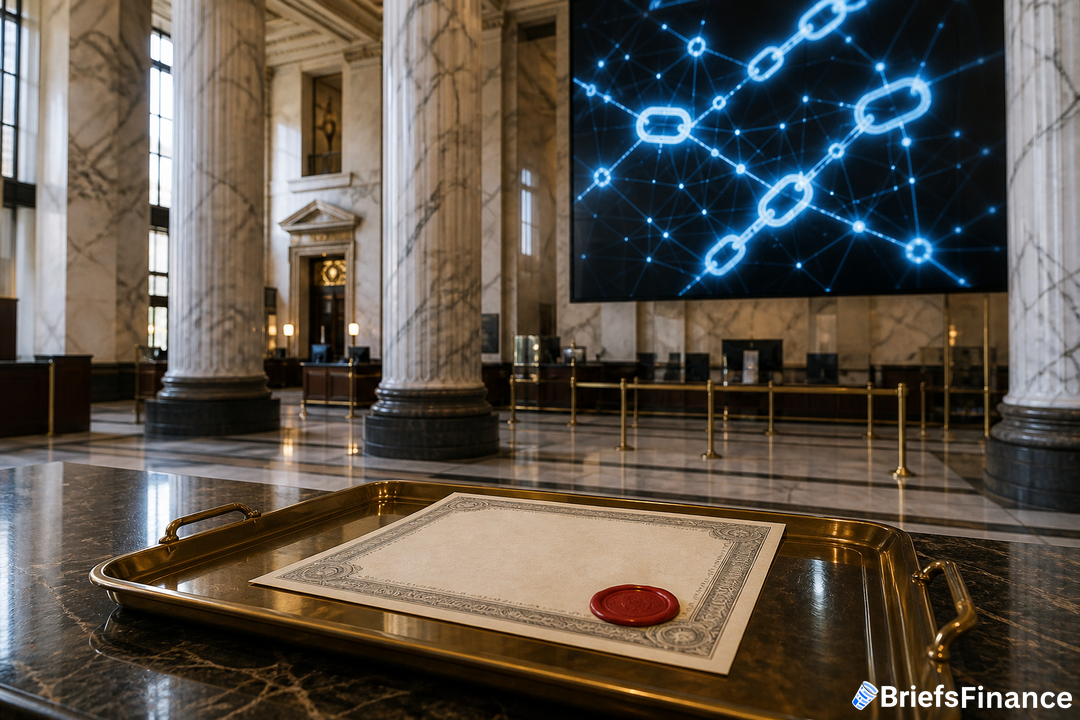
India just ticked a first in its bond market. New Delhi-based power financier REC Ltd. sold 5 billion rupees of blockchain-based notes that mature in May 2028 and pay 7.30%. That is about $52.9 million. Around 20 institutions joined the deal, spanning banks, mutual funds and corporates, according to people familiar with the sale.
Who bought and who arranged
Top private lenders HDFC Bank Ltd. and ICICI Bank Ltd. were among the purchasers, alongside Axis Bank Ltd. and Yes Bank Ltd. Other named subscribers were AK Capital Services Ltd., ICICI Securities Primary Dealership Ltd., Taurus Group and Trust Investment Advisors Pvt. HDFC Bank said it served as one of the arrangers but did not say whether it purchased the bonds. Taurus Group confirmed it both invested in and helped arrange the offer, and AK Capital also confirmed participating. Axis Bank, ICICI Bank, ICICI Securities Primary, REC, Trust Investment and Yes Bank didn't immediately respond to emailed requests for comment.
How it worked and why it matters
Investors settled using the RBI's digital currency, while the bond itself was issued on blockchain rails. That combination is the draw: Amar Gandhi, Taurus Group's founder and managing director, said, "The most significant potential benefit of tokenization is speed and settlement efficiency." He added that linking tokenized instruments with central bank digital currency payments can make allotment and settlement markedly quicker.
If this REC pilot scales, it could help build out India's corporate bond market by boosting transparency and making it easier to trade. There are already follow-on signs: India's largest engineering firm, Larsen & Toubro Ltd., aims to receive orders this week for three-year tokenized notes, with the size up to 5 billion rupees. L&T did not respond to a query about the plan.
Understanding what moved a market beats knowing that it moved. Get the free Market Briefs daily newsletter and follow the drivers.
What this could mean for your money
Faster, cleaner settlement lowers back-office friction, which can attract more issuers and investors over time. If tokenized deals keep coming - like the potential L&T sale this week - you could see more variety and potentially better pricing in plain-vanilla rupee debt that shows up in mutual funds and fixed-income products you already use.