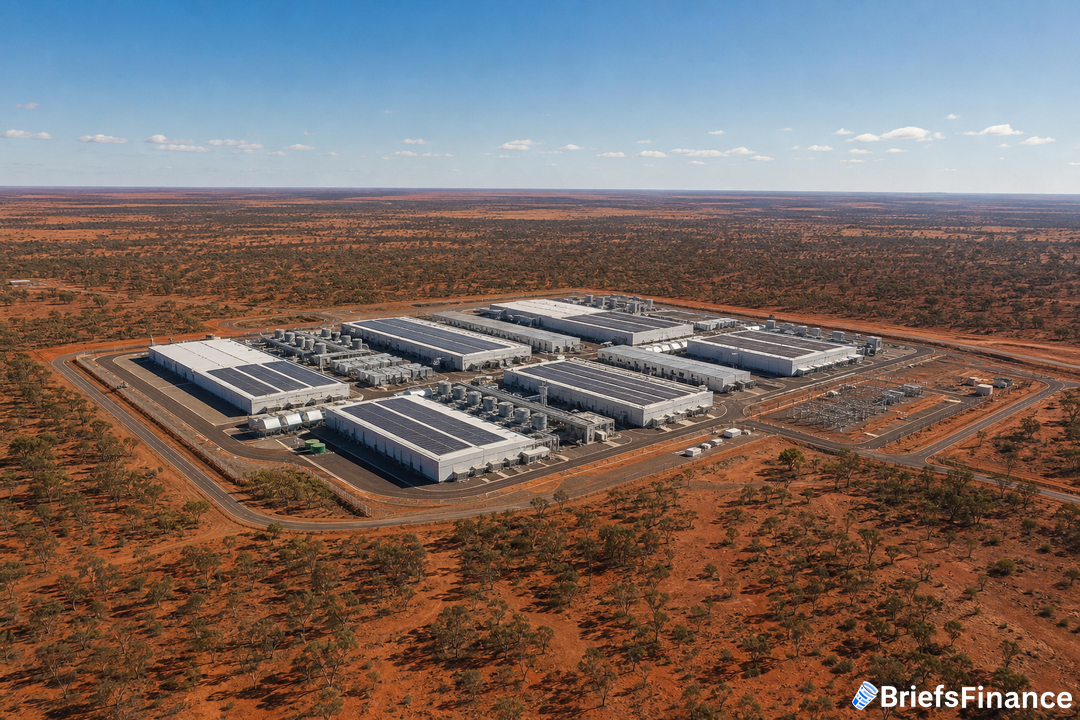
Why Australia is suddenly on the shortlist
Big Tech is shopping for server space, and Australia is moving up the list. In Sydney, Sabooh Whitelaw, an associate VP at AirTrunk who oversees energy and utilities, said that over the last six to eight months the company has experienced higher-than-anticipated interest in Australia from Google LLC, Apple Inc., Meta Platforms Inc., Amazon.com Inc. and Microsoft Corp. The pitch is clear: political predictability, room to build, renewable power and a short hop to major Asian markets. As Whitelaw put it, "The demand is expected to translate into firm commitments and investment in the coming months and years." Requests for comment to Google, Apple, Meta, Amazon and Microsoft did not receive immediate responses.
The US squeeze and Australia's bottlenecks
Back in the US, the AI buildout is running headfirst into power constraints in major data-center hubs, and worries about household bills and environmental impact are feeding a political backlash. Projects have been put on ice from New York to Seattle over concerns about grid strain and water use.
Australia offers an outlet, but it is not an instant escape valve. On the main grid, about nine gigawatts of proposed data-center projects seeking transmission connections were in the pipeline in the June quarter, and roughly 84% of that was still just at the application stage, with none yet commissioned, according to the Australian Energy Market Operator. Whitelaw warned that slow approvals and grid hookups could push timelines back if demand grows faster than construction can keep up.
Markets move every day, and most of it never reaches you in time. Get the free Market Briefs daily newsletter and stay ahead of it.
Policy, politics and the numbers to watch
The federal government in Canberra is developing nationwide rules that may compel large data centers to finance their own power generation. The government is also counting on the wave of projects to help finance new renewable electricity as old coal plants retire. Commonwealth Bank of Australia estimates data centers could attract A$150 billion, or $108 billion, of investment by 2030.
Electricity needs are set to climb. According to the Australian Energy Market Operator, by 2035-36 AI centers could be responsible for approximately 13% of Australia's electricity consumption, compared with roughly 3% now, raising the possibility that demand could outpace the build-out of new energy infrastructure. Although Australia has mostly avoided the level of pushback unfolding in the US, resistance is growing: in New South Wales, activists have demanded an urgent pause on expansion, and in Tasmania, a petition with more than 10,000 signatures triggered a parliamentary inquiry.
What this could mean for your wallet
If the buildout lands in Australia, expect plenty of cranes before the kilowatts arrive. Faster commitments from tech giants could spur renewable projects and construction jobs, but delays in grid connections and approvals may keep timelines elastic. For consumers, the big watch items are whether new generation comes online fast enough to meet AI-era demand and how policymakers balance growth with power prices and local impacts.