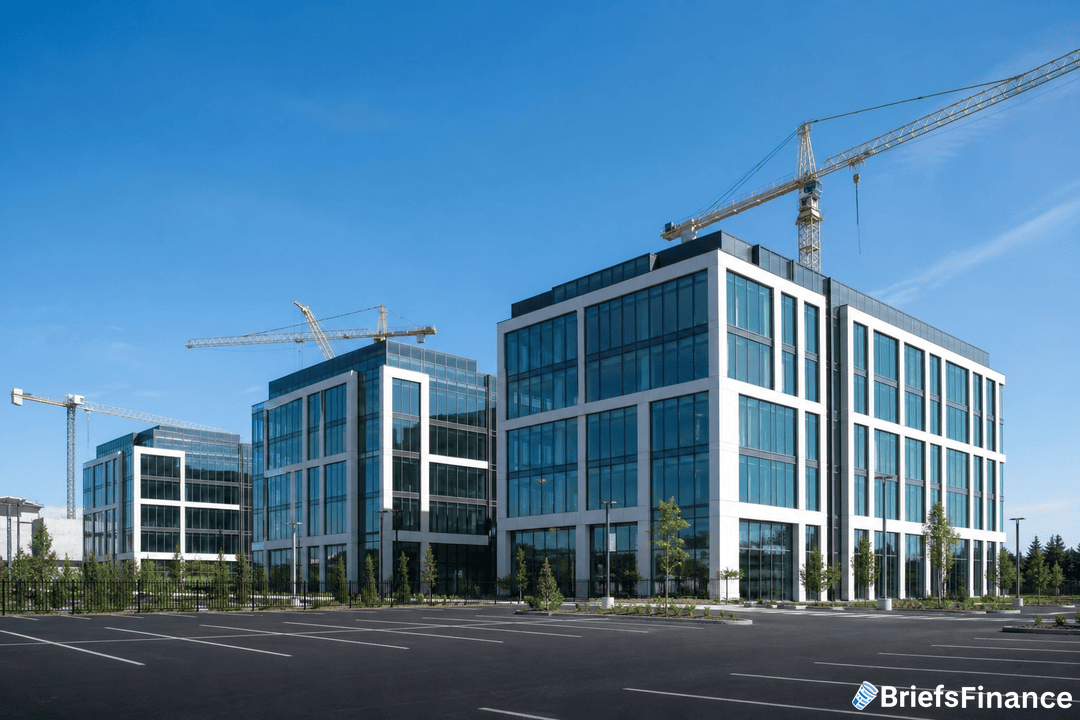
If you have driven past an office building or a shopping center lately, you might assume commercial real estate is still in the doghouse. Empty storefronts and quiet lobbies tell that story. But the people who actually buy and lend on these properties are telling a different one.
What the Data Says
JLL tracks two key measures each month: how much investors want to bid on properties, and how freely lenders are handing out money for deals. Property bidding in June showed its best month-over-month gain in a year, and July saw the second-highest count of unique bidders in the index's five-year history.
These two metrics are more meaningful when examined together. Lauro Ferroni, who leads JLL's capital markets research for the Americas, says the bidding index tends to follow the credit index. When lenders loosen up, buyers show up months later.
"An interesting finding with the most recent data in this index is the lessening divergence between the credit intensity index and the bid intensity index," Ferroni said. "We've actually found that the credit intensity index is a leading indicator for the bid intensity index, because credit availability sets the tone for liquidity."
The money story behind the headlines is usually the part that matters. Join Market Briefs free and get it every morning.
The relationship between these two indicators has become increasingly important as the market recalibrates following a period of significant disruption. Ferroni's team tracks both metrics closely because shifts in credit availability often precede changes in bidding activity by several weeks, giving investors a useful window into where the market is headed.
Where the Action Is
Not all properties are getting the same attention. Retail and industrial properties are seeing heavy investor activity. Lender competition is also exceeding earlier record levels, according to JLL.
The one weak spot remains multifamily housing. That sector continues to be the most sluggish in terms of both bidding and credit activity. This is a notable reversal, since multifamily was among the strongest property types during the pandemic when rental demand surged. Now, with higher interest rates and increased supply in certain markets, the sector faces headwinds that are keeping some investors on the sidelines.
"They've seen there hasn't been a wave of distress or defaults, so they're comfortable coming back to the sector," Ferroni said.
Lending has become more accessible through various channels, including commercial mortgage-backed securities providers, insurers, government agencies, and debt funds. This represents a shift from the early post-pandemic period, which saw challenges in various commercial real estate sectors and elevated interest rates beginning in 2022.
What It Means for Investors
Despite ongoing macro uncertainty and volatility appearing across the broader economy, bidding is rising. This is probably due to the volume of active capital counteracting and potentially overpowering the effects of that volatility. Ferroni noted that the recovery is being driven by a combination of stabilizing interest rates and a growing sense among investors that the worst of the market correction is behind them.
Ferroni sees no red flags in the data, just a steady recovery. "There's still fuel in the tank, but it's slow and steady rather than explosive," he said.
That cautious optimism is a far cry from the distress fears that gripped the market last year. The direction is clear: capital is returning to commercial real estate, though the pace will be gradual. The empty storefronts may be a familiar sight, but the money flowing into these assets tells a different story.
Understanding what moved a market beats knowing that it moved. Get the free Market Briefs daily newsletter and follow the drivers.