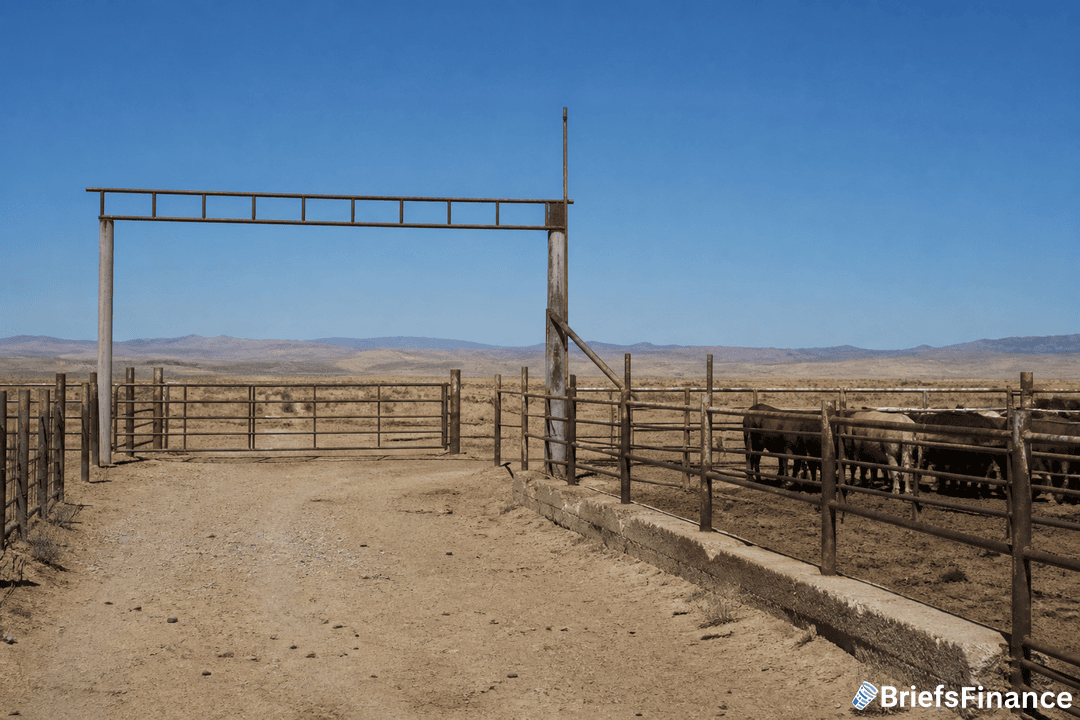
The U.S. is slowly opening the border again to Mexican cattle, and the move could take some pressure off beef prices at your local grocery store.
Agriculture Secretary Brooke Rollins announced that two additional New Mexico ports will start accepting cattle shipments from Mexico. The reopenings will happen in stages, with each port opening 30 days after the last one. The Douglas, Arizona, port already resumed cattle imports this Monday after being closed for roughly a year over screwworm fears.
Rollins said the first New Mexico port will open 30 days after Douglas, and the second one follows 30 days later. She did not say which of the two ports, Santa Teresa or Columbus, opens first.
Why the Border Was Closed
The pause on Mexican cattle began in late 2024 after New World screwworm was detected in Mexico. This is a parasite that is every rancher's nightmare. The larvae burrow into open wounds on livestock and can kill an animal within days if it goes untreated.
The best financial decisions come from understanding the whole picture. Join Market Briefs free and get the full brief each morning.
The U.S. hadn't seen a livestock case of screwworm in about five decades, but it showed up in June. Right now, Texas has only two active cases. Mexico still has nearly 2,000.
The screwworm scare has been a major concern for the industry, as the parasite can devastate livestock populations. With Texas currently reporting only two active cases and Mexico still grappling with nearly 2,000, the USDA is confident that the phased reopening will allow for careful monitoring. The sterile fly production plant, which will be crucial for controlling the pest, is not expected to be operational until 2027, meaning that for now, containment efforts rely on vigilance and international cooperation.
The USDA says it won't open any Texas ports anytime soon. Rollins explained that's because Texas is where the remaining U.S. activity is concentrated.
What This Means for Your Grocery Bill
The timing of the reopenings is no accident. The U.S. cattle herd has been shrinking, and that has pushed beef prices upward. To ease the squeeze, President Trump recently allowed 300,000 tons of ground beef imports to enter with no out-of-quota tariff for 90 days.
This is part of a bigger effort to get more meat into the supply chain. The Texas & Southwestern Cattle Raisers Association supports the reopenings, but it has a clear warning for the USDA. The group says if any established safety trigger fails, it will demand the ports close again immediately.
Rollins says the decision is grounded in science and data. "We feel and believe, based on science and data, that we have taken every step to protect the American herd and the American consumer," she said.
The catch: The U.S. can't ramp up its own sterile fly production just yet. The only U.S. plant that produces sterile screwworm flies won't open until spring 2027. In the meantime, that work continues in Mexico and Panama.
For your household, this is about supply. More cattle crossing the border means more beef in the pipeline, which could help slow the price climb at the meat counter. The reopening schedule is measured and cautious, but it is a concrete step toward restocking a herd that is still thin.
Markets move every day, and most of it never reaches you in time. Get the free Market Briefs daily newsletter and stay ahead of it.