Free NewsletterPro Login

Flock CEO Seeks Middle Ground Between Privacy and Safety as Scrutiny Grows

Published Aug 24, 2026
Share:
Summary:
  • Flock Safety faces backlash after the Washington Post identified 46 cases of police misusing its surveillance technology.
  • CEO Garrett Langley says the country must balance privacy and safety, not pick one.
  • The company cut data retention to seven days, but the ACLU wants a 48-hour limit.

A Tech Company Under Fire

Flock Safety produces surveillance cameras, drones, and license-plate-reading technology used by police. Such worries are not merely theoretical.

Langley's latest Fox News spot was merely the most recent conversation he has given as the company faces growing public outcry around concerns that its technology could be misused.

Politicians from both parties are now directing criticism at Flock. Michigan's Democratic Senate nominee Abdul El-Sayed, for instance, attacked rival Mike Rogers for backing "this mass proliferation of Flock cameras, any and everywhere, watching your every move to collect information without you even noticing." And Vermont Senator Bernie Sanders posted, "STOP AI MASS SURVEILLANCE. STOP FLOCK."

A trio of GOP House members proposed legislation to bar the federal government from buying automated monitoring tools that employ facial recognition, biometric identifiers, or plate scanning, "including a Flock Safety camera."

A few minutes a day is enough to stay genuinely informed about your money. Join Market Briefs free and start tomorrow.

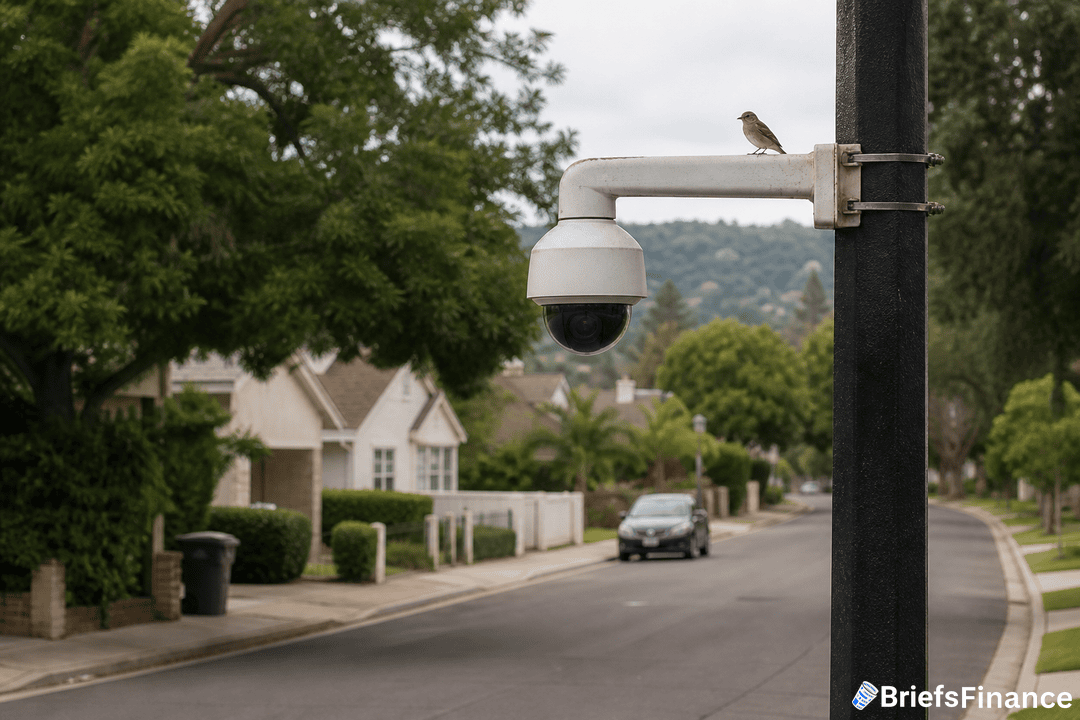
Flock Safety's devices are typically mounted on poles and capture license plates and vehicle characteristics, feeding into a network that police can search. The company has argued that its technology helps solve crimes, but critics worry about the potential for abuse, especially given the documented incidents of misuse by officers.

Flock's Response: We're Listening

CEO Garrett Langley says the backlash is fair, but he wants people to see the bigger picture. "I don't think that Flock created police abuse. I think we're the first company to ever shine a light on it and build the tools to find it," he told CBS News. He also apologized to one alleged victim, saying, "I apologize. It kills me that she went through that."

"When people talk about just one of these, privacy or safety, they're prioritizing the wrong thing, and what we have to prioritize as a country is compromise," he said. "How do we have our safety, and how do we balance privacy?"

Flock has made changes in response to the criticism. Now, a case code must be input prior to retrieving information.

But both changes can be overridden. Officers can extend data storage by activating a feature known as Evidence Mode. The ACLU said, "While Flock has not shortened the default retention period to the ACLU's recommended 48 hours, its proposal may be a step in the right direction. Whether this is a real change or just another Flock PR move, however, will depend on how its 'Evidence Mode' operates."

The decision to reduce data retention from 30 days to seven days is notable, but the override mechanism could still allow indefinite access. This tension reflects a broader national debate about automated surveillance and civil liberties, as municipalities and states weigh new rules for law enforcement technology.

What This Means for Your Portfolio

Langley said state regulators should "pass bills that make [the illegal use of Flock data] a criminal offense." In his Fox News conversation, he referenced the steps the firm has already taken. For investors, the ongoing controversy represents a regulatory and reputational risk, but Flock's role in crime-solving continues to attract police contracts. How the company balances these pressures will determine its long-term standing amid increasing public scrutiny.

Rates, prices and policy all end up in your budget eventually. Get the free Market Briefs daily newsletter and see it coming.

Disclosure

Recent News

1 2 3 … 108

Get Market Briefs delivered to your inbox every morning for free!

No fluff. No noise. No politics. Just finance news you can read in 5 minutes.

Blogs

October 16, 2026
How Boring Math Makes You Rich: The Briefs Money Spreadsheet, Explained
  • Briefs Money shows you what to do with every paycheck, and in what order: how much to spend, save, and invest, when to build an emergency fund, and which debt to pay off first.
  • The Climb to Wealth course walks you through the system step by step, and the Personal Finance Spreadsheet is where you track your own numbers.
  • Investing is one piece of building wealth. The system that gets money to your investments, and keeps it there, decides the outcome.
Read More
October 16, 2026
Common Investing Mistakes: Why a Stock Grade Is One Tool, Not the Whole Toolkit
  • The Briefs Score shows growth, income, and wealth preservation investors how well a stock fits their goal, with a separate letter grade for each one.
  • The most common mistake is treating the letter as an instruction. An A tells you a stock scores well for one goal, not that you should buy today.
  • Research works best as one input in a process you own. The grade shows how a stock stacks up. You supply the goal, the timeline, and the rules for being wrong.
Read More
October 16, 2026
How to Read a Company's Numbers Without a Finance Degree (Using Briefs Terminal)
  • Briefs Terminal lets you size up any public company in about ten minutes: what the stock costs, what it earns, how fast sales are growing, and what it pays you, all on one page.
  • It lines those numbers up against the company's closest competitors for you, so you can tell if a number is impressive or just average.
  • Below that are the income statement, balance sheet, and cash flow statement from the company's SEC filings, the latest news, and transcripts of its earnings calls.
Read More
October 16, 2026
What Type of Investor Am I? The Three Investor Archetypes, Explained
  • Briefs sorts its stock grades and monthly reports by three investor goals: growth, income, and wealth preservation. Pick yours and you know which report and which grade to read first.
  • Growth investors want stocks that beat the S&P 500. Income investors want to get paid in cash. Wealth preservation investors want stocks that hold up when the market drops.
  • The same stock can score an A- for one goal and a D- for another, so picking your goal comes before picking any stock.
Read More
October 16, 2026
How to Build a Stock Watchlist That Isn't Just Stocks You Heard About
  • A watchlist on Briefs Terminal lets you group stocks by the idea you're tracking and follow each one's price, one-day move, and 52-week high and low in one place.
  • Each list has its own name and description, so you always know why a stock is on it, and you can make as many lists as you have ideas.
  • The monthly growth, income, and wealth preservation reports under the Briefs Research tab hand you new themes to track that you didn't hear about online.
Read More
October 16, 2026
How to Choose an ETF That Matches Your Idea (Using the ETF Planning Tool)
  • The ETF planning tool takes an idea like "I want to invest in fast food companies," asks what you mean, and finds the ETFs that match, with the reasons, the holdings, and the sources.
  • Build a Plan then shows what your money could grow to in those ETFs over the years you choose, with conservative, expected, and optimistic estimates next to the S&P 500.
  • It gets you from an idea to an actual plan without researching dozens of companies one at a time.
Read More
October 16, 2026
Is This Stock a Good Buy? How to Use the Briefs Score to Tell If a Stock Fits the Way You Invest
  • The Briefs Score shows growth, income, and wealth preservation investors how well a stock fits their goal, with a separate letter grade for each one.
  • One stock can score very differently for each. Nvidia showed an A- for growth and a D- for income, because it grows fast and pays almost no dividend.
  • Seven sub scores under each grade show what earned the letter, so you can see exactly where a stock is strong or weak for your goal.
Read More
October 16, 2026
How to Tell an Asset From a Liability: The One Question to Ask Before You Buy Anything
  • The typical American household earned more in 2025 than in any year on record, yet only 30% of Americans say they could pay a surprise $1,000 bill from savings, so the problem isn't income but what the income gets spent on.
  • An asset puts money in your pocket and a liability takes money out, and the wealthy buy assets first, then let the assets pay for the fun stuff.
  • Before you buy anything, ask one question: does this put money in my pocket, or take money out of my pocket? Then you need a plan for the money you keep.
Read More
October 16, 2026
How to Build Your First $2,000 Emergency Fund and Wipe Out Every Debt Over 10%
  • Your first money goal isn't investing, it's $2,000 in its own account named Do Not Touch, built by moving 10% of every paycheck into it automatically.
  • More than a third of American adults couldn't cover a $400 surprise bill with cash or savings, according to the Federal Reserve, and that's how one bad day turns into years of credit card payments.
  • Once the $2,000 is there, attack every debt charging more than 10% interest, highest rate first, because you can't out-invest a 22% credit card so paying it off is the investment.
Read More
October 16, 2026
How to Invest Through a Crash: 3 Rules From the Worst-Timed Investor Alive
  • Meet Bunty, a fictional investor with the worst timing in history: he put $100,000 into the market in four chunks right before four crashes, never sold, and by 2025 it had grown to more than $500,000.
  • Investors who jump in and out of the market miss its best days, and missing just a handful of those days can cut your final result roughly in half.
  • The fix is ABB, Always Be Buying: you buy on a schedule through booms, crashes and scary headlines, which matches the market, and beating it takes knowing where the money is moving first.
Read More
1 2 3 … 29
Share via
Copy link










