Free NewsletterPro Login

Warning: Undefined variable $stocks in /var/www/briefs.co/htdocs/wp-content/plugins/oxygen/component-framework/components/classes/code-block.class.php(133) : eval()'d code on line 448

Warning: foreach() argument must be of type array|object, null given in /var/www/briefs.co/htdocs/wp-content/plugins/oxygen/component-framework/components/classes/code-block.class.php(133) : eval()'d code on line 448

Warning: Undefined variable $funds in /var/www/briefs.co/htdocs/wp-content/plugins/oxygen/component-framework/components/classes/code-block.class.php(133) : eval()'d code on line 472

Warning: foreach() argument must be of type array|object, null given in /var/www/briefs.co/htdocs/wp-content/plugins/oxygen/component-framework/components/classes/code-block.class.php(133) : eval()'d code on line 472
/* the link was here */
BREAKING
Crypto Rally Pushes Bitcoin Above $81,000 Read coverage →        
×

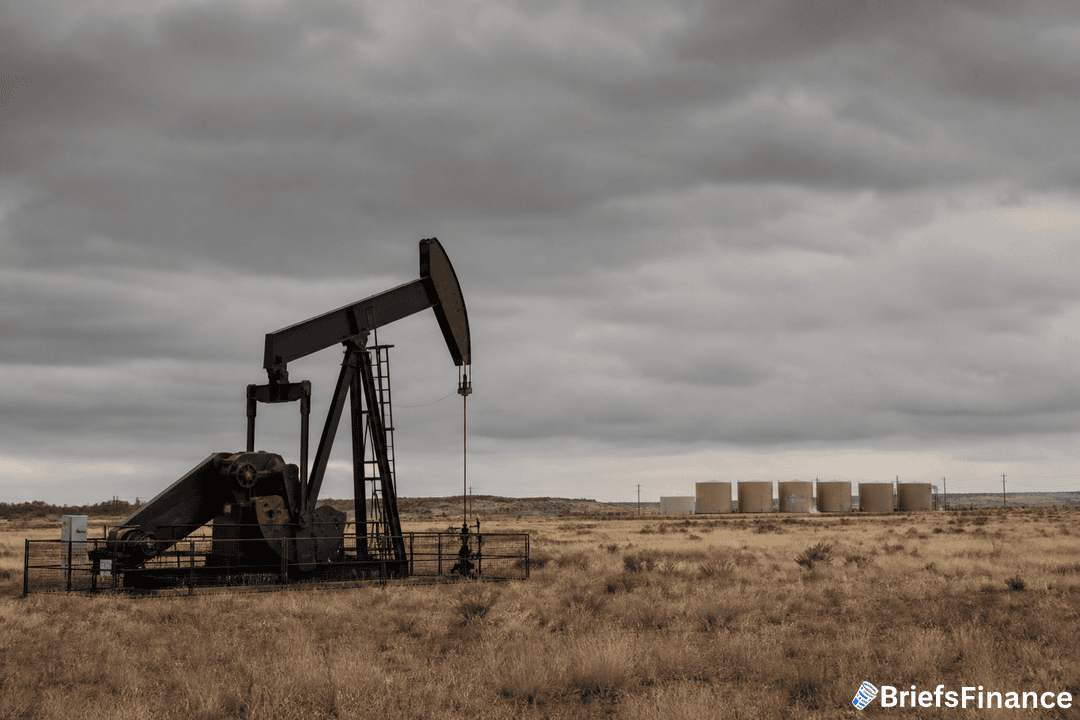
Crude Tumbles More Than 3% as Washington Picks Financial Squeeze Over Strikes

Published Aug 25, 2026
[tts_player]
Share:
Summary:
  • Oil tumbled more than 3% on Tuesday as Washington shifted from military strikes to economic pressure against Iran.
  • Brent crude closed at $89.20 a barrel after a 3.2% drop, while West Texas Intermediate settled at $82.21, down 3.3%.
  • Crude prices are down more than 5% this week after new U.S. sanctions targeted Iran and anyone still trading with it.

Washington Chooses Money Over Missiles

Oil prices slid sharply on Tuesday, losing more than 3% because Washington chose financial penalties over missile attacks in its campaign against Tehran.

The new sanctions hit Iran directly and also target the countries that still do business with it, which is a warning to anyone trading with Tehran.

The international Brent contract slid 3.2% to $89.20 a barrel. West Texas Intermediate, the U.S. benchmark, settled 3.3% lower at $82.21. Weekly losses now exceed 5%.

The White House calls this campaign "economic D-Day."

Treasury Secretary Scott Bessent called it "the single greatest financial offensive ever" and told CNBC's "Squawk on the Street" that maximum economic pressure likely means there will not be "a large-scale kinetic restart."

Kinetic, in military speak, means shooting.

The logic is easy to follow: if the goal is to make Iran hurt, the fastest way is through money, not missiles. Traders are betting that a war that never starts keeps oil lower than a war that does.

The shift to economic pressure removes the immediate threat of a military confrontation in the Strait of Hormuz, a chokepoint for global oil trade. That threat had been keeping a risk premium in crude prices, and Tuesday's move signals that Washington prefers to squeeze Iran financially rather than risk a disruption to supply.

Signals On The Ground

The quieter signals point the same direction. The State Department is preparing to send evacuated U.S. diplomatic staff back to the Middle East, possibly as soon as Aug. 25, 2026, according to a Tuesday New York Times report.

When oil drops on geopolitics, patient investing wins, so get the free Always Be Buying E-Book

Diplomats do not usually fly back into an active war zone.

Defense Secretary Pete Hegseth said Monday that economic pressure "hurts them the most right now," but he left the door open for more strikes.

"If we need to use kinetic strikes, we'll use them," he told reporters, adding that "by no means are we foreclosing using kinetic strikes anywhere in the Strait of Hormuz or around Iran."

The military option is resting, not retired.

Iran says it is ready for the squeeze anyway. On state television, Economy Minister Ali Madanizadeh declared that Tehran is "fully prepared" and has "a two-year plan to manage these events," adding, "We have our own tools and we know how to play the game."

A two-year plan is a long time to hold your breath, and a reminder that this fight is not ending tomorrow.

China Is The Pressure Point

The real pressure point is not Tehran, but Beijing. BBH strategists note that China buys roughly 90% of Iran's oil exports, making it Iran's biggest customer by a mile.

China has repeatedly pushed for a diplomatic resolution, and under the new sanctions it could face consequences if it keeps buying Iranian crude.

BBH strategists called the latest U.S. move more of a warning than a decisive blow, since Washington did not immediately impose secondary sanctions on other countries.

Those are the penalties that hit a third party, like China, for trading with Iran.

The reason for the caution is clear. Targeting China means going after major Chinese banks and refiners, which risks financial turmoil, retaliation, and damage to U.S.-China relations.

China's foreign ministry pushed back Tuesday, with spokesperson Lin Jian saying Beijing will "do everything necessary to firmly safeguard its rights and interests" and that "economic warfare and maximum pressure provide no solution."

In plain terms, Beijing is not asking for permission.

What It Means For Your Portfolio

For the rest of us, the immediate takeaway is friendlier. Cheaper oil means cheaper gas, and cheaper gas is a tax cut you feel at the pump, plus a little relief for inflation.

The oil market's mood can flip in a day, though. If the diplomatic track stalls and the U.S. hits Iran harder, crude could snap back just as fast as it fell.

The bottom line: this is a bet that economic pressure works and war stays off the table. If it pays off, your energy bills get some relief and inflation keeps cooling.

If it fails, the market just showed you how fast prices can change. Beijing's next move is the one that decides which way oil goes from here.

As sanctions replace strikes, market moves, so download the free Always Be Buying E-Book to invest steadily

Disclosure

Recent News

1 2 3 61

Get Market Briefs delivered to your inbox every morning for free!

No fluff. No noise. No politics. Just finance news you can read in 5 minutes.

Blogs

August 23, 2026
How to Get the Most From Your Guideline 401k
  • Guideline is a company that provides low-cost 401k plans, popular with small businesses and their employees.
  • A "Guideline 401k" follows the same core rules as any 401k: tax-advantaged growth, contribution limits, and often an employer match.
  • The biggest results come from capturing the full match, choosing low-cost funds, and picking Roth or traditional to fit your situation.
Read More
August 23, 2026
Principal 401k: What to Know About Your Plan
  • Principal is one of many companies that manage workplace 401k plans, so a "Principal 401k" is simply a 401k where Principal is the provider.
  • The rules of a 401k are the same no matter who runs it: pre-tax or Roth contributions, tax-advantaged growth, and often an employer match.
  • The biggest wins come from grabbing the full match, picking low-cost funds, and knowing whether Roth or traditional fits you.
Read More
August 23, 2026
What a Tariff Dividend Means for Your Money
  • A "tariff dividend" is the idea of taking money the government collects from tariffs and paying some of it back to citizens.
  • To judge the idea, you first need to know what a tariff is: a tax on imported goods, usually paid by the companies bringing them in.
  • Tariffs ripple through prices, businesses, and your investments, so the smart move is understanding those ripples, not just the headline.
Read More
August 23, 2026
No Tax on Overtime: How Overtime Pay Is Taxed
  • "No tax on overtime" refers to a tax break that lets certain workers deduct some overtime pay, lowering the income they get taxed on.
  • A deduction does not mean overtime is truly tax-free. It means part of that pay is subtracted before your tax is figured.
  • The bigger money lesson: how you earn money changes how it is taxed, and investors often get the friendliest treatment of all.
Read More
August 23, 2026
Reading the Silver Price Forecast for 2026
  • Nobody can honestly promise a specific silver price for 2026. Any exact number is a guess, so treat forecasts as opinions, not facts.
  • Silver is unusual because it is both a precious metal and an industrial metal, so its price answers to two very different forces.
  • Instead of chasing a forecast, learn the drivers - inflation, interest rates, recession fear, and industrial demand - so you can judge any prediction yourself.
Read More
August 23, 2026
What to Do When Reddit Stocks Go Viral
  • "Reddit stocks" usually means stocks getting hyped in online communities, where crowds can send a price soaring or crashing fast.
  • These tips can be entertaining and sometimes useful, but they are opinions, not research, and often come loaded with hype.
  • The safe move is to treat every online tip as a starting point, then do your own homework before risking a dollar.
Read More
August 23, 2026
Why Is Bitcoin Dropping Right Now?
  • Bitcoin drops for a mix of reasons: interest rates, big-picture money policy, regulation news, and simple shifts in how much risk investors want to take.
  • Bitcoin has a fixed supply and no earnings, so its price runs almost entirely on supply, demand, and sentiment.
  • Sharp drops are normal for bitcoin. Understanding the drivers matters more than reacting to any single day.
Read More
August 23, 2026
The Fidelity 500 Index Fund, Made Simple for Beginners
  • The Fidelity 500 Index Fund is a low-cost fund that tracks the S&P 500, an index of 500 large U.S. companies.
  • Buying it means owning a tiny slice of 500 businesses at once, which spreads your risk in a single purchase.
  • Index funds like this win over time mostly by keeping fees low and letting compounding do the work.
Read More
August 23, 2026
USA Penny Stocks: Risks and Rewards Explained
  • USA penny stocks are very low-priced shares of very small companies, often trading under $5 and sometimes under $1.
  • They dangle the dream of huge, fast gains, but carry brutal risks: low liquidity, wild swings, and high failure rates.
  • Most investors build wealth faster with quality companies and funds than by chasing cheap shares.
Read More
August 23, 2026
Finding Cheap Stocks to Buy Now Without Getting Burned
  • A low share price does not mean a stock is cheap. Real value compares the price to what the business is actually worth.
  • The best cheap stocks to buy now are quality companies trading below their true value, not the tiniest, riskiest shares on the market.
  • For most beginners, a low-cost index fund is the simplest "cheap" way to own great companies at once.
Read More
1 2 3 25
Share via
Copy link