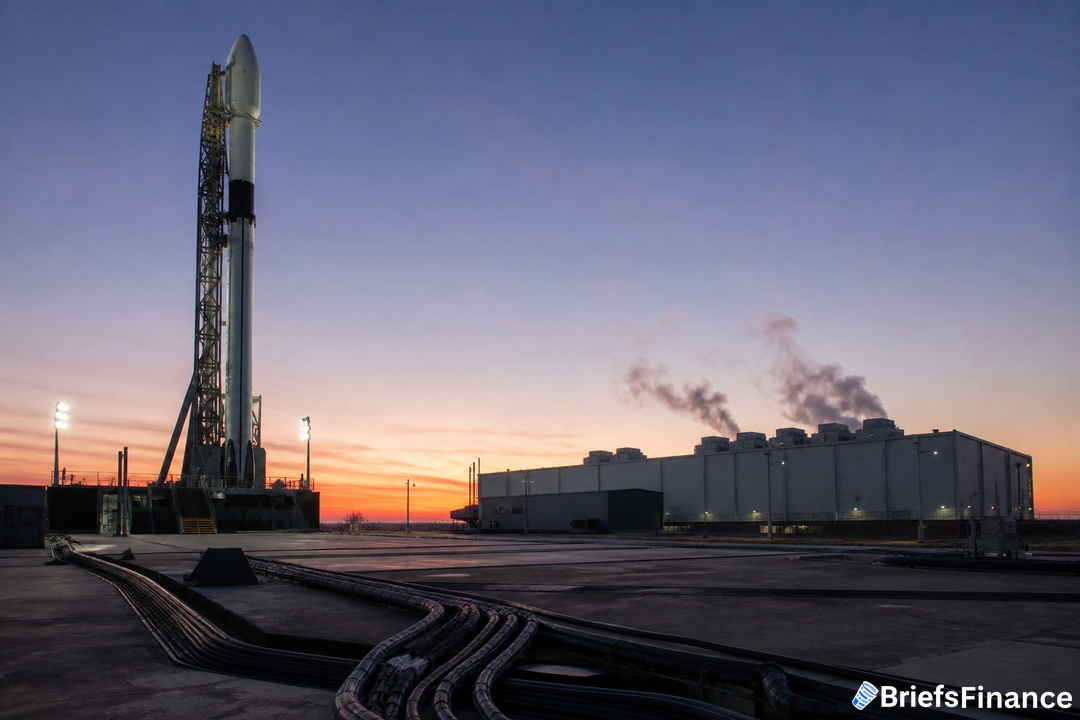
Elon Musk's newest initiative places the first wave of AI satellites in orbit by the end of 2027, with a significantly bigger rollout the following year. The satellites will run on Nvidia chips, and Musk claims the system offers a more affordable and lightweight alternative to traditional ground-based facilities.
The New Timeline
SpaceX anchored its massive June initial public offering on establishing space-based data centers as a pioneer in the field, using a constellation of spacecraft to handle computational workloads in orbit as a cheaper and greener option compared to ground-based facilities.
Earlier guidance suggested these orbital centers might arrive as soon as 2028. However, during the company's first earnings call as a public entity, Musk seemed to move that schedule up to "next year." Now he's specifying that the initial group launches in the final three months of 2027.
In a post on X, Musk shared the revised schedule along with specifications for the data center satellite, describing it as "significantly simpler, lower cost, denser and lighter than a traditional rack." He added that the first launch would be followed by "significant scale" in 2028.
As orbital AI data centers near reality, grab the free Always Be Buying E-Book to build wealth steadily.
That's a rapid reversal in a short period. The company accelerated its timeline almost immediately after going public.
Nvidia Is the Engine
Earlier this month, SpaceX announced Nvidia would be its exclusive partner for the AI hardware headed to space. Musk had previously considered multiple chip designs but concluded that Nvidia's offerings provided the best performance.
Nvidia, set to release its quarterly financial results on Wednesday, also said SpaceX would integrate its Vera central processing unit to accelerate the computing powering Grok and its upcoming AI agent technologies.
This partnership is significant because it ties the two companies together for the long haul. SpaceX gains access to a proven chip manufacturer, while Nvidia secures a customer looking to place its products in a completely novel environment.
The Scale Is Hard to Picture
SpaceX has submitted a request with the Federal Communications Commission for clearance to deploy up to one million satellites designed to handle complex AI computational work.
The move into space-based data centers reflects a broader push by the company to diversify beyond its traditional launch and satellite businesses. If successful, the orbital centers could cut down on the massive energy and water consumption associated with terrestrial data centers, which have drawn scrutiny from environmental regulators and local communities. Musk has framed the initiative as a way to sidestep many of those hurdles while also reducing latency for users in remote regions of the globe.
What It Means for Your Portfolio
For investors, the key takeaway isn't necessarily the satellites themselves but the accelerated timeline. The company has moved its launch window from "as early as 2028" to the fourth quarter of 2027, with substantial scaling expected in 2028.
With space-based computing on the horizon, get the Always Be Buying E-Book for a simple path to consistent investing.