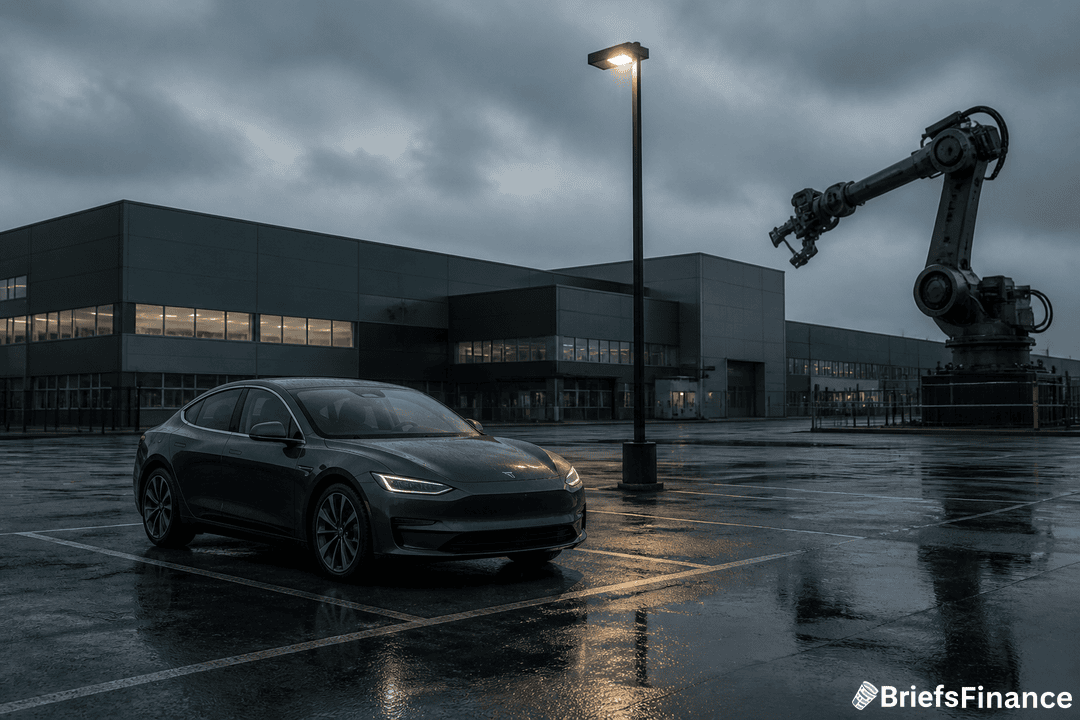
Delivery Forecast Comes Up Short
Xpeng just got a big check for its robot business, but investors spent Tuesday focused on something less glamorous: car sales.
The Chinese electric vehicle maker's Hong Kong-listed shares fell more than 9% on Tuesday, August 25, 2026, after the company said it expects to deliver 115,000 to 121,000 vehicles in the third quarter.
That outlook was weaker than Wall Street wanted, and it followed an 8.5% drop in the company's U.S.-listed shares the day before.
The second-quarter numbers added little comfort.
Xpeng posted a net loss of 1.34 billion yuan, or about $200 million, which was wider than its loss in the same period last year.
Revenue did grow, rising 8% to 19.74 billion yuan. But the net loss also widened, and the softer delivery forecast kept the pressure on.
Citi said the delivery shortfall was not about weak demand.
The bank pointed to supply chain issues that slowed the production ramp-up of the MONA L03 model, and it trimmed its price targets on Xpeng's U.S. and Hong Kong shares.
Put simply, the market is judging Xpeng on what it delivers next, not on what it has built. The forecast covers just three months, but for a company whose CEO talks about selling more robots than cars within 10 years, three months can feel very short.
When delivery forecasts miss the mark, a simple investing habit like the Always Be Buying E-Book can build wealth steadily
The Robot Bet Is Getting Real
The delivery news was the headline, but the bigger story may be happening outside the car business.
Xpeng's robotics unit secured more than $900 million in its initial capital raise, giving it a post-transaction valuation above $6.3 billion.
IDG Capital led the round, with Gaorong Ventures participating. Tencent and Alibaba joined as strategic investors, giving the robot unit two of the biggest names in Chinese tech.
The size of that round is striking, and so is the math that follows.
By Citi's numbers, the robot unit is worth about as much as the car business, which the bank values at roughly $6.5 billion.
Citi sees the fundraising as a long-term positive, citing Xpeng's expertise in AI algorithms, AI model development, and chip design.
In November, Xpeng's chief executive, He Xiaopeng, predicted that robot sales would surpass vehicle sales within ten years, and the company also unveiled its second-generation humanoid robot that month.
The company also runs a flying vehicles business, so the robot bet is just one piece of a wider push beyond cars.
Brian Gu, Xpeng's vice chairman and co-president, said in a LinkedIn post that the funding opens "a new phase of global mass production and commercial deployment for advanced humanoid robots."
What the Two-Story Split Means for You
Xpeng now looks like two different companies. The car side is fighting for momentum in a crowded Chinese EV market.
It regained market share last year with its lower-priced Mona brand but has struggled to keep sales rolling amid a broader downturn.
The robot side is pulling in some of China's most famous tech investors. That split is worth understanding if you own the stock or have been watching from the sidelines.
Citi's numbers show the market is pricing the two businesses almost equally.
For investors, that gap works both ways: a robot breakthrough could lift the entire story, but a car sales miss can still drag the shares down.
The last two days show which side still has the louder voice in the stock price. Anyone holding Xpeng is really holding two bets at once.
A robot milestone rarely lifts share price alone, so grab the free Always Be Buying E-Book for consistent investing