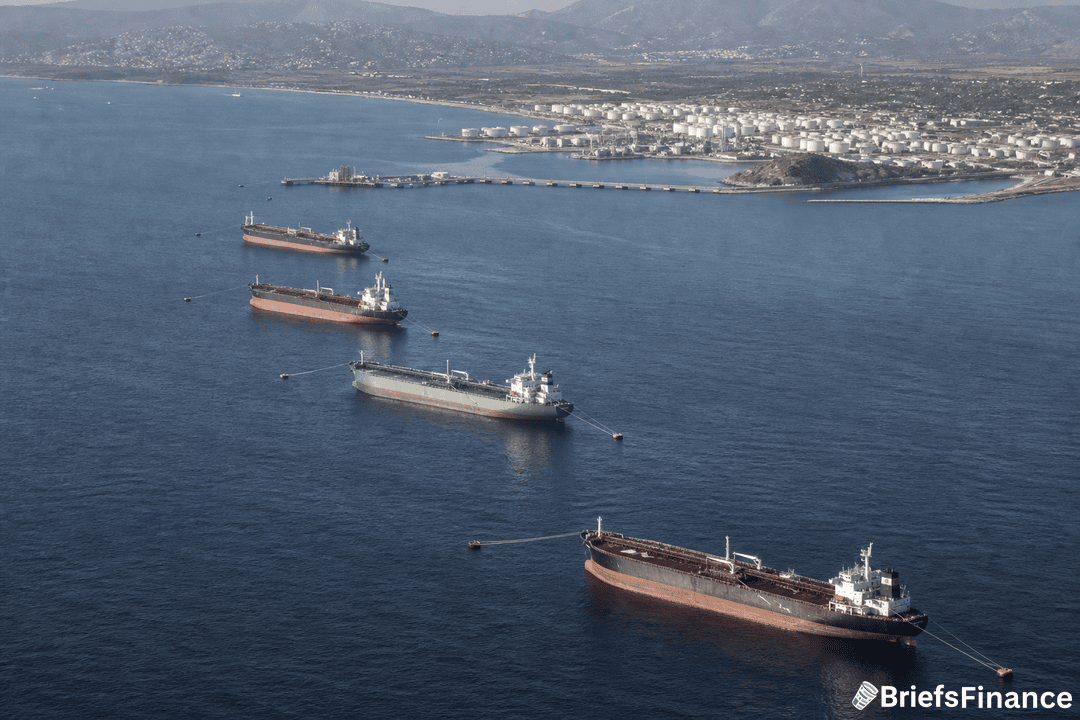
Why This Snapshot Got Attention
Satellites rarely cause much excitement in the oil market. The Aug. 24 image was different.
Basra Oil Terminal is Iraq's main export hub. When more tankers gather there, it suggests more crude may soon enter the global pipeline. The picture from Aug. 24 therefore offers a practical clue for tracking supply, even if it cannot guarantee a lasting shift.
It's the recent pattern, however, that made this splash. In the past several weeks, satellite flyovers usually found just one or two tankers at the export yard. Before the war, the normal number was six tankers at eight berths. Snapping seven tankers at once looks a lot closer to the old pace.
But a picture has to come with a caution note. A single-flight look at loadings does not guarantee Iraq's exports will actually stay at this level. It simply says that on that day, more barrels appeared ready to move. That is a clue worth looking at, not a done deal.
Markets move every day, and most of it never reaches you in time. Get the free Market Briefs daily newsletter and stay ahead of it.
Why Traders Are Watching the Gulf
The next reason comes from beneath the water's surface. There are signs of more hidden exports from the Persian Gulf. Loaded ships are one of the few visible signs that this hidden trade might be picking up.
The oil still has to move through a narrow waterway. Once ships leave Basra, the Strait of Hormuz is next. That's a narrow chokepoint on one of the world's busiest oil routes, and how much oil actually gets through is the real question.
The Iraq ministry and state oil marketing company did not reply to requests for comment. Those requests, by the way, were made outside normal business hours. Since nobody from Iraq confirmed the picture, the satellite and the X post remain the best evidence.
On Aug. 25, the market was still processing that picture. At the same time, a barrel of crude traded at $80.56. That came after a 5.23% move in the price.
What It Means for Your Money
Oil that stays in the ground does not heat bills. But oil that actually leaves port counts. More crude reaching the water can feed global supply, and more supply can weigh on prices.
Lower prices show up at the pump after a while. They also go into the profits of oil companies, and those profits matter to your portfolio if you hold energy stocks.
So treat the seven tankers as a weather vane: It is a hint that oil flows and the direction of the Middle East's supply are not as fixed as they seemed. The next few images of Basra will matter.
One image captures a single day; a string of images would show a trend. The real signal is not the satellite photo itself, but what it eventually means for prices.
The money story behind the headlines is usually the part that matters. Join Market Briefs free and get it every morning.