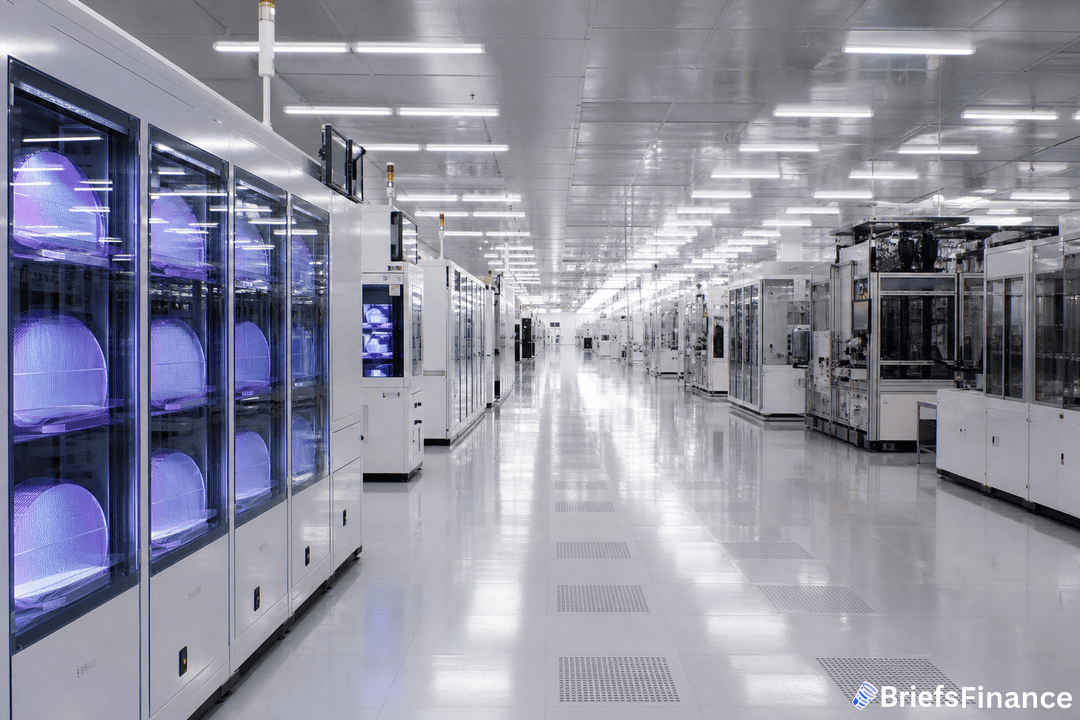
Valuation Soared by Almost $11 Billion in One Month
A hardware startup just pulled off one of the fastest value jumps in recent memory.
Etched announced on August 18, 2026, that it raised $700 million, with Jane Street leading the round.
The new round values the startup at $21 billion.
The speed is the eyebrow-raising part. In December, Etched was valued at $5 billion.
A $300 million round in July brought in more investor cash.
After that round, the startup was valued at $10.3 billion.
Then the price tag jumped again. Within a single month, that valuation climbed by almost $11 billion.
Jane Street is not the usual type of investor to lead a startup round. It tested and bought Etched's hardware before leading the round.
In a blog post, Jane Street said, "We tested the chip and are pleased with the early results." It added that it now has its own rack running in its datacenter.
The valuation climb mirrors a broader shift in AI spending toward the physical layer. More money is being poured into chips, memory, and complete systems, not just the models themselves. Etched's rise from $5 billion to $21 billion in less than a year is one sign of that appetite.
Understanding what moved a market beats knowing that it moved. Get the free Market Briefs daily newsletter and follow the drivers.
Why the Chips Are Getting Attention
Etched builds hardware designed for inference. Inference is the stage after a user submits a prompt, when an AI model actually generates an answer.
Co-founder and COO Robert Wachen says the excitement comes from two new components the company designed from scratch. "Inference is built in two stages," Wachen said, "prefill and decode."
Prefill is the compute-heavy stage where the system reads the prompt and gathers context. Decode is the memory-heavy stage where the system produces output tokens, the chunks of text that become the actual answer.
Etched says its prefill chip runs at low voltage, which lets it pack in more transistors without overheating. More transistors means faster token processing.
For decode, the company created something it calls cluster-scale memory. "It allows many chips to connect together and use a shared memory pool at a very, very fast, low latency," Wachen said.
That means chips can share data with very little delay, which matters while a model is generating an answer. Etched claims the result is higher speed and lower cost.
Etched sells its technology as complete systems it calls frontier inference clusters. Nvidia uses the term "AI factories" for its own full systems, but the idea is similar: customers get a whole setup, not just one chip.
There is also a lingering question about whether Etched's chips are hardwired for one specific AI model. Wachen said that was the original plan, but it is no longer the case.
The systems can run any frontier model, meaning the chips are not tied to a single winner. That flexibility could be a big reason investors are so eager.
What This Means for Your Portfolio
Everyday stock buyers could not get into this round. The only people who got in at the new price were the investors writing checks.
Still, the deal shows where serious money thinks AI is headed. Jane Street tested and bought the hardware, liked the results, and then led a round that lifted the company's value to $21 billion.
The round's other investors include Kleiner Perkins, Sequoia Capital, Andreessen Horowitz, Tiger Global, Bain Capital Ventures, and Blackstone. That many big names piling into one hardware startup is a sign the money is moving past software.
For your portfolio, the bigger question is what this kind of spending means for the AI investments you may already own. The money is not just going into software.
It is also going into the chips, memory, and systems underneath, the parts that make AI work.
If the people closest to the technology keep paying up for faster hardware, that is a strong hint about where the next wave of AI money will flow. Keep an eye on the machinery, not just the chatbots.
A few minutes a day is enough to stay genuinely informed about your money. Join Market Briefs free and start tomorrow.