As of August 15, 2026, bond traders are arguing about roughly $70 billion in AI debt guarantees that never show up on a corporate balance sheet.
This week, Nvidia made that number harder to ignore with a $500 billion financing partnership. The chipmaker is expected to guarantee tens of billions in AI chip debt.
A separate company, created just for the deal, borrows money to buy AI chips. A customer's contract pays off the loan.
If the customer stops paying, the lender re-leases or sells the chips, and the company that promised to cover the gap pays whatever is left. That promise is called a residual-value guarantee.
It lets Nvidia and Broadcom sell more chips without booking the debt. Customers get cheaper borrowing because the chipmaker's credit rating backs the deal.
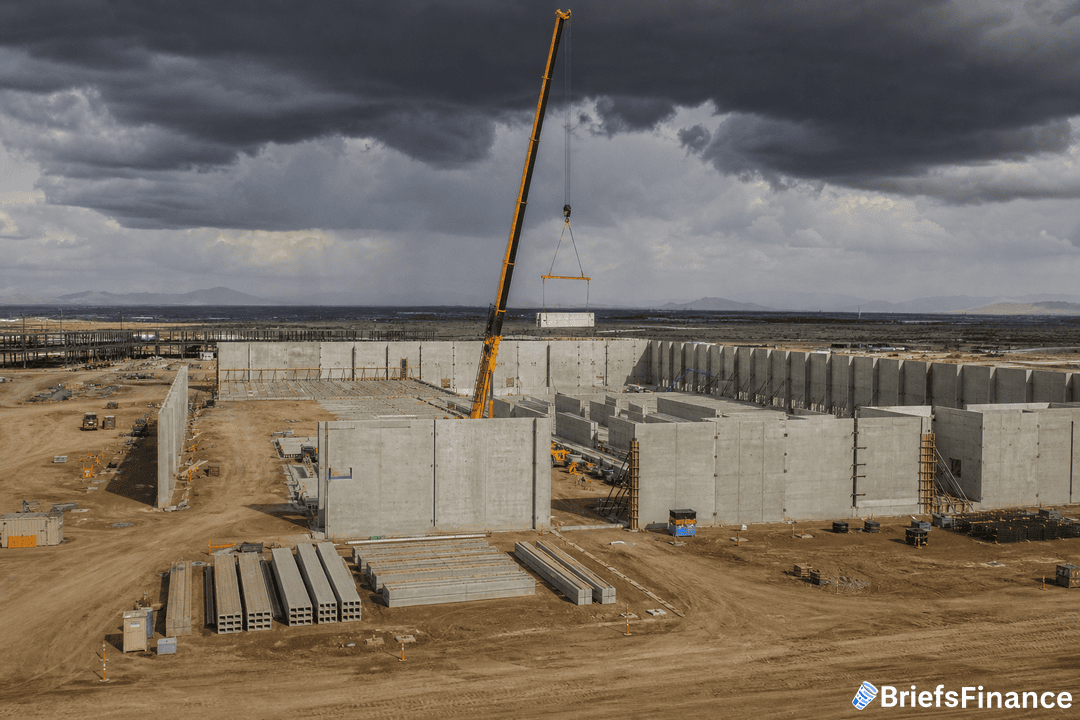
Meta pioneered the structure for its data centers. Its Beignet deal, for the Hyperion data center in rural Louisiana, used roughly $27 billion in debt.
A $28 billion backstop protects lenders if Meta walks away from its 20-year lease. Meta used the same playbook for its Sopaipilla project in Texas.
That project carried roughly $13 billion in debt.
Why the Guarantees Worry Credit Investors
The problem is that these guarantees appear costless right up until the moment they are not. If the boom cools, customers stop paying, hardware prices fall, and the guarantor writes a big check at the worst time.
CreditSights analysts compare Nvidia's guarantee to selling a put option, a contract that pays off when prices fall. Their warning: "This is pro-cyclical and exacerbates boom-bust potential. The guarantee is nearly costless in the boom phase, but becomes most relevant in a severe, abrupt downturn."
Worried about hidden risks in the market? Grab the free Always Be Buying eBook and build steady wealth anyway.
The biggest deal so far is Broadcom's Big Sky financing for Anthropic PBC. Broadcom guaranteed most of the $35 billion package.
The listed backstop is $29 billion. Apollo and Blackstone were lenders, and the safest slice, known as senior debt, earned investment-grade ratings at a lower borrowing cost.
Rating agencies are starting to treat these promises as real. S&P Global Ratings will count Broadcom's support as contingent debt, or debt that appears only if something goes wrong, and add it to adjusted debt calculations.
Moody's analysts warn the main danger is a pile-up. "The primary risk lies in multiple such transactions occurring over a short period," they wrote, which could overhang Broadcom's credit even with low leverage.
Mariya Entina, a portfolio manager at DoubleLine, says the deals obscure reality. "When you have financial engineering, you're obscuring the financial reality," she said.
TCW's Brian Gelfand says these are not ordinary investment-grade deals, calling the tail risks "elevated given the off-balance sheet nature."
The Bull Case: Remote Risk, Fast Paydown
Other investors say the worry is overdone. Chip demand should outrun supply for years, borrowers pay down the debt over time, and any tech risk sits with companies that have enough cash to absorb it.
Broadcom's Big Sky deal was the first in its AI XPV platform, struck in June. Bank of America strategists see the platform reaching $370 billion in senior debt by mid-2029.
Janus Henderson's John Lloyd says doomsday fears are overblown. "You would have to have growth rates of token usage fall of a cliff, which we're just not seeing," he said.
"They're not trying to hide the contingent liability. They're trying to get it financed," he added.
Nvidia CEO Jensen Huang said on X the company could guarantee up to 25% of a given opportunity, case by case. "Our role is to help unlock a very large pool of independent capital while maintaining disciplined risk exposure," he wrote.
What It Means for Your Portfolio
Under U.S. accounting rules, a company books a contingent liability only when a loss is likely and can be estimated.
Otherwise, the promise lands in the footnotes, as Meta's filing showed. "RVG payments are not probable, and therefore no liability has been recorded to date," the company said, but some investors no longer find that reassuring.
If the AI buildout keeps working, these promises probably fade away. If it does not, chipmakers could face billions in guarantee payments right as their earnings weaken.
The first sign of trouble will show up in the footnotes, when a company stops calling the risk remote and starts setting money aside.
When bond traders get nervous, it's a good time to learn a simple investing system with the free Always Be Buying eBook.