Free NewsletterPro Login
S&P 500 6,287 +0.42%
DOW 44,521 -0.18%
NASDAQ 21,103 +0.71%

Warning: Undefined variable $funds in /var/www/briefs.co/htdocs/wp-content/plugins/oxygen/component-framework/components/classes/code-block.class.php(133) : eval()'d code on line 491

Warning: foreach() argument must be of type array|object, null given in /var/www/briefs.co/htdocs/wp-content/plugins/oxygen/component-framework/components/classes/code-block.class.php(133) : eval()'d code on line 491
/* the link was here */

Kenya to Import a Million Sacks of Maize After Poor Harvest Worsens Food Supply

Published Aug 10, 2026
[tts_player]
Share:
Summary:
  • Kenya plans to purchase a million 90-kilo sacks of maize to replenish its national grain stockpiles after a poor harvest.
  • The nation's maize shortfall is projected at about 5.4 million 90-kilo sacks by late September, with yields expected to fall by up to 40%.
  • Kenya's inflation rate climbed to 6.5% in July, driven by rising fuel costs that intensified price pressures on food and transportation.

The Rain That Made Things Worse

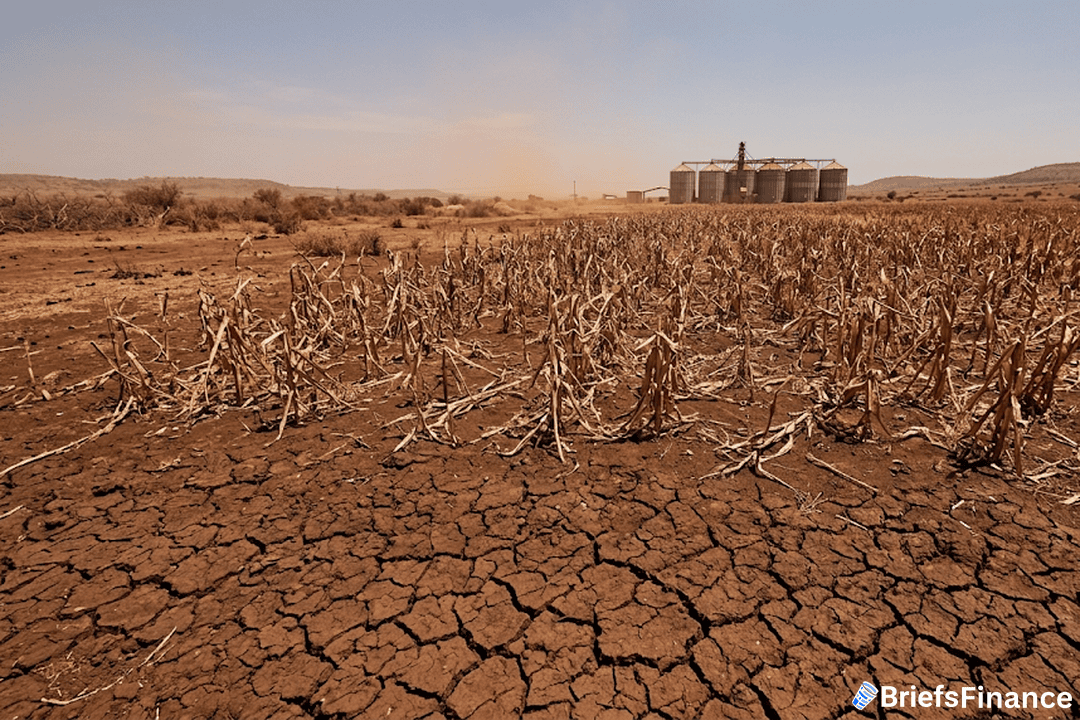
According to the agriculture secretary, the growing season was disrupted when rains arrived earlier than expected, followed by an extended dry period during crucial phases of crop development. This weather pattern severely damaged plant establishment and flowering, particularly in Kenya's primary agricultural regions. Kagwe also noted that the late arrival of subsidized fertilizer, caused by supply chain disruptions related to the war, further reduced crop output.

He warned this would create a cascading effect, since lower earnings would likely diminish farmers' ability to purchase inputs for the next planting season. Both the unfavorable weather conditions and fertilizer delivery delays contributed to this season's reduced harvest, according to Kagwe.

The Import Plan and the Gap

Kagwe said the government plans to import 90-kilogram sacks of maize totaling one million to rebuild its strategic grain reserves following the weak harvest. He shared this information during a statement delivered to lawmakers. The procurement could potentially be executed through a "government-to-government arrangement," he explained.

Get the free Always Be Buying eBook and learn the simple system for building wealth on any income

The proposed import volume of one million bags falls considerably short of the anticipated 5.4 million bag deficit. These calculations were included in Kagwe's presentation to legislators.

The agriculture secretary warned that the anticipated reduction in yields could expand the maize supply gap. He suggested this scenario might necessitate emergency imports or drawing down strategic reserves to maintain market stability.

"The projected depressed yields risk widening the maize deficit in the country, requiring contingency imports or release of strategic reserves to stabilize the domestic demand situation," Kagwe said.

His legislative briefing also covered the projected shortfall figures and emphasized the necessity for prompt policy interventions. He cautioned that the country's maize deficit could grow larger if the expected yield reductions come to pass.

What the Shortage Means for Prices

During June, the cost of maize meal - the primary ingredient for ugali, a dietary staple - varied between 153 shillings ($1.20) and 163 shillings per two-kilogram package, as reported by the minister.

Why This Matters

This corn shortage represents a significant challenge for Kenya's food security, as maize serves as the foundation of the national diet. The gap between the planned imports and the actual deficit suggests that Kenyan consumers may face continued price pressures in the coming months. The government's reliance on intergovernmental agreements for procurement indicates the scale of the shortfall exceeds what commercial markets can readily supply.

With the next harvest season still months away and farmers facing reduced incomes, the situation could persist beyond the current projection period. The combination of climate-related disruptions and input supply chain problems highlights the vulnerability of Kenya's agricultural sector to multiple simultaneous shocks.

Download the free Always Be Buying eBook and start putting your money to work today
Disclosure

Recent News

1 2 3 52

Get Market Briefs delivered to your inbox every morning for free!

No fluff. No noise. No politics. Just finance news you can read in 5 minutes.

Blogs

June 29, 2026
Portfolio Diversification: Why Putting All Your Eggs in One Basket Destroys Wealth
  • Real diversification means spreading investments across all 11 economic sectors plus bonds, alternatives, and cash so no single bet can sink the portfolio.
  • Different sectors perform at different times, so a diversified portfolio captures upswings while smoothing the brutal drawdowns that wipe out concentrated bets.
  • Total market index funds offer the simplest path to diversification, and annual rebalancing is what keeps the structure working over time.
Read More
June 29, 2026
Non Taxable Income: What It Is and Why It Matters
  • Non taxable income is money you receive that you don't owe income tax on.
  • The tax code treats workers, investors, and business owners very differently, and investors often come out ahead.
  • Learning how income is taxed is a quiet superpower for keeping more of what you earn.
Read More
June 29, 2026
Semiconductor Stocks: A Simple Guide for Investors
  • Semiconductor stocks are companies that design and make computer chips, the brains inside nearly every modern device.
  • The AI boom has turned chips into one of the market's most important and most watched groups.
  • They offer big growth potential, but come with high valuations and a notoriously cyclical history.
Read More
June 25, 2026
How Stocks Work: A Simple Guide for Beginners
  • A stock is a slice of ownership in a company - buy one, and you own a piece of the business.
  • You make money two ways: the share price rising over time, and dividends paid to shareholders.
  • The simplest path for most beginners is buying into the whole market through a low-cost index fund.
Read More
June 25, 2026
Stop Loss vs Stop Limit: What's the Difference?
  • A stop loss order sells your stock once it hits a trigger price, prioritizing getting you out.
  • A stop limit order only sells within a price range you set, prioritizing price over a guaranteed exit.
  • The trade-off: a stop loss almost always executes; a stop limit might not if the price moves too fast.
Read More
June 25, 2026
Energy Stocks: A Simple Guide for Investors
  • Energy stocks are companies that produce and supply the power the world runs on, from oil and gas to newer sources.
  • They make up one of the 11 sectors of the market and tend to move with energy prices and big-picture shifts.
  • Like any sector, the key is diversification and understanding the forces driving demand.
Read More
June 18, 2026
What Is a Stop Loss Order? A Simple Guide
  • A stop loss order automatically sells a stock once it falls to a price you set.
  • It's a tool to cap losses or lock in gains without watching the market all day.
  • It works best for active strategies, and can backfire if used carelessly on long-term holdings.
Read More
June 18, 2026
Best S&P 500 Index Fund: How to Choose One
  • The best S&P 500 index fund for most investors is simply the cheapest, most established one that tracks the index well.
  • Funds like VOO, IVV, and SPY all hold the same 500 companies, so the biggest difference is the fee.
  • Pick one, automate your buys, and let time do the heavy lifting.
Read More
June 17, 2026
What Are Penny Stocks? Risks and Rewards Explained
  • Penny stocks are very low-priced shares of very small companies, often trading for just a few dollars or less.
  • They promise huge gains but carry huge risks: low liquidity, high failure rates, and wild price swings.
  • Most investors are better served by quality companies and funds than by chasing cheap shares.
Read More
June 17, 2026
Best Stocks for Beginners With Little Money
  • The best stocks for beginners with little money usually aren't individual stocks at all - they're low-cost index funds.
  • You can start with $100 or less and use small, regular investments to build wealth over time.
  • Focus on diversification and consistency, not on picking the next big winner.
Read More
1 2 3 24
Share via
Copy link













