What the Helios Announcement Actually Means
AMD just fired a pretty clear shot across Nvidia's bow.
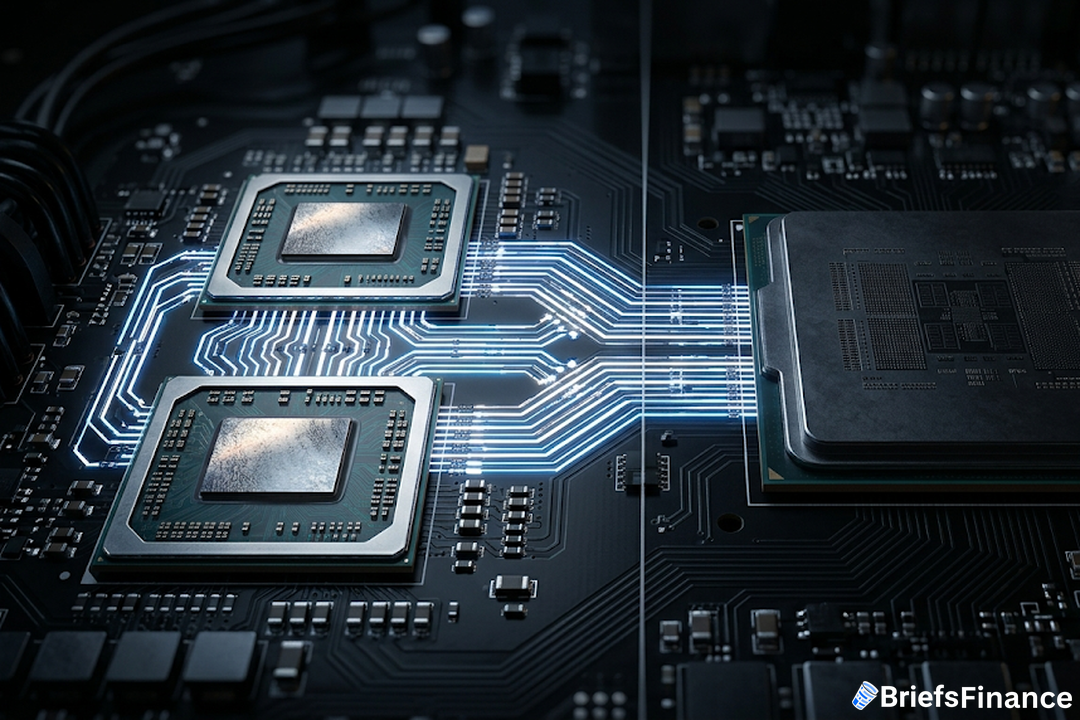
On July 23, CEO Lisa Su announced a partnership with Cerebras, a startup that makes a giant, wafer-sized AI chip. Together they are building a system called Helios. The big idea here is "disaggregated inference" - a fancy way of saying that instead of using the same chip for every part of an AI answer, you split the work across different hardware that is better suited for each step.
Think of it like this. When you ask an AI a question, the first step is understanding what you typed. Then the model has to generate a response.
AMD believes that these two phases are not alike, so they warrant separate types of hardware. Processing a prompt and generating tokens are not the same thing, so why treat them that way?
Su put a number on the claim. She said, "Helios can process up to 30% more inference tokens per dollar than Nvidia's Vera Rubin NVL72 rack." That is a direct comparison against the market leader. It is also the kind of stat that gets the attention of anyone running a data center on a budget.
Get the market news that matters in a five-minute read with Market Briefs, our free daily newsletter
Why the Industry Is Shifting Toward This Approach
This move is not happening in a vacuum.
AI companies have spent the last few years mostly focused on training models - teaching them on huge datasets. That phase is not over, but the focus is shifting toward inference, which is what happens when you actually use the model to generate answers. Every time you type a prompt into ChatGPT or any other AI tool, you are using inference. And as those tools get more popular, inference costs become a much bigger deal.
Investment bank UBS noticed this trend back in June. They wrote a note about the shift toward disaggregated inference, pointing out that Nvidia is already working on similar setups through its acquisition of hardware startup Groq. Amazon Web Services is also exploring the same idea, according to UBS.
The catch is that making different chips work together smoothly is hard. Disaggregated inference creates new challenges in getting all that hardware to talk to each other without bottlenecks or slowdowns. But the potential payoff - lower costs and better performance - is big enough that the industry is pushing forward anyway.
What This Means for Your Portfolio
AMD's Helios announcement is just one piece of a much larger puzzle.
The company already has a long list of big-name customers for its AI infrastructure. OpenAI, Meta, Microsoft, and Oracle all use AMD's chips. On July 22, one day before the Helios news, AMD announced a multibillion-dollar infrastructure partnership with Anthropic, the AI lab behind Claude.
That kind of demand is why AMD is betting big on a shift in how AI hardware works. If disaggregated inference really does deliver better performance for less money, it could put pressure on Nvidia's dominance. And when chip costs come down, the companies that buy those chips - the AI labs, the cloud providers, the tech giants - can spend more on other things or pass savings along to users.
For investors, the takeaway is not about picking a winner between AMD and Nvidia today. It is about watching how the industry evolves. If the approach Helios uses proves out, it could reshape who builds the next generation of AI infrastructure. That ripple could hit a lot of the stocks in your portfolio, whether you own chipmakers directly or hold funds that track the broader tech sector.
Join Market Briefs, our free daily newsletter, for a quick daily rundown of the markets