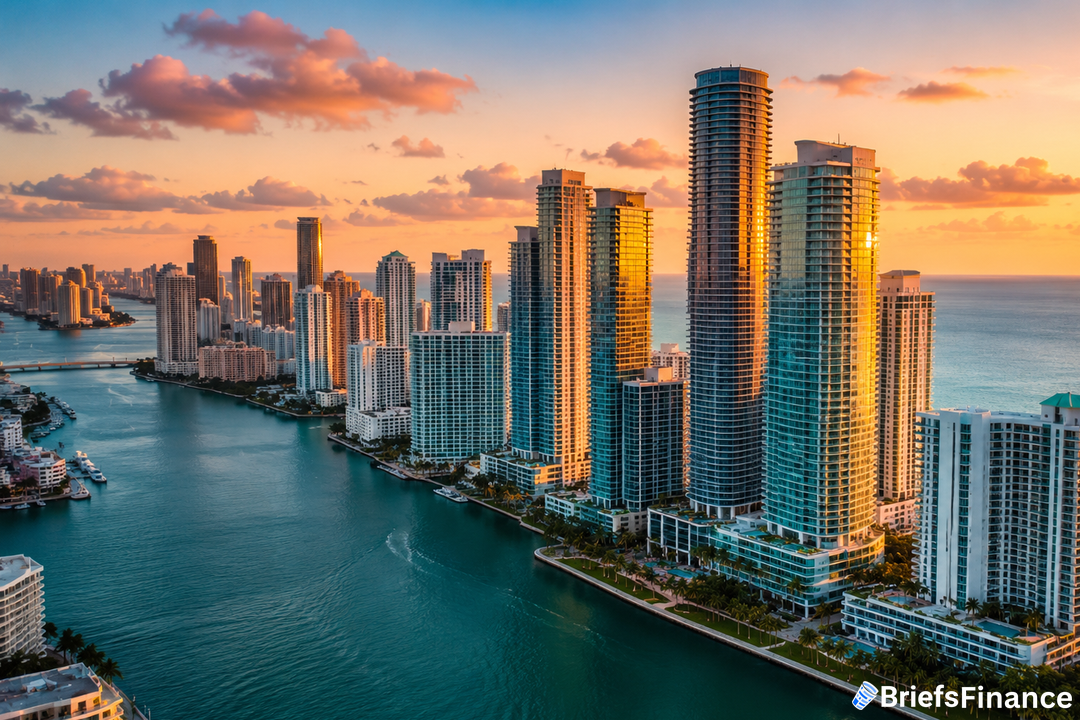
The Switch Nobody Saw Coming
For decades, New York City was the gold standard for expensive living in America. High rents, high taxes, high everything. But the math has flipped.
What caused this shift? Rising property taxes, skyrocketing insurance costs, and general inflation have turned South Florida into a uniquely pricey region.
Since 2019, consumer prices in the region have jumped 36%. That surge ranks second only to Tampa among large U.S. markets for inflation. The biggest driver? Housing.
Insurance, Restaurant Bills, and the Income Gap
Housing is not the only thing eating Miami budgets. Homeowners insurance is brutal.
Get the market news that matters in a five-minute read with Market Briefs, our free daily newsletter
Everyday costs are higher too. The average restaurant bill per person in Miami is $94, up 4% from a year ago. In New York, the comparable bill is $79. So dinner out in Miami costs more than in New York.
Here is the kicker: the typical Miami-area household earns about $1,000 less than the U.S. median. So people are paying more for everything while earning less. Florida has no state income tax, which helps, but it is clearly not enough to offset the other costs.
This cost shift reflects a broader realignment. During the pandemic, many professionals relocated from high-tax states to Florida, driving up demand for housing. However, local wages did not keep pace, creating a squeeze. Meanwhile, Florida's vulnerability to hurricanes has caused insurance rates to skyrocket, further widening the gap between income and expenses.
What Could Change - And What Voters Decide Next
But 60% is a high bar. And the amendment only addresses property taxes, not the other costs driving the gap - insurance premiums, restaurant prices, or the fact that Miami incomes still trail the national average.
The Miami-New York cost inversion underscores how post-pandemic migration has reshaped regional economics. While many moved to Florida seeking lower taxes and warmer weather, the influx has strained housing supply and infrastructure, leading to higher costs that local wages have not matched. Meanwhile, Florida's exposure to climate risks continues to push insurance premiums upward, making affordability a persistent challenge.
The pandemic-era migration wave that brought thousands of new residents to Florida has reshaped the state's economy. Many newcomers from high-tax states like New York and California purchased homes with cash, driving up prices beyond what local wages could support. At the same time, the state's rapid population growth has strained infrastructure, from roads to schools, adding further pressure on the cost of living. These structural shifts have made South Florida a cautionary tale of how even tax-friendly states can become expensive when demand outstrips supply.
Join Market Briefs, our free daily newsletter, for a quick daily rundown of the markets