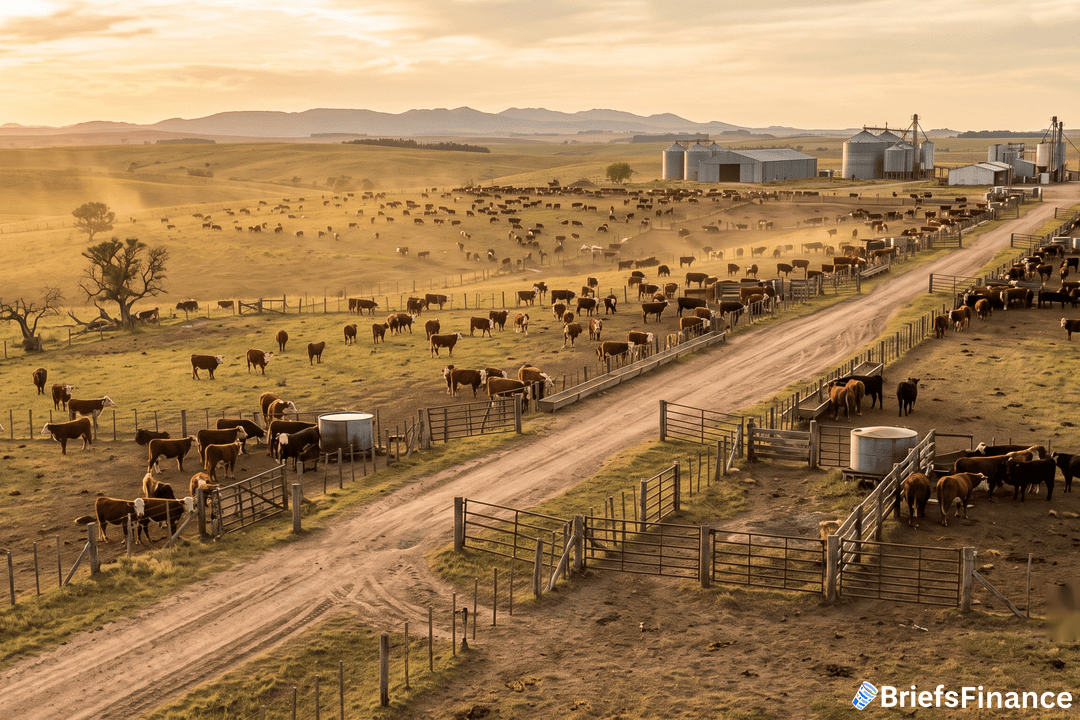
Argentine ranchers are shipping record amounts of beef to the United States. At home, steak lovers are paying the price. A trade deal designed to lower U.S. meat prices is squeezing Argentine families just as President Javier Milei faces re-election.
The Deal That Changed the Market
In April, Argentine beef sales to the United States rose 204% compared to the same month last year. The reason: Trump pushed for a bigger quota to bring down beef prices before the US midterm elections.
The quota expansion opened a vast new market for Argentine producers who had previously relied heavily on China.
Santiago Escales, export manager of meatpacker Grupo Lequio, said the larger quota changes everything. "When the quota is limited, you reserve it for the highest-value products to maximize profitability. "But once it becomes so much bigger, you stop worrying about whether to use it for one particular cut or another - you can ship everything. It opens up a lot more opportunities"."
Get your free investing masterclass bonus when you join Market Briefs, our free daily newsletter
Grupo Lequio shipped 3,000 tons to the U.S. between January and April - the same volume it exported in all of last year. The U.S. paid $8.25 per kilogram for Argentine beef in April. China paid $6.24 per kilogram. So ranchers shifted sales away from China, where shipments dropped 32% in April.
The Squeeze on Argentine Dinner Tables
Higher export prices set a new benchmark for beef inside Argentina. Emmanuel Álvarez Agis, an economist at consultancy PxQ, said: "Gaining access to a high-income market like the US piles on pressure as local prices immediately start converging up toward export prices." The beef production cycle intensifies this effect by reducing slaughter numbers, as farmers retain more cows for breeding, thus tightening supply.
Meanwhile, the U.S. cattle herd is at its lowest point in 75 years, helping push U.S. ground beef prices to a record high in May. So even with more Argentine beef arriving, American shoppers haven't seen relief.
What to Watch
President Milei must now balance free-trade benefits against voter anger over expensive steaks. Pablo Rivero, owner of famous Buenos Aires steakhouse Don Julio, is betting on U.S. demand. He is opening a new bistro called Graciela in New York's West Village, partly because the bigger quota lets him import his own quality meat.
"American beef tends to be slightly sweeter, while ours has a deeper, more intense flavor," Rivero said. But for Argentine workers, that deeper flavor is getting harder to afford. "Argentina used to be an outlier when it came to beef prices and domestic consumption - there was an abyss between us and the rest of the world," Santiago Escales noted. "Today, things are becoming more rational, though that obviously creates other challenges."
Milei's free-market reforms have opened the economy but also exposed households to global price pressures. With annual inflation above 200% and the peso repeatedly devalued, export earnings in dollars become increasingly attractive to producers, further driving local prices upward. The historic low in U.S. cattle numbers means that even increased Argentine imports have not lowered American ground beef costs, underscoring how supply constraints ripple across borders.
Subscribe to Market Briefs, our free daily newsletter, and claim your bonus investing masterclass