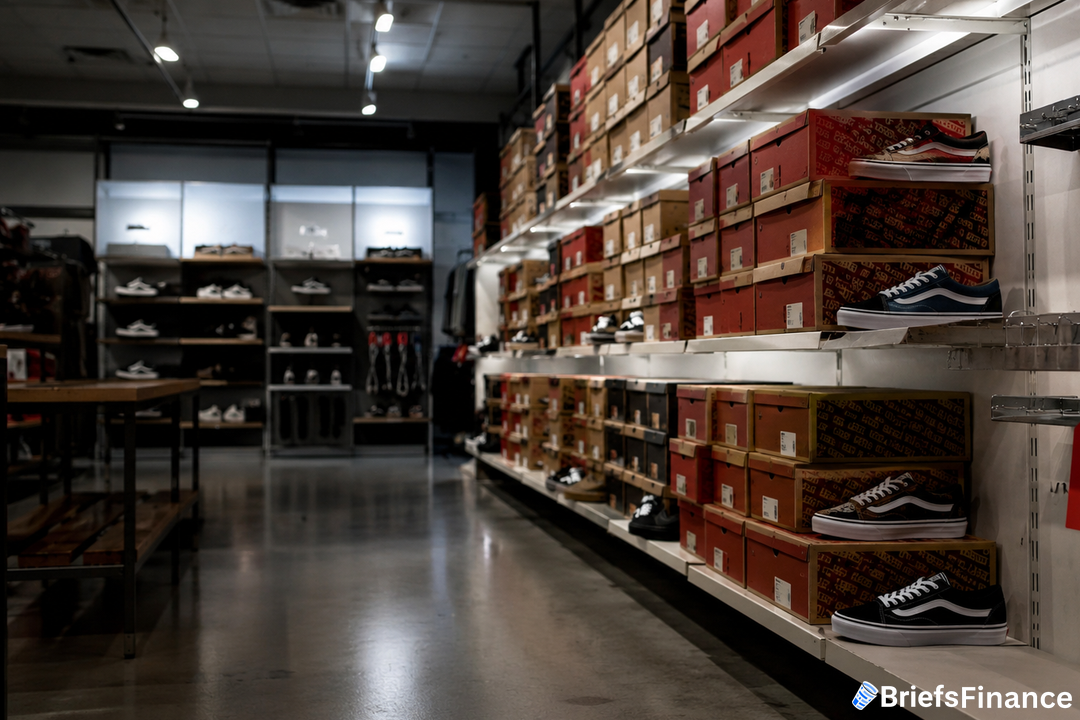
Vans Keeps Dragging Down VF
VF Corp owns Vans, The North Face, and Timberland. And management expects a similar decline in the current quarter.
Up until the selloff, VF shares had risen by under 1% year-to-date based on the previous day's closing price.
CEO Bracken Darrell expressed confidence that Vans sales will pick up later this year, driven by growth in wholesale and direct-to-consumer channels.
Truist's Joseph Civello noted that although executives are optimistic about wholesale momentum for Vans in the coming months, he considers it a "show-me story."
Get the market news that matters in a five-minute read with Market Briefs, our free daily newsletter
VF's efforts to revive Vans are happening as the sneaker brand confronts intense competition and shifting consumer preferences. The company has slashed costs and redesigned products, but the 9% sales decline indicates recovery is still elusive. The raised full-year forecast partly stems from strength in The North Face and Timberland, yet investors remain skeptical about the second-half wholesale rebound that management expects.
VF Corp's heavy dependence on Vans has been a double-edged sword: the brand once drove growth but now accounts for a significant drag on results. Meanwhile, The North Face and Timberland have performed well but cannot fully compensate for Vans' weakness, leaving the parent company vulnerable to any further deterioration in the sneaker brand's performance.
To counter the decline, VF has invested in marketing campaigns and new product launches, including collaborations with artists and influencers. The company has also expanded Vans' direct-to-consumer channels and improved its e-commerce platform. However, these initiatives have not yet reversed the sales slide, and the brand continues to lose ground to competitors like New Balance and Skechers, which have gained traction with younger demographics.
North Face Offers a Bright Spot
The North Face posted a 4% revenue increase, but VF forecasts its second-quarter sales will be roughly flat year-over-year. Timberland also delivered better-than-expected revenue, helped by robust demand in the Americas.
Bloomberg Intelligence analyst Abigail Gilmartin wrote: "VF's raised fiscal 2027 sales outlook suggests its reset is progressing, though weaker-than-expected profitability and the uncertain Vans recovery temper the improvement."
VF has long relied on Vans for a significant share of its revenue, but the brand's slide has weighed heavily on the parent company's stock. The North Face and Timberland have provided some cushion, yet neither is large enough to fully offset Vans' struggles. The company has also been working to reduce inventory and streamline operations, but investors are waiting for tangible proof that the Vans brand is stabilizing.
Leadership Changes Add to the Uncertainty
VF is also navigating a shakeup in its executive ranks. Paul Vogel will stay on in an advisory capacity while the transition unfolds. Abhishek Dalmia, currently serving as chief operating officer, will assume the additional responsibilities of CFO.
Join Market Briefs, our free daily newsletter, for a quick daily rundown of the markets