A $2 Billion Bet on a More Complicated World
Shipping a box from one city to another sounds simple. But the companies that make everything from medicine to phones have to move parts and products across borders, through customs, and into the hands of people who need them fast. That's getting harder, not easier.
UPS knows this. That's why the delivery giant is spending more than $2 billion on its international, healthcare, and supply chain operations.
The spending started in 2024 and runs through 2028. Scott Szwast, UPS's vice president of international strategy, said the aim is to give businesses more speed and flexibility when the economy throws a curveball.
"These investments are really aligned to one of our big strategic areas of focus, which is creating capabilities to enable our customers, particularly in complex industries, to more effectively run their global supply chains," Szwast said.
Where the Money Goes
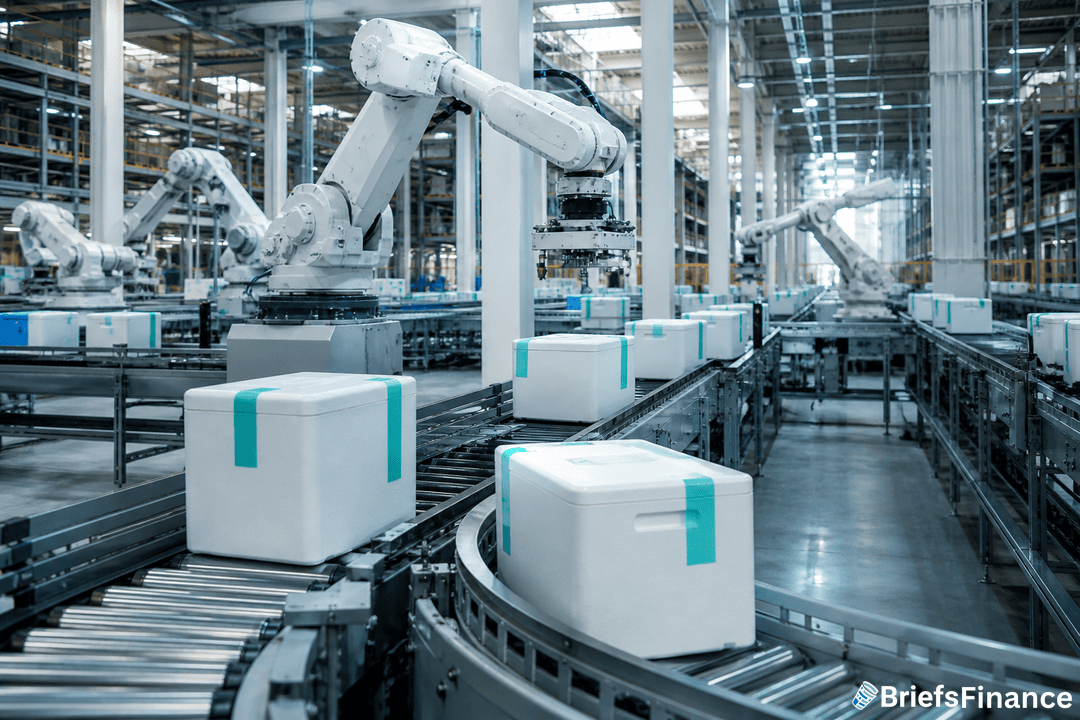
Some of that cash is already at work. UPS opened a technology-driven logistics center in Taiwan that uses automation and robotics to shave one day off the total supply-chain time. In Amsterdam, a new facility handles freight, brokerage, and cold-chain services.
Supply chain shifts create opportunities, so grab the free Always Be Buying E-Book to start investing
More is on the way. A Philippines hub opens this year. An Ontario, Canada, facility follows next year. And a major air-cargo hub at Hong Kong International Airport is set for 2028.
To keep up with demand, UPS now flies five times a week on both the Paris-Hong Kong and Shenzhen-Sydney routes.
Szwast says companies are realizing their supply chains are not always built with intention. "What they find in a lot of cases is that their supply chains look more like their histories than their strategies," he said. They've built operations piece by piece, often in a rush, and now they're stuck with a tangle of systems that don't talk to each other.
What It Means for Your Medicine Cabinet
The push isn't just about moving boxes faster. It's about moving the right boxes the right way. Take healthcare. UPS recently announced $48 million for temperature-controlled facilities across its network.
That money will fund 27 sites designed to keep medications cold, including the popular GLP-1 drugs used for diabetes and weight loss.
That matters because more and more medicines need to stay at a specific temperature from the factory to your front door. A single warm afternoon can ruin an entire shipment. By building more of these specialized sites, UPS is betting that healthcare companies will keep trusting it with their most delicate products.
Szwast says companies are also trying to avoid putting all their operational eggs in one basket. They're introducing new products with new shipping needs faster than ever before. "They need very agile, very effective solutions to connect these new parts of their businesses," he said.
So what does this mean for you? If you're a patient waiting on a prescription or a small business shipping goods across the ocean, faster and smarter shipping can mean fewer delays and fewer surprises. That's the whole point of the investment: to make the invisible machine behind your next package a little more reliable.
When logistics get complicated, download the Always Be Buying E-Book for a steady wealth plan