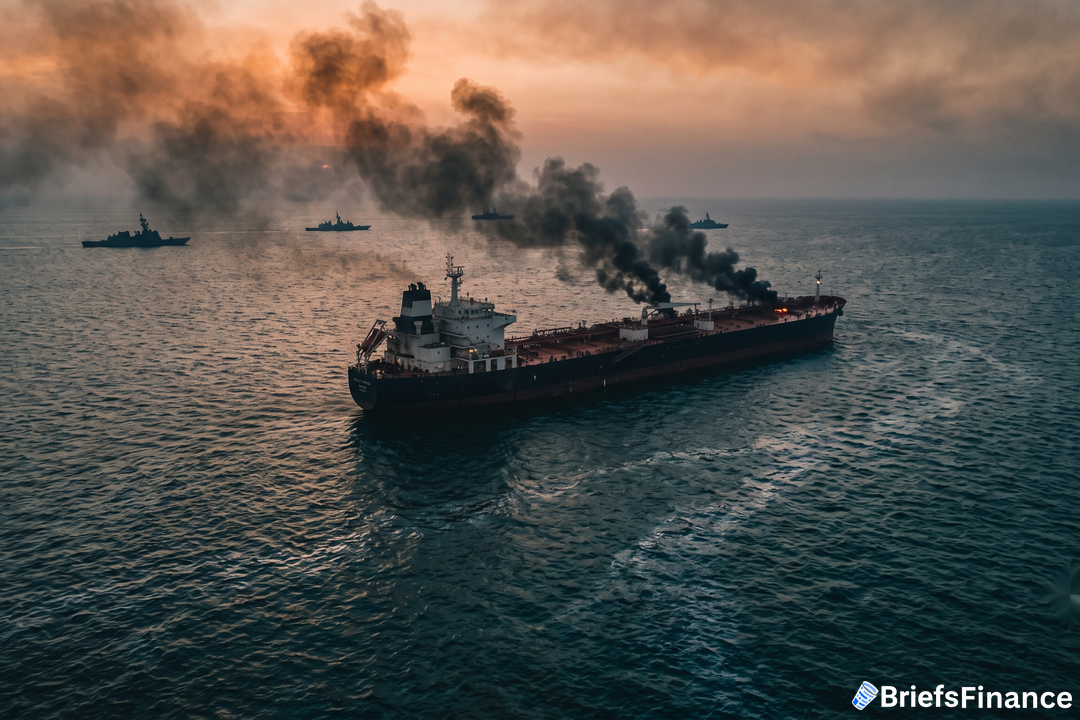
A June agreement to reopen the Strait of Hormuz was supposed to calm tensions. Instead, the U.S. is now bombing Iran for the third time in a single week.
The Latest Attack
Defense Secretary Pete Hegseth issued a public statement, declaring: "Iran made a poor choice. Now they pay."
Centcom added: "In response, the United States is imposing a heavy cost by continuing to degrade Iran's ability to attack civilian mariners and commercial ships freely transiting the strait."
The Failed Agreement
The current crisis stems from a memorandum of understanding signed on June 17, 2026, between the U.S. and Iran. Under that deal, Iran agreed not to charge a toll for ships using the strait for 60 days. However, the accord lacked a clear definition of how vessel traffic should be managed.
Get the market news that matters in a five-minute read with Market Briefs, our free daily newsletter
This ambiguity created a dangerous vacuum. Without a clear framework, both sides interpreted the terms differently, and Iran soon resumed aggressive actions in the strait. Former U.S. State Department special envoy David Goldwyn said: "The underlying problem here is that the memorandum of understanding did not reach an understanding with respect to the management of ship traffic through the strait. It essentially punted that issue."
Energy Secretary Chris Wright, speaking on June 24, 2026, said: "Iran will not have the ability to close the Strait of Hormuz going forward. That's their key leverage and we're taking that leverage away from them."
Approximately one-fifth of the world's daily petroleum supply moves through the Strait of Hormuz, making it a vital maritime chokepoint for global oil shipments. Previous U.S. administrations worked to keep the waterway open, but tensions escalated after Iran began imposing tolls on transiting vessels earlier this year. The June memorandum was an attempt to de-escalate, but the lack of a detailed traffic management plan undermined the effort.
The dispute over tolls and transit rights had been simmering for months, with Iran arguing that it had a sovereign right to charge for passage through its territorial waters, while the U.S. and its allies maintained that the strait is an international waterway that must remain free and open. This fundamental disagreement over legal principles set the stage for the breakdown of the June accord and the subsequent military escalation.
Diplomatic Moves and What's Next
Diplomats are scrambling. Iran's Foreign Minister Abbas Araghchi met in Oman with his counterpart, Sayyid Badr bin Hamad Al Busaidi. France and the United Kingdom are examining proposals for voluntary navigational fees in the strait, subject to approval from the UN's International Maritime Organization.
For now, the strait remains closed, and the U.S. continues its airstrikes.
Join Market Briefs, our free daily newsletter, for a quick daily rundown of the markets