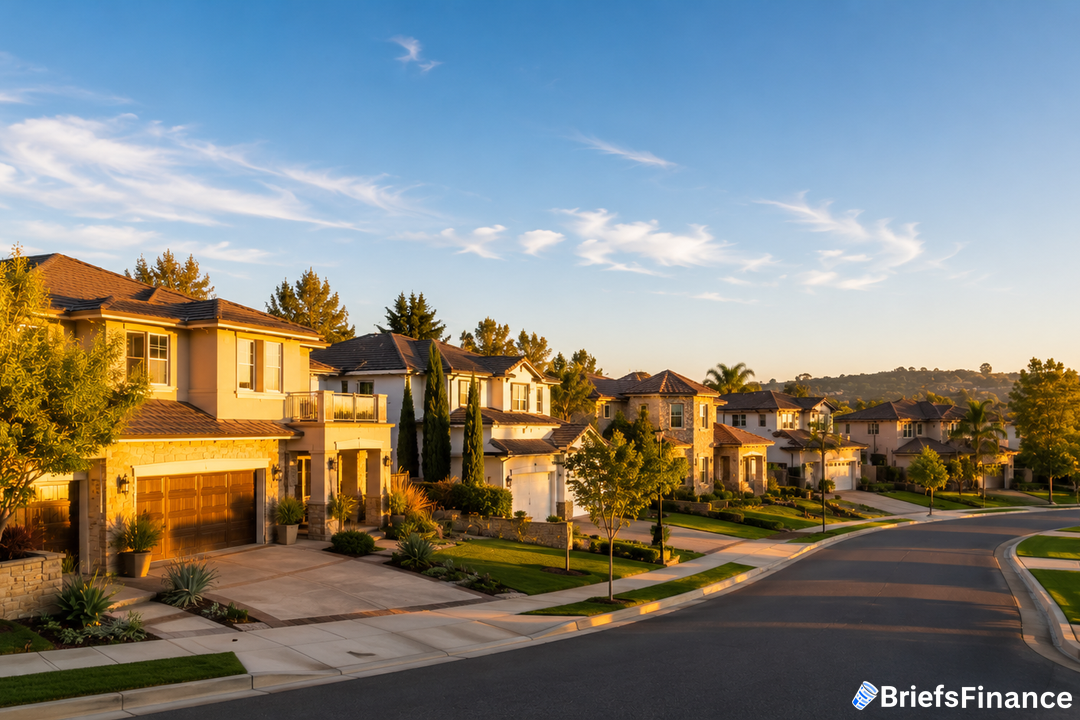
Sales and Listings: Slow Growth, Slight Pullback
Properties are spending slightly more time listed for sale, with the median time on market rising to 39 days, one day more than a year earlier.
Prices: Record High, but Far Above Pre-Pandemic Levels
Home prices have climbed more than 36% since the start of the pandemic, when the median sale price was $258,500 in the four-week period from end of 2019 to start of 2020. San Francisco led the 50 largest metro areas with an 11.5% rise in sale prices, while Detroit came second at 9.7%. At the other end, San Jose saw the largest decrease at -6.2%, and Seattle dropped -4.8%.
The pandemic-era housing boom was fueled by historically low mortgage rates, which dipped below 3% in 2020 and 2021, along with a shift to remote work that increased demand for suburban homes. That combination drove prices up rapidly, but the subsequent rate hikes have reversed those conditions.
Get your free investing masterclass bonus when you join Market Briefs, our free daily newsletter
Why the Shift? Mortgage Rates and Inflation
Mortgage rates have been hovering around 6.5% for weeks. "That level is discouraging many potential homebuyers," noted housing analyst Mark Peterson. Homes taking longer to sell is a sign that higher borrowing costs are cooling demand.
Inflation data also suggests little near-term relief for rates.
What to Watch
The U.S. housing market is now considered a buyer's market, giving homebuyers more negotiating power. Home prices are expected to keep rising gradually, but the 2.5% annual increase is modest compared with pandemic-era spikes.
However, the Federal Reserve's aggressive rate hikes to combat inflation have pushed mortgage rates to around 6.5%, dramatically increasing monthly payments. This has forced many potential buyers to the sidelines while existing homeowners, locked into low-rate mortgages, are reluctant to sell. As a result, inventory remains tight even as demand softens, forming a fragile balance that could be altered by any monetary policy change.
The current market, with its record-high prices and weak buyer activity, shows that the housing sector is still adapting to conditions after the pandemic.
These trends mark a clear departure from the frenzied bidding wars of 2021. During the pandemic, ultralow mortgage rates and a rush for more space drove prices up at double-digit annual rates. Now, with rates roughly three percentage points higher and inflation eating into budgets, many would‑be buyers have pulled back. At the same time, sellers are reluctant to list because they would trade a low-rate mortgage for a much higher one, keeping inventory tight.
Subscribe to Market Briefs, our free daily newsletter, and claim your bonus investing masterclass