Free NewsletterPro Login
S&P 500 6,287 +0.42%
DOW 44,521 -0.18%
NASDAQ 21,103 +0.71%
S&P 500 +12.4%
Briefs Finance Fund +24.8%
JOIN THE FUND →

Trump Revives Campaign Pledge to Cap Credit Card Rates at 10%

A stylized illustration of a cylindrical cup with blue arrows and lines indicating a swirling or rotational motion inside the cup.
Published Jan 10, 2026
[tts_player]
Share:
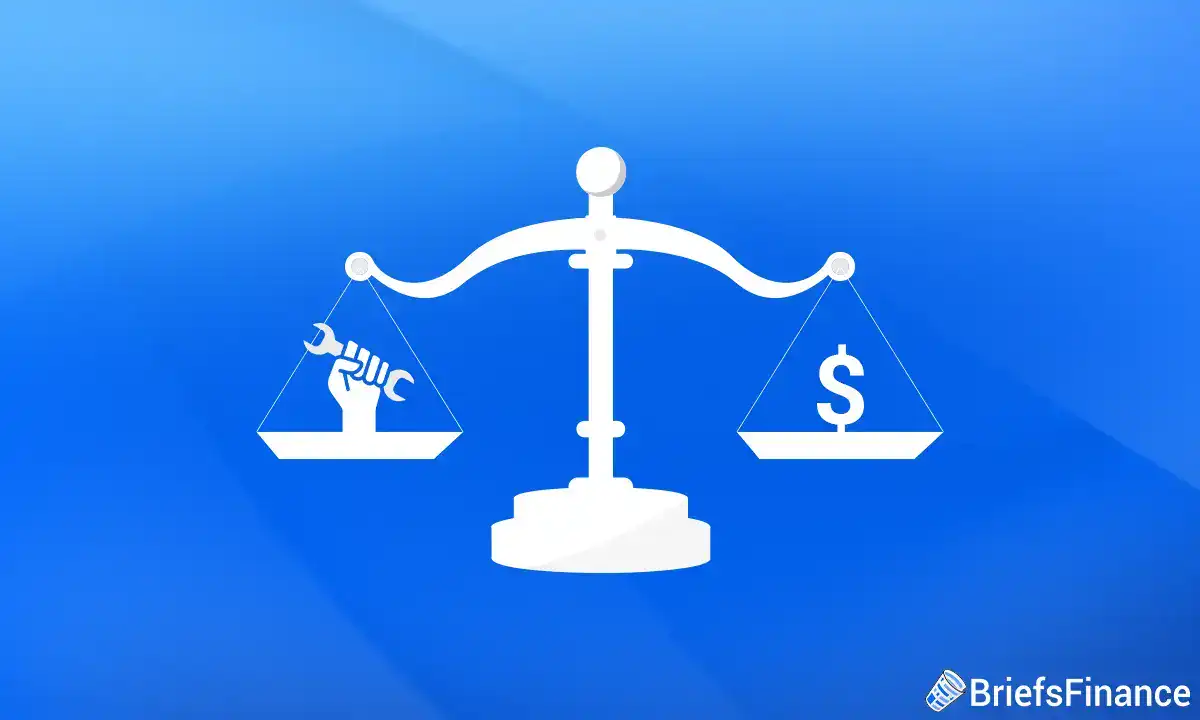
A white balance scale on a blue background with a wrench and fist on one side and a dollar symbol on the other. BriefsFinance logo in the bottom right corner.
Summary:
  • Trump called for one-year 10% credit card rate cap starting Jan. 20, 2026, without implementation details
  • Banking groups warn cap would "reduce credit availability" and push consumers to costlier alternatives
  • Sen. Warren says call is "meaningless without a bill," while bipartisan lawmakers have introduced 10% cap legislation

The Announcement

President Trump said Friday he was calling for a one-year cap on credit card interest rates at 10% starting January 20. But he did not provide details on how his plan would come to fruition or how he planned to make companies comply.

"Effective January 20, 2026, I, as President of the United States, am calling for a one year cap on Credit Card Interest Rates of 10%," Trump wrote on Truth Social.

"Please be informed that we will no longer let the American Public be 'ripped off' by Credit Card Companies," he added.

The Problem

Trump also made the pledge during the 2024 campaign, which he won. But analysts dismissed it at the time, saying such a step required congressional approval.

In his post, Trump did not offer explicit support to any specific bill. There have been some legislative efforts in Congress to pursue such a proposal, but they are yet to become law.

The White House did not immediately respond to a request for comment on details of the call from Trump. It said on social media without elaborating that the president was capping the rates.

The Congressional Reality

Sen. Elizabeth Warren, a Democrat on the Senate Banking Committee, said Trump's call was meaningless without a bill being passed by Congress.

"Begging credit card companies to play nice is a joke. I said a year ago if Trump was serious, I'd work to pass a bill to cap rates," Warren said. She criticized Trump's attempts to gut the U.S. Consumer Financial Protection Bureau.

Opposition lawmakers have criticized Trump, a Republican, for failing to deliver on his campaign pledge.

The Bipartisan Bills

Lawmakers from both the Democratic and Republican parties have raised concerns about high rates and have called for those to be addressed. Republicans currently hold a narrow majority in both the Senate and House of Representatives.

Independent Sen. Bernie Sanders of Vermont and Sen. Josh Hawley of Missouri, a Republican, have previously introduced bipartisan legislation to cap credit card interest rates at 10% for five years. This bill explicitly directs credit card companies to limit rates as part of broader consumer relief legislation.

Democratic Rep. Alexandria Ocasio-Cortez of New York and Republican Rep. Anna Paulina Luna of Florida have also introduced a House bill to cap credit card interest rates at 10%, reflecting cross-aisle interest in addressing high rates.

The Banking Response

Some major U.S. banks and credit card issuers like American Express, Capital One Financial, JPMorgan Chase, Citigroup and Bank of America did not respond to a request for comment.

Some banking advocacy groups said in a joint statement that a 10% interest rate cap would "reduce credit availability" and "only drive consumers toward less regulated, more costly alternatives."

The statement came from the Consumer Bankers Association, Bank Policy Institute, American Bankers Association, Financial Services Forum and Independent Community Bankers of America.

The Criticism

Billionaire fund manager Bill Ackman, who endorsed Trump in the last elections, said on X the president's call was a "mistake."

The Irony

Last year, the Trump administration moved to scrap a credit card late fee rule from the Biden era.

The Trump administration asked a federal court to throw out a regulation capping credit card late fees at $8, saying it agreed with business and banking groups that alleged the rule was illegal. A federal judge subsequently threw out the rule.

The Bottom Line

Trump called for a one-year 10% credit card rate cap starting January 2026 without providing implementation details or supporting specific legislation, prompting Warren to dismiss it as "meaningless" while banking groups warn it would reduce credit availability despite bipartisan bills already introduced by Sanders, Hawley, Ocasio-Cortez and Luna.

Disclosure

Recent News

1 2 3 27

Get Market Briefs delivered to your inbox every morning for free!

No fluff. No noise. No politics. Just finance news you can read in 5 minutes.

Blogs

June 18, 2026
What Is a Stop Loss Order? A Simple Guide
  • A stop loss order automatically sells a stock once it falls to a price you set.
  • It's a tool to cap losses or lock in gains without watching the market all day.
  • It works best for active strategies, and can backfire if used carelessly on long-term holdings.
Read More
June 18, 2026
Best S&P 500 Index Fund: How to Choose One
  • The best S&P 500 index fund for most investors is simply the cheapest, most established one that tracks the index well.
  • Funds like VOO, IVV, and SPY all hold the same 500 companies, so the biggest difference is the fee.
  • Pick one, automate your buys, and let time do the heavy lifting.
Read More
June 17, 2026
What Are Penny Stocks? Risks and Rewards Explained
  • Penny stocks are very low-priced shares of very small companies, often trading for just a few dollars or less.
  • They promise huge gains but carry huge risks: low liquidity, high failure rates, and wild price swings.
  • Most investors are better served by quality companies and funds than by chasing cheap shares.
Read More
June 17, 2026
Best Stocks for Beginners With Little Money
  • The best stocks for beginners with little money usually aren't individual stocks at all - they're low-cost index funds.
  • You can start with $100 or less and use small, regular investments to build wealth over time.
  • Focus on diversification and consistency, not on picking the next big winner.
Read More
June 16, 2026
Tech Stocks: A Simple Guide for New Investors
  • Tech stocks are companies in the information technology and related sectors, from software to chips to the internet giants.
  • They've driven much of the market's growth, but they can be volatile and richly valued.
  • The smart approach is to understand what you own and not let one sector run your whole portfolio.
Read More
June 16, 2026
What Is a Joint Stock Company? A Simple Guide
  • A joint stock company is a business owned by many people, each holding shares of stock that represent a slice of ownership.
  • It's the basic idea behind every public company you can buy on the stock market today.
  • Owning a share makes you a part-owner, entitled to a piece of the profits and growth.
Read More
June 16, 2026
Capital Gains Tax in California: A Simple Guide
  • Capital gains tax is what you owe when you sell an investment for more than you paid for it.
  • How long you held it matters: long-term gains are taxed more gently than short-term gains at the federal level.
  • Smart investors lower the bill with tools like tax-loss harvesting and holding for the long run.
Read More
June 15, 2026
Top Covered Call ETFs: How to Compare Them
  • Top covered call ETFs are income funds that own stocks and sell call options against them to generate steady cash.
  • The best one for you is the fund whose income, holdings, and fees fit your goals, not simply the one with the flashiest yield.
  • They all share one trade-off: more income today, less upside in a big rally.
Read More
June 15, 2026
What Are Stock Options? A Plain-English Guide
  • Stock options are contracts that give you the right, but not the obligation, to buy or sell a stock at a set price by a set date.
  • There are two kinds: calls (the right to buy) and puts (the right to sell).
  • Options can multiply gains or wipe out your money fast, so they suit investors who already know the basics.
Read More
June 15, 2026
EBITDA Margin: What It Is and How to Calculate It
  • EBITDA margin measures how much core profit a company keeps from each dollar of sales, before interest, taxes, and accounting deductions.
  • The formula is EBITDA divided by revenue, shown as a percent.
  • A higher, steadier EBITDA margin usually signals a more efficient, more durable business.
Read More
1 2 3 23
Share via
Copy link









