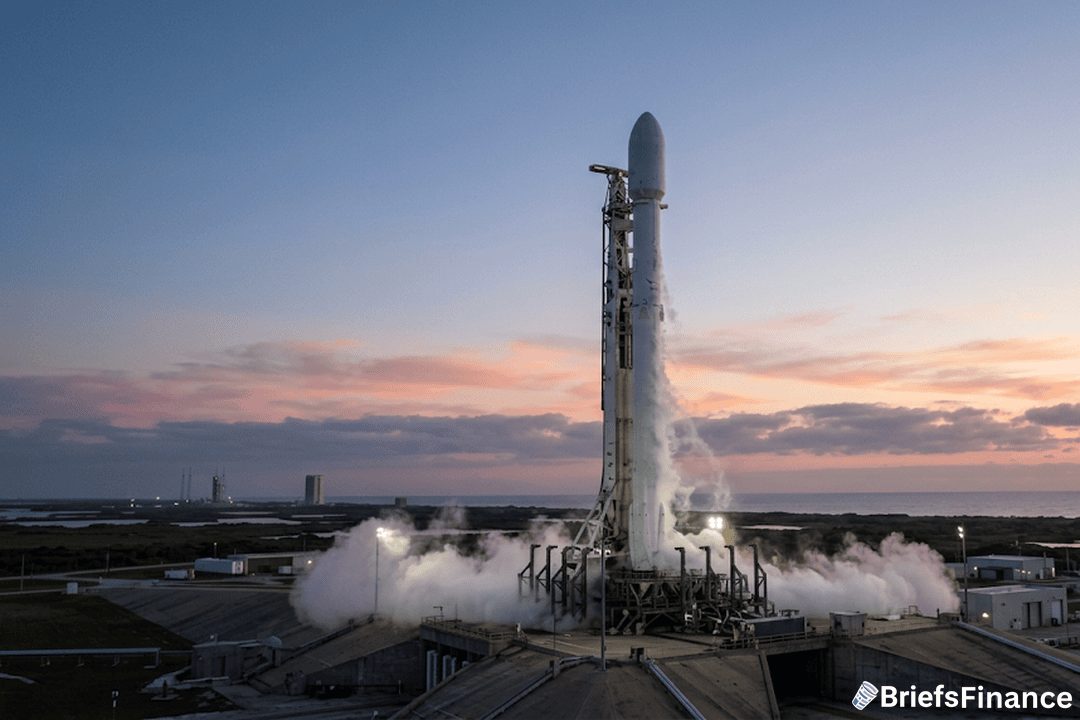
The First Lockup Expires Aug. 6
Time to define the word at the center of this story. A lockup is a waiting period after a company's IPO, or first sale of stock to the public, when early shareholders are not allowed to sell their stock, so the public market doesn't get swamped the moment the stock starts trading.
SpaceX's initial lockup restrictions expire Aug. 6, 2026. When that date arrives, early investors can sell just over 911 million shares - roughly 7% of all outstanding stock - and this block is larger than the 639 million shares SpaceX sold in its record-setting IPO.
This is not a small test. Greg Martin, co-founder of Rainmaker Securities, told CNBC that the lockup's expiration may matter more for the stock's "near-term path" than the company's underlying business or strategy.
The Stock Is Already Under Pressure
SpaceX stock has been sliding for weeks, even though it rose to $150 when it debuted on Nasdaq in June and then ripped past $225 within days. By Wednesday, the stock had fallen to $108.27, a closing low that was less than half its mid-June high.
Late Tuesday, SpaceX released its first earnings report as a public company. It showed capital spending, the money poured into things like buildings and equipment, came in at more than double its revenue, and the stock fell sharply after that report.
Get the free Always Be Buying eBook and learn the simple system for building wealth on any income
After that first release, another 319 million shares become eligible on Aug. 20, with around 700 million more available in September and a similar-size block due in October. Elon Musk, the world's richest person, owns more than 6 billion SpaceX shares, but his stake stays locked up until June 2027.
Not everyone expects all those shares to hit the market at once. In a Wednesday report, Mizuho analysts said the potential increase in shares for sale is significant, but shares becoming available to sell does not mean all of them will be sold.
One Early Investor Has Already Decided to Sell
The clearest signal comes from Jessie Bates III, a 29-year-old safety for the Atlanta Falcons. Bates has chosen to sell his entire SpaceX stake, saying he wants to "lock in gains."
Bates bought his stake in 2022 for about $150,000, when SpaceX was valued at $127 billion; at today's $1.43 trillion valuation, his stake is worth more than $1.5 million. That is the kind of return that makes selling feel rational.
His investment manager is Michael Ledo, CEO of RISE Family Office, which describes its work as "helping athletes build lasting wealth, become business leaders and build strong families." Bates also owns stakes in other private companies, including Cart.com, Turo, OpenAI, Anthropic and Databricks, and he said future strategic acquisitions might tempt him back into SpaceX.
What It Means for Your Portfolio
The bigger point is about supply and demand: when a group of insiders gets the green light to sell, some of them will, and that can put a stock under pressure. SpaceX already trades under the symbol SPCX, so this is not just a private-market curiosity anymore.
Even so, the size of the August unlock is enough to test how much demand exists for the stock.
For anyone watching this stock, the next few weeks will answer a simple question: can SpaceX absorb the wave? Before the IPO, SpaceX committed to a $60 billion purchase of Cursor that is slated to close this quarter, and its February combination with Musk's xAI put the combined company's value at $1.25 trillion, so the narrative around the stock is shifting even as shares unlock.
None of that makes the lockup less important. It just means the stock is being tested by both the headlines and the rules of who is allowed to sell, so that is worth watching closely.
Download the free Always Be Buying eBook and start putting your money to work today