Free NewsletterPro Login

Paxos Just Became The First Blockchain Firm Cleared To Settle U.S. Stocks

Published Jun 1, 2026
Share:
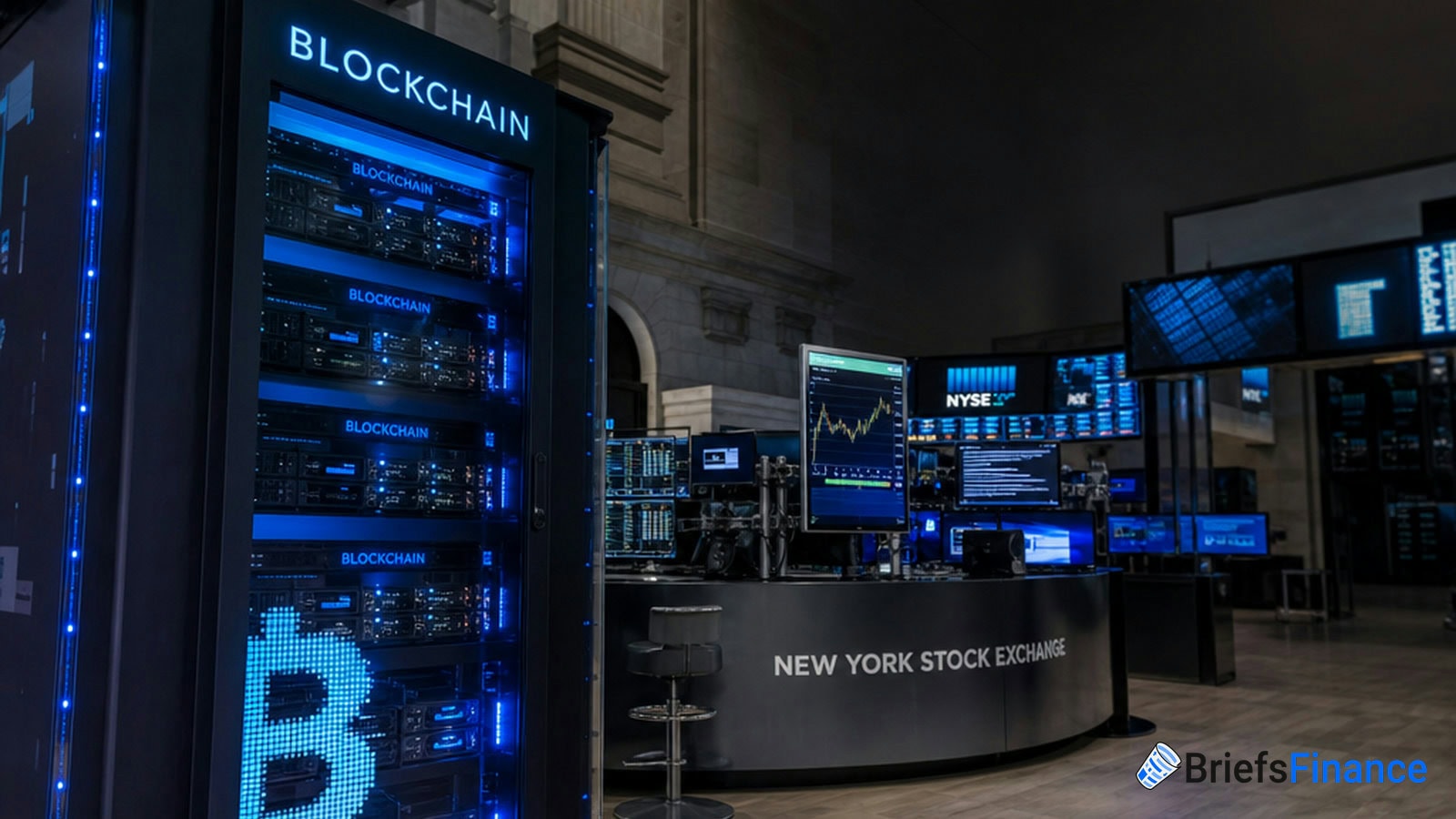
A modern trading floor at the New York Stock Exchange features blockchain servers, digital monitors, and financial data displays.
Summary:
  • Paxos Securities Settlement Company received SEC registration as a central securities depository, making it the first blockchain firm legally cleared to settle U.S. stock trades.
  • The blockchain-based system can shrink settlement from the current one-business-day standard to near-instant, freeing up billions in capital that banks currently hold as collateral overnight.
  • The approval removes a key regulatory barrier for tokenized real-world assets, with the next question being whether major banks and brokerages route trades through Paxos or stick with DTCC.

Stock trades happen in milliseconds, but settling them takes a full business day. Paxos just got the SEC's blessing to skip that gap - making it the first blockchain firm ever cleared to do so.

What The SEC Just Approved

Paxos Securities Settlement Company - a subsidiary of stablecoin issuer Paxos - now has full SEC registration to act as a central securities depository. That's the same role the Depository Trust & Clearing Corporation (DTCC) has held for decades as the plumbing behind every U.S. stock trade.

The difference: Paxos runs on a blockchain, which means trades can clear same-day or close to instant instead of waiting a full business day for cash and ownership to change hands.

That one-day delay is called T+1, a rule the U.S. adopted in 2024 to speed up from the old T+2 standard. Paxos is now positioned to shrink that gap close to zero.

Every morning, Market Briefs breaks down moves like this in five minutes - plus a free investing masterclass when you sign up.

Why Banks Care

Think of clearing like the escrow on a house sale - the buyer wires the money, the seller signs over the deed, and a middleman makes sure both sides actually deliver. For stocks, that middleman has almost always been DTCC, which handles trillions in trades every single day.

While the trade itself takes a fraction of a second, the money and the ownership don't move until the next day, leaving billions in cash locked up at banks as collateral.

That trapped capital can't be loaned out, invested, or used for anything else - and Paxos says it can shrink that holding window from a day to minutes.

For big banks moving billions a day, freeing up that locked capital is a real number on the balance sheet.

That's why industry groups have long pushed regulators toward same-day settlement, even though the operational risks of moving any faster have kept the line at T+1 for now.

Faster settlement also cuts counterparty risk - the chance one side fails to deliver during the waiting window - because less time between trade and settlement means less time for something to go wrong.

Paxos has been working this corner of finance for years. Bank of America, Credit Suisse, and Societe Generale used a 2020 Paxos pilot to clear daily U.S. stock trades, and PayPal and Mastercard already rely on its white-label infrastructure.

What To Watch

The approval also opens the door for tokenizing real-world assets - the long-running pitch that stocks, bonds, and funds could trade as digital tokens on a blockchain. Until now, that vision hit a wall at the clearing step, because no blockchain firm could legally settle the trades.

BlackRock and Franklin Templeton have already launched tokenized money market funds that settle on blockchains, but those have operated on the edges of the system. A registered clearing agency changes that, because the same blockchain rails can now plug directly into the existing stock market infrastructure.

Paxos just removed the wall. Whether the big TradFi players - traditional finance firms like banks and brokerages - actually route business through it or stick with DTCC out of habit is the next thing worth watching.

A crypto firm sitting next to DTCC on the regulatory org chart is a story that would have sounded absurd two years ago.

If you want this kind of read on the market every weekday morning, join 350,000+ investors reading Market Briefs - you also get a 45-minute investing course thrown in as a bonus.

Disclosure

Get Market Briefs delivered to your inbox every morning for free!

No fluff. No noise. No politics. Just finance news you can read in 5 minutes.

Blogs

May 30, 2026
Financial Literacy Books That Actually Build Wealth
  • The best financial literacy books don't just teach budgeting, they shift how you think about money.
  • Two classics stand out: The Intelligent Investor for valuing investments, and Rich Dad Poor Dad for the owner's mindset.
  • Reading is only step one. The real wealth comes from acting on what you learn.
Read More
May 30, 2026
What Is a Roth Conversion? A Simple Guide
  • A Roth conversion moves money from a traditional retirement account into a Roth account.
  • You pay taxes on the money now, in exchange for tax-free growth and withdrawals later.
  • It can pay off if you expect higher taxes or more income in the future, but the timing and tax hit matter a lot.
Read More
May 30, 2026
Trailing Stop Loss: How to Protect Your Gains
  • A trailing stop loss is an order that automatically sells a stock if it falls a set percentage from its recent high.
  • As the stock rises, the sell point rises with it, locking in gains while capping losses.
  • It's most useful for active strategies like momentum investing, not for long-term buy-and-hold.
Read More
May 30, 2026
5 Types of Wealth: Why Money Is Only One of Them
  • Real wealth is more than a bank balance. It spans your finances, health, mind, purpose, and freedom.
  • Money is powerful, but it amplifies the life you already have rather than fixing a broken one.
  • True financial wealth means your cash flow covers your expenses, so your money works while you live.
Read More
May 30, 2026
How to Invest in Private Equity: A Beginner's Guide
  • Private equity means investing in companies that aren't listed on the stock market.
  • Traditional private equity is built for experienced, high-net-worth investors with large amounts to invest.
  • New rules have opened more accessible paths, like startup crowdfunding and real estate deals, often starting around $100.
Read More
May 30, 2026
What Is a Call Option? A Simple Guide With Examples
  • A call option gives you the right to buy a stock at a set price by a set date.
  • Investors buy calls when they expect a stock to rise, using less money than buying the shares outright.
  • The most you can lose buying a call is the premium, but time works against you, so it's an advanced tool.
Read More
May 30, 2026
EBITDA Formula: How to Calculate It Step by Step
  • EBITDA stands for Earnings Before Interest, Taxes, Depreciation, and Amortization, a measure of a company's core profit.
  • The formula adds those four items back to net income to show what the underlying business earns.
  • Investors use EBITDA to compare companies and to judge how many times earnings a stock is selling for.
Read More
May 30, 2026
What Is a Stock Option? A Plain-English Guide
  • A stock option is a contract giving you the right, but not the obligation, to buy or sell a stock at a set price by a set date.
  • There are two types: calls (the right to buy) and puts (the right to sell).
  • Options are powerful but risky, so they suit investors who already have the basics down.
Read More
May 30, 2026
Put Option: What It Is and How It Works
  • A put option gives you the right to sell a stock at a set price by a set date.
  • Investors use puts to bet a stock will fall, or as insurance to protect shares they own.
  • The most you can lose buying a put is the premium you paid, which makes it a defined-risk tool.
Read More
May 30, 2026
Operating Margin: What It Is and How to Calculate It
  • Operating margin shows how much profit a company keeps from its core business after paying its running costs.
  • The formula is operating income divided by revenue, shown as a percent.
  • A strong, steady operating margin signals a well-run business that controls its costs.
Read More
1 2 3 22
Share via
Copy link










