Free NewsletterPro Login

Free Live Investors Workshop

Seats limited

Tue, Sep 29

The dollar is losing value.

Here’s how investors can still profit.

Hosted By

Jaspreet Singh

Founder, Briefs Finance

X

Warning: Undefined variable $stocks in /var/www/briefs.co/htdocs/wp-content/plugins/oxygen/component-framework/components/classes/code-block.class.php(133) : eval()'d code on line 448

Warning: foreach() argument must be of type array|object, null given in /var/www/briefs.co/htdocs/wp-content/plugins/oxygen/component-framework/components/classes/code-block.class.php(133) : eval()'d code on line 448

Warning: Undefined variable $funds in /var/www/briefs.co/htdocs/wp-content/plugins/oxygen/component-framework/components/classes/code-block.class.php(133) : eval()'d code on line 472

Warning: foreach() argument must be of type array|object, null given in /var/www/briefs.co/htdocs/wp-content/plugins/oxygen/component-framework/components/classes/code-block.class.php(133) : eval()'d code on line 472
/* the link was here */

New York Weighs $100 Million Tax Break For 99 Hudson Boulevard

Published Sep 10, 2026
[tts_player]
Share:
Summary:
  • New York City is weighing a roughly $100 million property tax break for Tishman Speyer's 48-story 99 Hudson Boulevard, with a public hearing Thursday and a Sept. 15 vote by a unit of the Economic Development Corporation.
  • An IDA analysis projects city taxes forgone of $92.2 million against nearly $860 million in combined direct and indirect tax receipts, with construction slated to start in January and opening expected in 2030.
  • If it goes through, it would mark the biggest subsidy for economic development since Mayor Zohran Mamdani assumed office, testing progressives even as business groups argue these tools are essential for growth.

What the city is considering

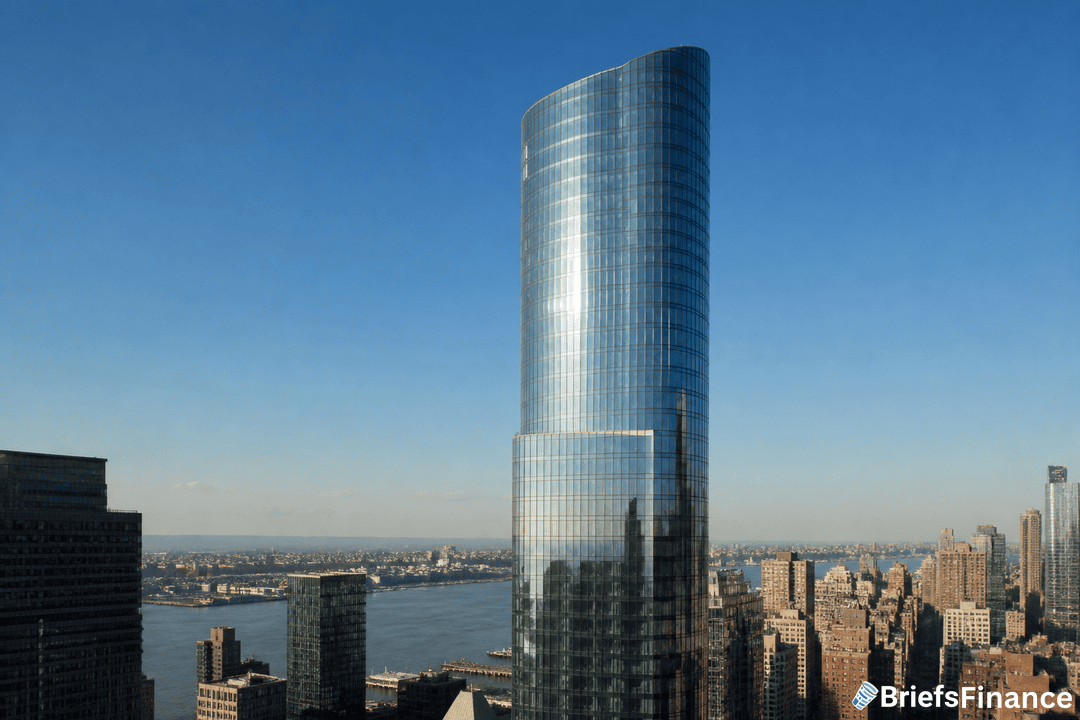
New York is weighing a sizable property tax incentive for 99 Hudson Boulevard, a planned office tower from Tishman Speyer in Hudson Yards on Manhattan's far west side. The site sits opposite the Jacob K. Javits Convention Center on 11th Avenue and would contain about 1.3 million square feet across 48 floors. The application goes to a public hearing on Thursday, and a subsidiary of the city's Economic Development Corporation plans a Sept. 15 vote.

Tishman Speyer's application to the city's Industrial Development Agency puts construction at $2.7 billion and a January start date. 99 Hudson is expected to open in 2030, and "will transform a long-vacant lot into a world-class office space while generating jobs, tax revenue and meaningful improvements in the public realm," a Tishman Speyer spokesperson said.

It would be the developer's second high-rise in Hudson Yards. Tishman Speyer also built The Spiral, a 66-story tower with 60 outdoor terraces that houses Pfizer Inc.'s headquarters. Tenants there also include HSBC Holdings Plc, AllianceBernstein Holding LP, and the hedge fund Marshall Wace LLP.

Dollars and policy checkpoints

The IDA's tax-exemption policy gives the agency discretion to provide or withhold assistance, with staff and the board weighing criteria including expected job creation, public support, and whether the project would proceed absent a subsidy. For 99 Hudson, the agency's analysis puts the city's tax cost at $92.2 million and projects nearly $860 million in combined direct and indirect tax revenue from the development.

If approved, the tax break would represent the biggest economic development subsidy since Mayor Zohran Mamdani came into office, likely sparking resistance from progressives who say these policies advantage the wealthy over services and housing. "Hudson Yards has done extremely, extremely well," John Kaehny, who is the executive director of Reinvent Albany, said.

Mamdani's press representative did not reply when asked for comment. According to the mayor's earlier statements, subsidies as a general practice are not necessary to compete for business. The city plans to put $70 million toward constructing the stores, with further funding to support ongoing operations.

Big city decisions remind investors to keep a steady plan for their savings. Join Briefs Finance CEO Jaspreet Singh on September 29th for a FREE live investor workshop, How to Profit From A Dollar That's Losing its Value, where he shows how we're spotting investment opportunities as the dollar falls. Save your spot.

Business advocates see it differently.

Hudson Yards by the numbers

Hudson Yards was rezoned in 2005. After the Great Recession, the city had to cover $360 million in interest on $2 billion of bonds backed by developer payments in lieu of property taxes.

The past decade has been a very different story. On the residential side, one-bedroom apartments in Related's One Hudson Yards list between $5,700 and $7,900 per month, per StreetEasy.

The fiscal ledger has seen both costs and paybacks. A 2018 New School report put taxpayer costs associated with Hudson Yards at $2.2 billion, counting lost revenue from tax incentives, infrastructure overruns and backing by city debt.

Subsidies are not new in the district. Across the Bloomberg and Bill de Blasio years, the IDA granted roughly $1 billion in tax incentives to Related Cos., Brookfield Properties and Tishman Speyer, the agency's documents show. Former Mayor Michael Bloomberg argued tax breaks were needed to make Hudson Yards feasible. Bloomberg founded Bloomberg LP and retains a majority ownership stake; it is the parent company of Bloomberg News.

What this could mean for your portfolio

The Sept. 15 vote is a clean read on how far City Hall wants to go on subsidies even as Hudson Yards already attracts marquee tenants and premium rents. If the break advances, the IDA's model points to a $92.2 million city tax cost alongside nearly $860 million in revenue tied to the project over time, with a 2030 opening in sight. For everyday investors, the takeaway is straightforward: local policy choices still shape where cranes rise, which jobs appear and how tax dollars flow.

When public policy shifts, wise savers focus on preserving and growing capital. Our CEO Jaspreet Singh is hosting a FREE live investor workshop, How to Profit From A Dollar That's Losing its Value, on September 29th. Sign up free to join him live.

Disclosure

Recent News

1 2 3 72

Get Market Briefs delivered to your inbox every morning for free!

No fluff. No noise. No politics. Just finance news you can read in 5 minutes.

Blogs

September 9, 2026
Your 401k Is Fueling the AI Bubble
  • About $10 trillion of 401k money sits in a $77 trillion stock market, mostly through target date funds and S&P 500 funds. Roughly 30% of every S&P 500 dollar lands in five AI-heavy tech stocks.
  • Four bubble signals run hotter today than before the 2000 crash: top-ten concentration, tech's share of the index, the Buffett Indicator, and how much of the market index funds own.
  • You only lock in an AI bubble loss if you sell. The 2022, 2020, 2008, and 2000 crashes were all buying windows for long-term investors, and the US-China AI race means government money could keep flowing in.
Read More
September 9, 2026
What Is Wealth Preservation? How To Protect Your Money From Anything
  • Wealth preservation is an investing strategy built around keeping the money you've already made instead of chasing growth.
  • It leans on assets that hold steady when markets fall - gold, Treasury bonds, and companies that keep earning through wars, crashes, and pandemics.
  • The tradeoff is real: you give up some upside, and the two key numbers to check are maximum drawdown and correlation to the market.
Read More
September 8, 2026
Why Is Everything So Expensive? Why Prices May Never Come Back Down
  • Official inflation is 3.4% and prices are up 32% since 2020, but rent (41%), gas (47%), car insurance (64%) and ground beef (79%) all outran the 28% median wage.
  • The Federal Reserve targets 2% inflation on purpose. Rising prices push extra dollars to investors and shrink the real cost of a $40 trillion national debt.
  • Investors who simply owned the S&P 500 gained about 150% over the same six years, and the Fed's September 16 decision will show whether it protects the dollar or the economy first.
Read More
September 7, 2026
The U.S. Housing Market Just Flipped: Renting a Home Now Beats Buying One
  • The US is in a buyer's market in 41 of the 50 largest metro areas, but prices sit near record highs and mortgage rates are close to 7%.
  • The same median house costs 27% more than it did in 2021 while the monthly payment costs 90% more, and incomes rose a little more than 10%.
  • A 2008-style crash is not showing up in the data, so the pressure is landing on buyers instead of prices.
Read More
September 4, 2026
An Interest Rate Hike in 2026? The Fed Just Broke Its Own Script
  • The Federal Reserve spent a year signaling cheaper money, and its new chairman just warned that an interest rate hike may be coming instead.
  • The Fed is stuck between high inflation and a weak job market, and fixing one makes the other worse.
  • Higher rates also reprice roughly a third of America's $40 trillion national debt this year, which is why Washington wants cuts so badly.
Read More
September 3, 2026
5 Passive Income Ideas That Pay You Whether You Work or Not
  • School teaches one formula: work, earn, spend. Stop working and the money stops, so the wheel never ends.
  • Five assets pay you without your labor - dividends, rent, interest, royalties, and the things you already own.
  • $80,000 a year of cash flow takes about $1 million invested at 8%, or roughly 20 years of $1,000 a month.
Read More
September 2, 2026
The Best Way to Invest 10k: Three Options To Transform 10K into 10 Million
  • Passive investing in stocks or real estate targets around 10% a year, and time in the market matters more than the price you get in at.
  • Active investing means putting your time in alongside your money, which raises the target to roughly 20% a year and raises the risk of losing it all.
  • Investing in yourself has no ceiling, because a new skill can create a new income that no market return can match.
Read More
September 1, 2026
The Tax Write Offs the Rich Are Using in 2026 While the IRS Shrinks
  • The 2026 tax brackets landed lower than they were headed, and the standard deduction jumped from a planned $8,350 to $16,100 for single filers.
  • New write offs for overtime, tips, seniors and car loan interest are live now, and most of them are written to expire in 2028.
  • About a third of IRS auditors have been fired, and four assets do most of the work for people who want income without a matching tax bill.
Read More
August 31, 2026
America Is Running Out of Debt Buyers. Treasury Bills Are the Government's Fix
  • The government took in about $5 trillion in taxes in 2025 and spent about $7 trillion, and the national debt is now over $40 trillion.
  • Investors, banks, and foreign countries are all lending less to the U.S., so starting September 9 the government plans to sell more short-term treasury bills and use that cash to buy back its long-term debt.
  • Government interest rates set the floor for your mortgage, your car loan, and your credit card, and short-term Treasury ETFs like SGOV are one way investors are playing it.
Read More
August 23, 2026
How to Get the Most From Your Guideline 401k
  • Guideline is a company that provides low-cost 401k plans, popular with small businesses and their employees.
  • A "Guideline 401k" follows the same core rules as any 401k: tax-advantaged growth, contribution limits, and often an employer match.
  • The biggest results come from capturing the full match, choosing low-cost funds, and picking Roth or traditional to fit your situation.
Read More
1 2 3 26
Share via
Copy link