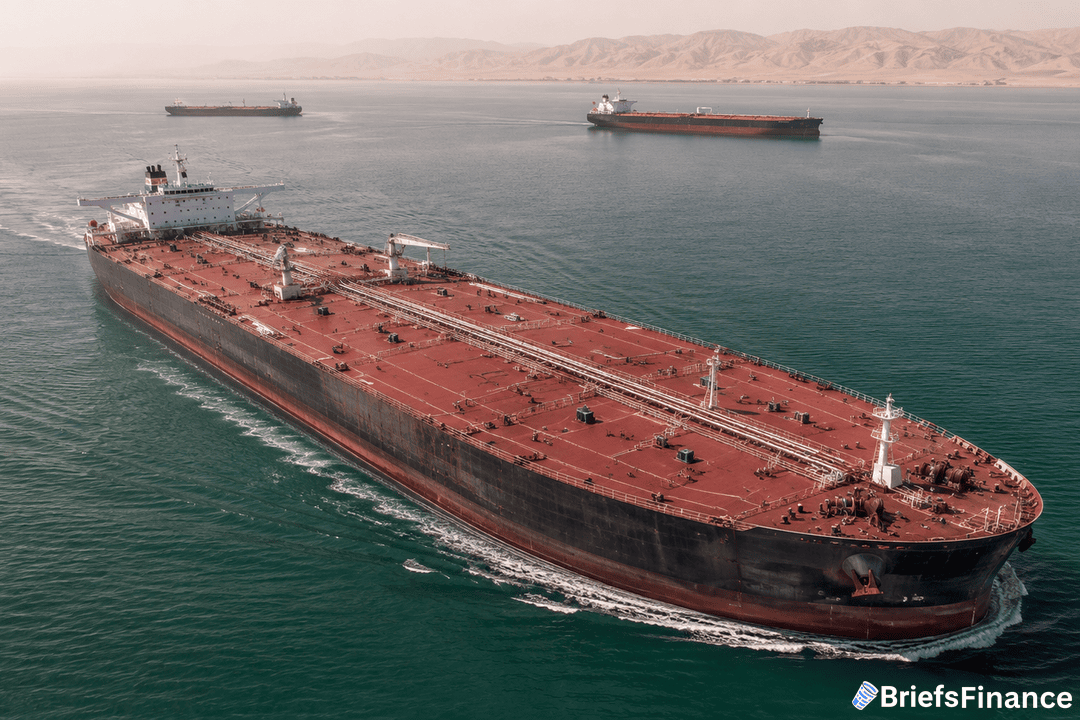
Iran's oil is flooding back onto the market. A U.S. blockade has finally lifted.
You would think that is good news for Tehran. But buyers are not rushing in, so Iran is slashing prices to move it.
The Fire Sale
Sellers of Iranian crude to China are cutting prices fast. July cargoes of Iranian Light oil now sell at a steep discount.
They go for $2.50 to $5 a barrel below Brent. Brent is the main world oil price.
Before the deal, that discount was around $1. So Iran is now giving up several times more per barrel.
It is doing that just to find buyers. The cuts show how badly Iran wants cash.
It is a classic fire sale. You have too much of something and too few buyers.
So the price has to come down. Weeks of lost sales have drained Iran's accounts.
Selling cheap still beats selling nothing. Cash now matters more than top price.
Oil swings touch everything from gas prices to your portfolio, and we explain what moves like this mean each morning in Market Briefs - a five-minute read with a free investing masterclass when you sign up.
Why The Buyers Are Slow
For about six weeks, a U.S. blockade trapped Iran's oil. That cut off badly needed cash.
The blockade lifted as part of the new deal. Then the barrels came pouring out.
At least 11 tankers recently left one Iranian port. Together they carried 20 million barrels.
Iran also restarted loadings at Kharg Island, its main export terminal. That site handles most of its exports.
But China's small private refiners are the main buyers. Right now they are holding back.
They are losing money on each barrel. These small refiners are known as teapots.
Fresh U.S. sanctions have also made them nervous. The latest hit an arm of China's Hengli Petrochemical, which denies buying Iranian oil.
Some buyers fear getting hit next. So they wait to see how things settle.
Where The Oil Is Sitting
The glut is not clearing yet. About 121 million barrels of Iranian oil still sit on tankers.
That is about 5% more than the week before the truce. The tracking data comes from the firm Kpler.
A big chunk is parked off China's coast, waiting for buyers. The rest waits in other spots, like the Singapore Strait.
One odd wrinkle stands out. On paper, China has not bought Iranian oil since 2022.
The barrels usually get relabeled as Malaysian to dodge attention. That trick has gone on for years, and it keeps the oil moving quietly.
What To Watch
The next move depends on China's refiners. They normally take about 90% of Iran's oil.
If they stay on the sidelines, Iran may have to cut prices even more. A lasting peace deal is still being worked out.
Iran wants to lock in steady sales. Deep discounts are its best tool for now.
More oil and slow buyers usually point one way for prices: down.
Want to understand the forces moving oil and markets? Read Market Briefs with 350,000+ investors and get a 45-minute investing course thrown in.