What the Houthis Are Doing
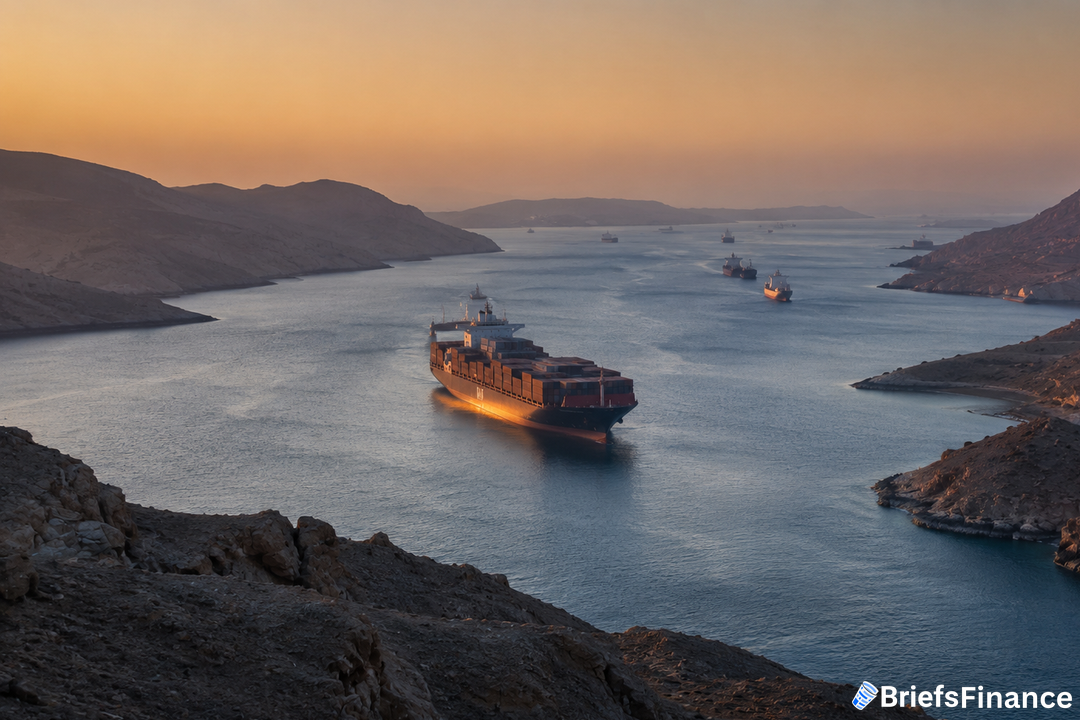
The Houthis, a militant group based in Yemen, have finished readying their forces to strike vessels moving through the Red Sea's southern entrance. A warning from the Joint Maritime Information Center states that the Houthis have deployed missiles and drones positioned near the Bab el-Mandeb Strait, a key narrow waterway between Yemen and East Africa.
The European Union's naval mission warned Wednesday that "merchant vessels linked to Israeli, U.S. or Saudi interests" should "avoid transiting the Red Sea and Gulf of Aden until the threat level decreases." The Houthis have said "all vessels loading or discharging cargo at or from any Saudi ports are prohibited," according to the EU naval mission's notice.
The warning center says the current threat level to ships in the area is "moderate" and noted that no attacks had happened in the two days before the statement. Vessels have continued moving along the southern Red Sea and through the Bab el-Mandeb Strait without incident for the last two days.
The Numbers Tell the Story
Saudi Arabia had been using the Red Sea route more and more as an alternative way to export its oil. Kpler data shows that crude flows from Yanbu's Red Sea terminal through Bab el-Mandeb reached a daily average of 3.5 million barrels in June, a sharp rise from the 240,000 barrels per day recorded a year prior.
Get the market news that matters in a five-minute read with Market Briefs, our free daily newsletter
Then the Houthi threat landed. Saudi Arabia's new export route just got a lot scarier.
Why This Is Happening Now
The Red Sea drama is not happening in a vacuum. Iran has intensified assaults on vessels transiting the Strait of Hormuz, the other major oil chokepoint on the opposite side of the Arabian Peninsula. This week, three vessels - one carrying crude, others carrying refined products and chemicals - came under attack near the shores of Oman and the UAE. Since July 6, twelve vessels have been targeted in and around Hormuz, leading to the deaths of two crew members and more than a dozen injuries, the International Maritime Organization reports.
That is why Saudi Arabia had been leaning so hard on the Red Sea. When Iran makes the Hormuz route dangerous, the Saudis ship their oil out the back door through Yanbu and down the Red Sea past Yemen. It worked - until the Houthis decided to block that door too.
The Houthis are aligned with Iran, so this looks coordinated. Iran goes after tankers in the East, the Houthis go after them in the West, and Saudi oil gets squeezed from both sides.
What It Means for Your Portfolio
Oil prices have already been on edge from the Hormuz attacks, and now this adds another layer of risk to global supply. Saudi Arabia exported 3.5 million barrels per day through the Red Sea in June. That oil has to go somewhere. If a meaningful chunk of it gets stuck, the global oil market feels the pinch.
For investors, the key takeaway is that oil supply routes are more fragile than they have been in years. Two major chokepoints - Hormuz and Bab el-Mandeb - are under active threat at the same time. That does not mean a crisis is guaranteed. But it does mean every headline from the region carries more weight for energy prices and for any portfolio with oil exposure.
Join Market Briefs, our free daily newsletter, for a quick daily rundown of the markets