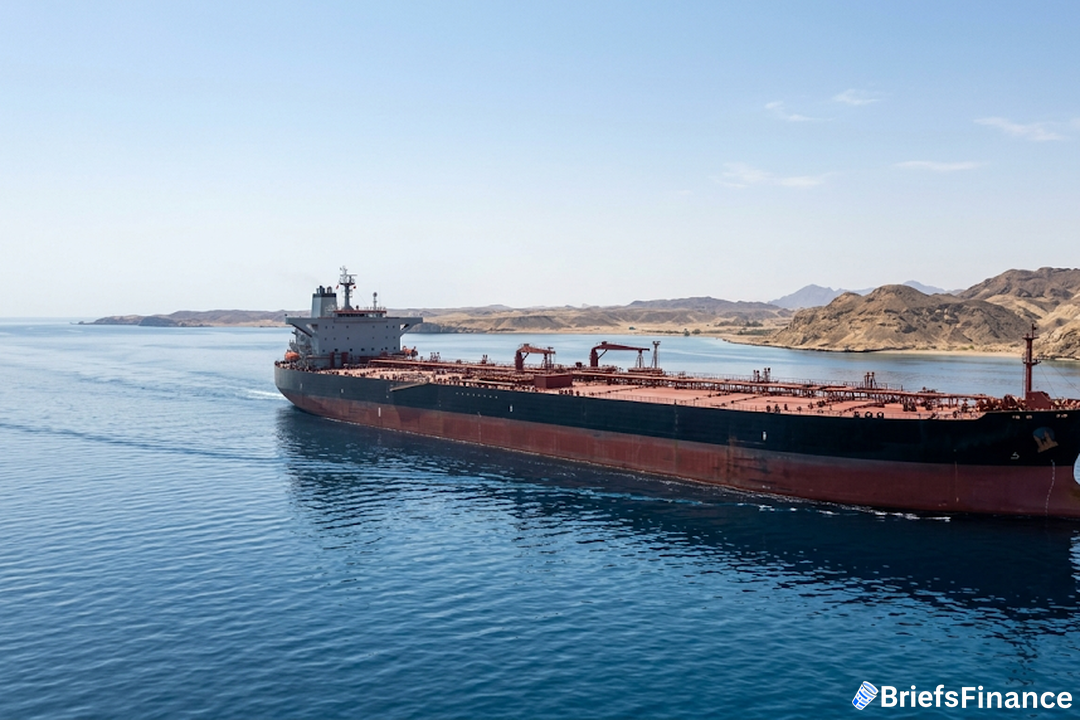
The Record and the Threat
Then the Houthi group in Yemen dropped a warning. A Houthi spokesperson announced, "We are imposing a blockade on Saudi shipments through the Red Sea." The following week, numbers dipped to 5.5 million barrels per day in the week ending July 20. That drop could be a sign that tankers started hesitating as the Houthi statement spread.
The timing matters. On Tuesday, crude oil futures hovered around $89 per barrel. Any real disruption at a major export route usually pushes prices higher fast.
Why the Houthis Are Blocking the Red Sea
According to the Houthis, the blockade retaliates for what they describe as Saudi Arabia's siege of Sana'a, the Yemeni capital. The Houthis maintain ties with Iran. Furthermore, the Houthis sent emails to ship owners urging them to avoid docking at Saudi ports.
Get the market news that matters in a five-minute read with Market Briefs, our free daily newsletter
Oil tankers rely on the Red Sea as a vital transit route. The Bab el-Mandeb Strait, which connects the Red Sea to the Indian Ocean, is one of the world's most important chokepoints. On Monday, the Saudi-led coalition operating in Yemen announced that it had started taking operational steps to safeguard vessels in the strait.
The Bab el-Mandeb is a narrow passage that funnels roughly 5% of global oil supply. A prolonged disruption would force tankers to reroute around the Cape of Good Hope, adding weeks of travel time and raising shipping costs. That risk is why markets are watching closely.
The record export figure highlights the strategic importance of the Red Sea terminals for Saudi Arabia, which also ships crude from its Persian Gulf ports. Any prolonged disruption at Bab el-Mandeb would force a significant rerouting of tankers, potentially tightening global supply.
What This Means for Your Portfolio
The bottom line: A real blockade would squeeze oil supply. But so far, the threat has not stopped ships. As of July 21, ships continued to head for Saudi Arabia's Red Sea terminals, and certain Asian purchasers were still dispatching their tankers to collect cargoes.
The record export number from Saudi Arabia is worth watching. Officials at Saudi Arabia's energy ministry did not reply promptly to a request for comment.
Investors in energy stocks or anyone exposed to oil prices - through oil-related holdings - should keep an eye on the Bab el-Mandeb news. Risk in the Middle East does not always turn into a crisis. But when a group with missiles threatens the route that carries a record amount of crude, the market does not just shrug it off. The question is whether the protection measures hold and whether tanker traffic stays normal.
If they do, the anxiety fades. If they do not, the price at the pump might start climbing.
Join Market Briefs, our free daily newsletter, for a quick daily rundown of the markets