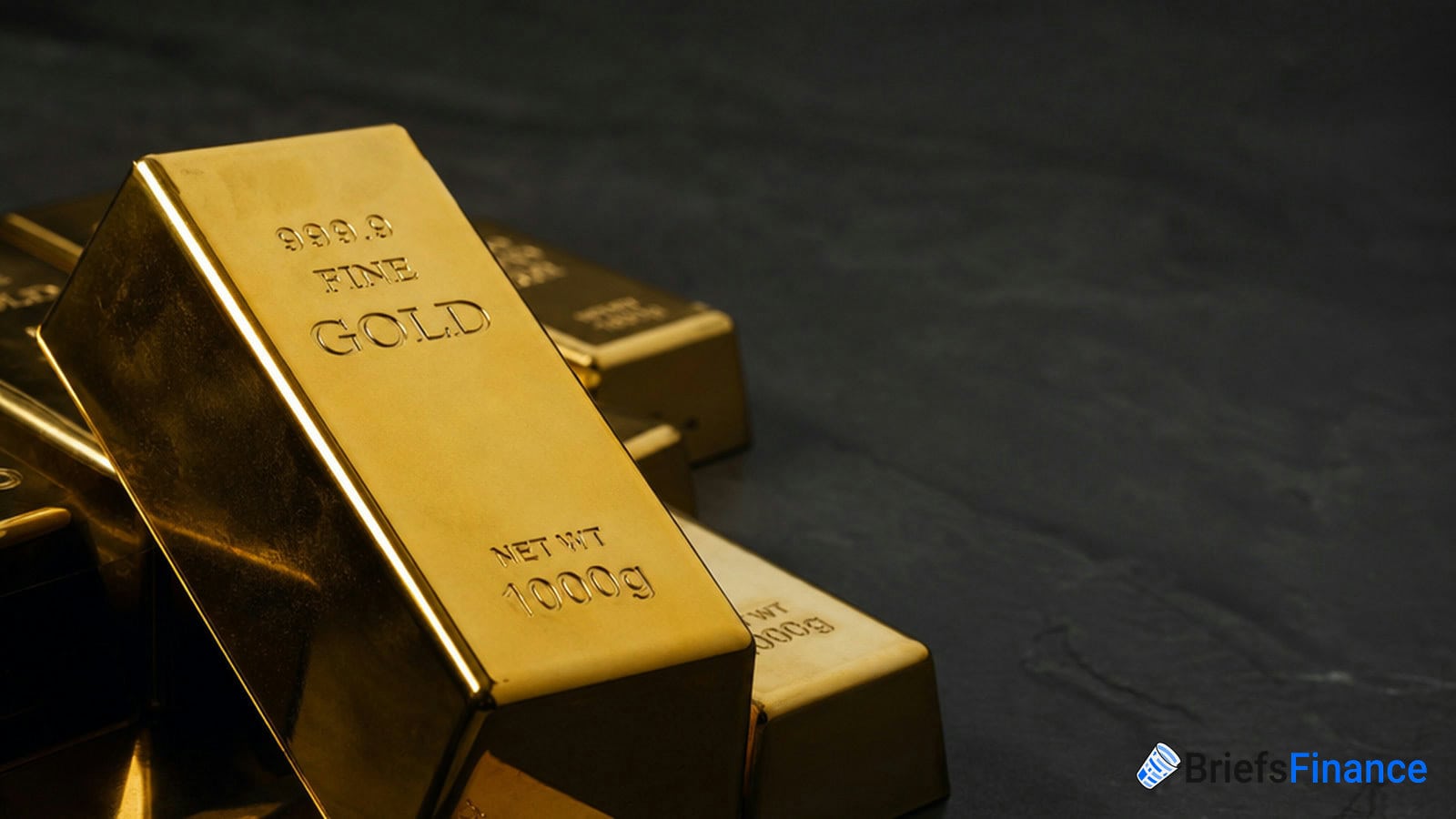
Goldman Sachs still thinks gold goes higher - but the bank just cut its year-end target by $500 an ounce.
The reason comes down to a shift in what the Fed will do next.
Goldman Cuts Year-End Target to $4,900
The new call from analysts Lina Thomas and Daan Struyven is $4,900 an ounce by December, down from $5,400.
They called the view "structurally constructive but tactically cautious" - bank-speak for "we still like it, just less than we did."
The cut traces back to a single change: Goldman's economists pushed the first expected Fed rate cut to June of next year, with another in December.
That's a six-month delay from the old call of cuts arriving in December 2026 and March 2027.
Why does that matter for gold? The metal pays no yield, so it competes with bonds.
When the Fed cuts rates, bond yields fall and gold looks more appealing - which is why inflows into gold-backed ETFs tend to spike when cuts look close.
Push the first cut six months further out, and that demand softens with it.
Much of the 2024 and 2025 rally ran on investors buying ahead of expected rate cuts, so when those cuts get delayed, so does the trade.
We break down moves like this one every morning in Market Briefs - delivered in five minutes a day, with a free investing masterclass when you sign up.
The Warsh Factor
The bigger reset is who's running the Fed now.
New chair Kevin Warsh, a Trump appointee, just held his first meeting - and Goldman called it "surprisingly hawkish," meaning more focused on fighting inflation than cutting rates.
Rates stayed put, but officials signaled growing support for hikes this year, with Warsh himself vowing to restore price stability.
That's a sharp turn from the Fed markets were pricing in a few months ago.
Goldman's own vice chairman Rob Kaplan - the former Dallas Fed president - echoed that read this week.
Kaplan told Bloomberg Television the central bank may need to hike as soon as September if inflation stays high.
If that plays out, Goldman thinks gold drops to $4,400 by year-end.
In their words, "demand for gold as a macro policy hedge could unwind more persistently."
What To Watch
Gold isn't without buyers.
Central banks are still loading up at roughly 50 tons a month this year, according to Goldman's analysts.
That steady pace is part of why the bank stays "structurally constructive" even after the haircut.
The official-sector buying has been a quiet floor under gold prices since 2022, when sanctions on Russia pushed countries to spread reserves away from the dollar.
But the tape says the air is coming out for now.
Gold is trading near $4,165 - on track for a third straight weekly decline.
That slide kicked in after the metal hit a record just below $5,600 in late January, capped by a third straight monthly loss in May.
Whether the slide continues hinges on the next inflation and jobs reads, which will shape whether the Fed holds, hikes, or eventually starts cutting.
A Fed that hikes instead of cuts isn't the setup gold bulls signed up for.
Join 350,000+ investors reading Market Briefs and get a free 45-minute investing course thrown in.