Washington's Crypto Bill Hits Another Snag
The crypto industry has operated for years without a clear set of rules from Washington. It looks like it will keep operating that way a little longer.
Michael Novogratz, the founder and CEO of Galaxy Digital, told analysts on August 5, 2026 that Congress now appears unlikely to pass the Clarity Act before its August recess. He said he is hopeful talks resume in September and lead to a bipartisan compromise.
The Clarity Act would set clearer U.S. rules for crypto, including which regulator handles which assets and how brokers and exchanges should behave.
Lawmakers have blocked the measure in the Senate for months over ethics rules tied to President Donald Trump's digital-currency holdings and over how to treat stablecoins, the digital currencies designed to hold a steady value.
"If Clarity doesn't pass, it's not the end of the world," Novogratz said. "We've been living without it, since this business started."
He added: "Of course, everyone would have been happy if it had been passed already."
The Numbers Behind the Drop
Trading volumes for digital assets fell about 7% from the previous quarter.
Get the free Always Be Buying eBook and learn the simple system for building wealth on any income
Its average loan book rose slightly to $1.4 billion, which suggests borrowing is still happening even as trading slows.
The loss was smaller than expected, and the revenue miss was not huge, but the weak trading volumes weighed on the quarter.
The Pivot to AI Infrastructure
Galaxy is one of the most diversified publicly traded crypto firms, with trading, lending, market-making, venture investing, and Bitcoin mining. Market-making means the firm steps in to help buyers and sellers complete trades, and it is a business that tends to slow when trading cools.
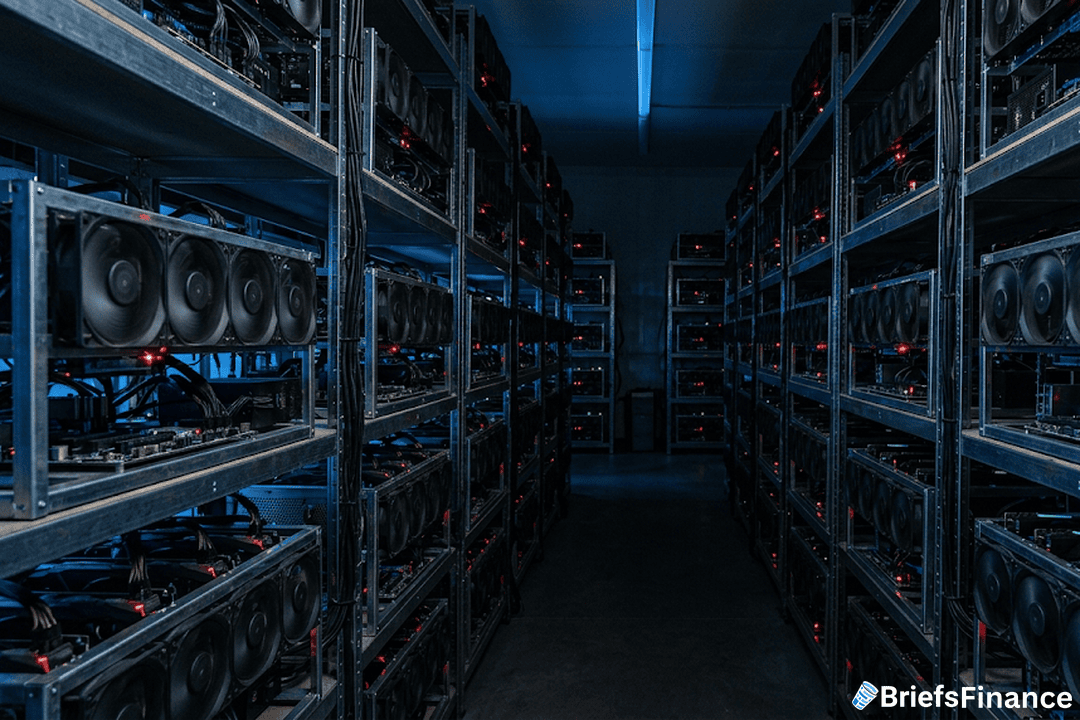
Galaxy is also converting some of its mining infrastructure for AI computing, a move that other listed miners like TeraWulf Inc. and Cipher Digital Inc. have made as well. That gives the company a way to put the same power and computing gear to work beyond digital currencies.
Galaxy bought three sites in Texas and said its data-center footprint grew significantly.
The data centers earned $20 million in adjusted gross profit, which is the money left over after direct costs.
They also earned $11 million in adjusted Ebitda, a profit measure that leaves out interest, taxes, depreciation, and amortization.
Novogratz told analysts he sees deep interest in the computing systems that will run finance in the future.
What It Means for Your Portfolio
What does all this mean for your portfolio? It means the crypto trade has more layers than just token prices.
The quarter shows that even a top crypto firm can feel the chill when trading goes quiet. But Galaxy's data centers are producing real profit, and Novogratz says the demand for that infrastructure is only going up.
"While token prices and trading activity remain subdued, we're seeing tremendous demand for the infrastructure that will power the next generation of financial markets," he told analysts.
For investors, the story is shifting, and it is no longer just about which coin does well. It is also about the companies building the systems that markets run on, and right now those systems are where the growth is showing up.
If trading stays quiet for a while, firms with one foot in AI infrastructure have extra revenue to lean on. That doesn't make the next Bitcoin swing any less dramatic, but it is a reminder that the business of crypto is broader than the price of a token.
That diversification is useful if digital-asset volumes stay weak.
Download the free Always Be Buying eBook and start putting your money to work today