Free NewsletterPro Login
S&P 500 6,287 +0.42%
DOW 44,521 -0.18%
NASDAQ 21,103 +0.71%
S&P 500 +12.4%
Briefs Finance Fund +24.8%
JOIN THE FUND →

Ford Just Doubled Its Commodity Cost Forecast To $2 Billion

Published May 7, 2026
[tts_player]
Share:
Summary:
  • Ford expects commodity headwinds to top $2 billion this year, roughly double its previous estimate, as aluminum prices surge.
  • LME aluminum is up more than 13% since the U.S.-Israel strikes on Iran on Feb. 28 and 19% in 2026, hitting multi-year highs.
  • Bernstein estimates 7% of global aluminum comes from the Middle East, with about 3% of global supply currently off the market.

The car you drive and the beer can you drink from share a cost problem.

Ford just doubled its forecast for commodity headwinds this year to over $2 billion, mostly because of aluminum. Coors Light's parent says aluminum added $30 million to costs in just one quarter. The Iran war is the throughline.

What's Driving Prices

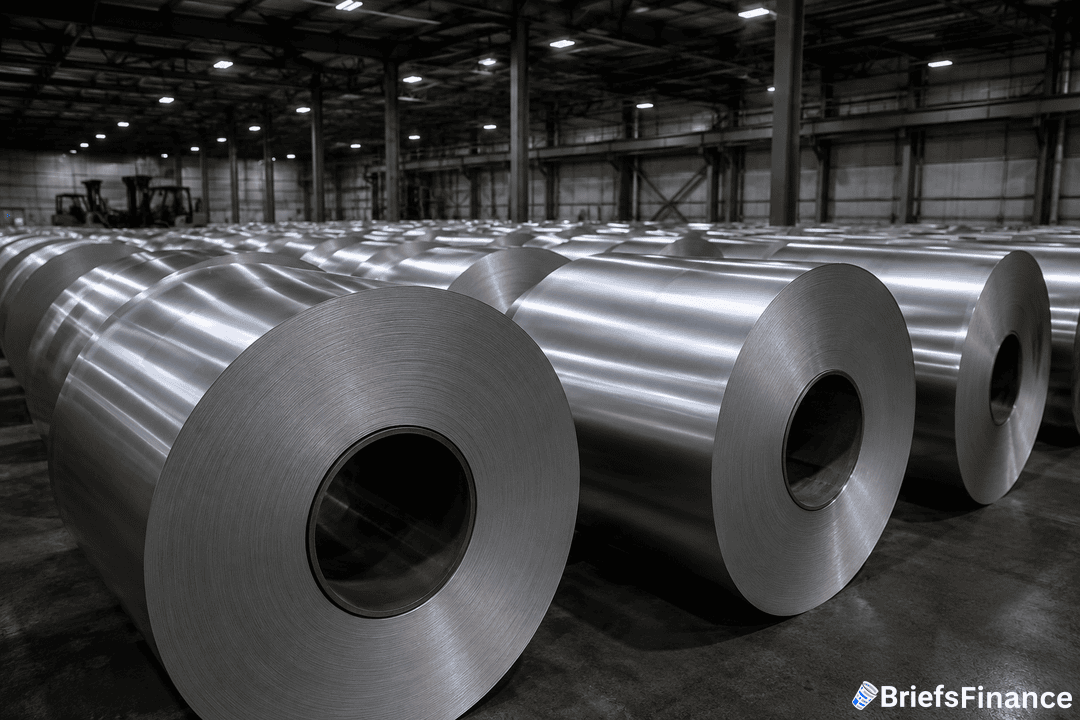
Aluminum on the London Metal Exchange has surged more than 13% since the U.S. and Israel hit Iran on Feb. 28. Prices are up roughly 19% so far in 2026, the highest levels since 2022. LME aluminum traded near $3,536 per metric ton this week.

Bernstein analyst Bob Brackett says the cause is the closed Strait of Hormuz, a key shipping lane for Middle East aluminum. About 7% of the world's aluminum comes from the region. Strikes have damaged production sites and knocked roughly 3% of global supply offline.

There's a second pressure too. Aluminum needs lots of energy to make. Higher gas and coal prices from the war flow straight into smelter costs.

The Companies Getting Hit

Ford. CFO Sherry House told analysts the war is clouding the F-150 outlook. Aluminum is core to the truck.

Ford was already seeing global shortages in steel and aluminum before Iran, House said.

Ford shares are down 17% since the war started. The S&P 500 climbed 5.7% over the same period. UBS analyst Joseph Spak says Wall Street's worry is "overblown" because Ford has hedged its aluminum exposure for 2026.

Molson Coors. The Coors Light and Miller Lite parent paid an extra $30 million in Q1 alone, per CFO Tracey Joubert. The U.S. Midwest aluminum price drove the hit.

The company has used recyclable aluminum cans for over six decades. It's expecting more inflation this quarter.

Keurig Dr Pepper. CFO Anthony DiSilvestro grouped aluminum with several commodities now under pressure. "As with many CPG companies, we have both direct and indirect exposure," he said.

What's Next

UBS now expects global aluminum supply to grow just 0.3% in 2026. That's down from a prior forecast of 2.4%. The bank cited Middle East disruption and limited room for European capacity to expand.

That tight supply has nowhere obvious to loosen. Brackett told clients last week that aluminum's upside risk comes from both broken supply chains and broken power costs.

The energy story matters because U.S. natural gas and European coal both run hot when Middle East crude is off the market. Smelters in Europe were already running on thin margins before the war.

The Strait of Hormuz isn't just an oil chokepoint. Roughly 7% of the world's aluminum trade also moves through it, per Bernstein.

When that lane closes, every can, every truck panel, and every window frame gets more expensive. The pass-through to consumers takes time but it's already started in CPG.

What To Watch

Hedges run out. Ford has 2026 covered. But every CPG company saying it has "indirect exposure" is telling investors the cost is coming, just not when.

The cost will not show up in earnings notes the way oil does. It will show up as thinner margins, higher beer prices, or pricier trucks. The companies that hedged early will hold up best.

The ones that did not are about to run a real test of pricing power.
Disclosure

Recent News

1 2 3 27

Get Market Briefs delivered to your inbox every morning for free!

No fluff. No noise. No politics. Just finance news you can read in 5 minutes.

Blogs

June 18, 2026
What Is a Stop Loss Order? A Simple Guide
  • A stop loss order automatically sells a stock once it falls to a price you set.
  • It's a tool to cap losses or lock in gains without watching the market all day.
  • It works best for active strategies, and can backfire if used carelessly on long-term holdings.
Read More
June 18, 2026
Best S&P 500 Index Fund: How to Choose One
  • The best S&P 500 index fund for most investors is simply the cheapest, most established one that tracks the index well.
  • Funds like VOO, IVV, and SPY all hold the same 500 companies, so the biggest difference is the fee.
  • Pick one, automate your buys, and let time do the heavy lifting.
Read More
June 17, 2026
What Are Penny Stocks? Risks and Rewards Explained
  • Penny stocks are very low-priced shares of very small companies, often trading for just a few dollars or less.
  • They promise huge gains but carry huge risks: low liquidity, high failure rates, and wild price swings.
  • Most investors are better served by quality companies and funds than by chasing cheap shares.
Read More
June 17, 2026
Best Stocks for Beginners With Little Money
  • The best stocks for beginners with little money usually aren't individual stocks at all - they're low-cost index funds.
  • You can start with $100 or less and use small, regular investments to build wealth over time.
  • Focus on diversification and consistency, not on picking the next big winner.
Read More
June 16, 2026
Tech Stocks: A Simple Guide for New Investors
  • Tech stocks are companies in the information technology and related sectors, from software to chips to the internet giants.
  • They've driven much of the market's growth, but they can be volatile and richly valued.
  • The smart approach is to understand what you own and not let one sector run your whole portfolio.
Read More
June 16, 2026
What Is a Joint Stock Company? A Simple Guide
  • A joint stock company is a business owned by many people, each holding shares of stock that represent a slice of ownership.
  • It's the basic idea behind every public company you can buy on the stock market today.
  • Owning a share makes you a part-owner, entitled to a piece of the profits and growth.
Read More
June 16, 2026
Capital Gains Tax in California: A Simple Guide
  • Capital gains tax is what you owe when you sell an investment for more than you paid for it.
  • How long you held it matters: long-term gains are taxed more gently than short-term gains at the federal level.
  • Smart investors lower the bill with tools like tax-loss harvesting and holding for the long run.
Read More
June 15, 2026
Top Covered Call ETFs: How to Compare Them
  • Top covered call ETFs are income funds that own stocks and sell call options against them to generate steady cash.
  • The best one for you is the fund whose income, holdings, and fees fit your goals, not simply the one with the flashiest yield.
  • They all share one trade-off: more income today, less upside in a big rally.
Read More
June 15, 2026
What Are Stock Options? A Plain-English Guide
  • Stock options are contracts that give you the right, but not the obligation, to buy or sell a stock at a set price by a set date.
  • There are two kinds: calls (the right to buy) and puts (the right to sell).
  • Options can multiply gains or wipe out your money fast, so they suit investors who already know the basics.
Read More
June 15, 2026
EBITDA Margin: What It Is and How to Calculate It
  • EBITDA margin measures how much core profit a company keeps from each dollar of sales, before interest, taxes, and accounting deductions.
  • The formula is EBITDA divided by revenue, shown as a percent.
  • A higher, steadier EBITDA margin usually signals a more efficient, more durable business.
Read More
1 2 3 23
Share via
Copy link











