Why Profit Growth Is Cooling
China's industrial sector has been on a hot streak this year, but the latest numbers show the heat is fading.
For the first half of 2026, profits are up 18.7% compared to the same period in 2025. That is slightly lower than the 18.8% figure recorded through May, confirming the trend is softening.
Just a year ago, things looked a lot worse. In June 2025, profits actually fell 3.6% year over year, and the first half of 2025 overall was down 2.8%. So the rebound has been real, but it may be losing steam.
The main culprit? Oil prices.
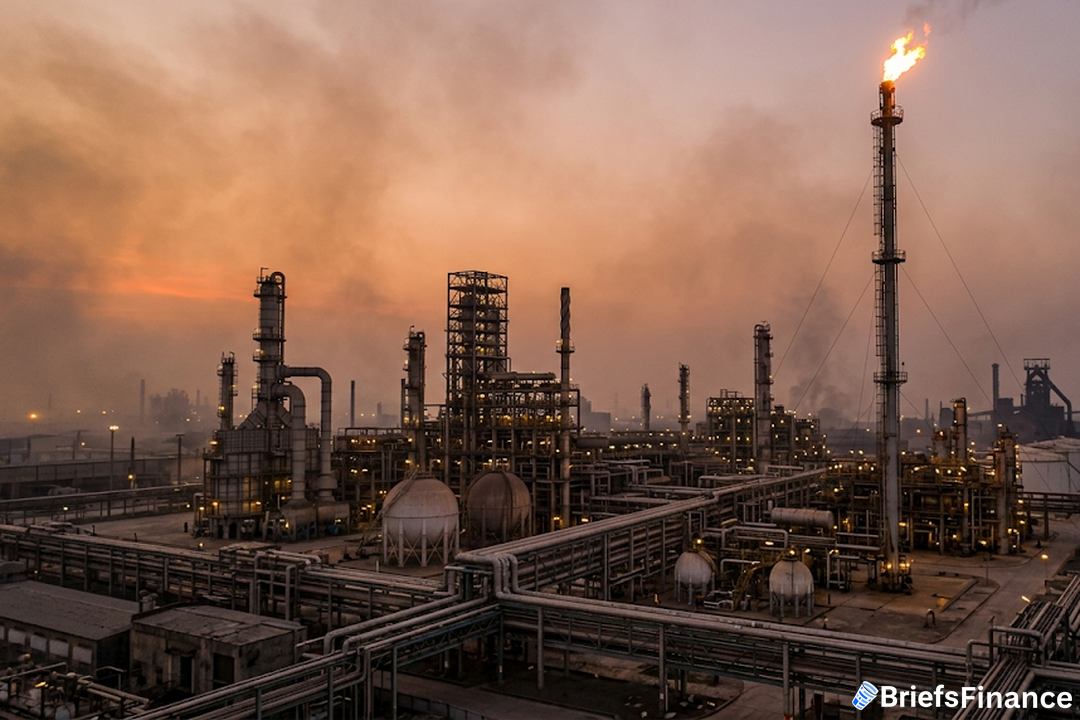
Earlier this year, rising energy costs helped boost the value of what factories produced, which padded their profit margins. But that boost is reversing. Tanker traffic through the Strait of Hormuz has normalized, bringing down the cost of oil, refined fuels, and petrochemicals.
Domestic Demand Still Lags
Beyond energy, there is a bigger issue: Chinese consumers and businesses are not buying as much as they used to.
Get the market news that matters in a five-minute read with Market Briefs, our free daily newsletter
Domestic demand remains lagging, and that shows up in the numbers for producer prices. These are the prices factories charge for the goods they make. In the second quarter of 2026, factory-gate prices rose 3.6% year over year.
That marked the first time since late 2022 that factory-gate prices had risen year over year.
In June, producer prices actually fell 0.3% compared to May. That was the first monthly decline since July 2025.
What Beijing Might Do Next
All eyes are on the Communist Party's Politburo meeting, which typically happens in late July. This is the group of top leaders that reviews how the economy is doing and decides what to do about it.
Analysts expect the Politburo to signal a more accommodative stance without unveiling a major stimulus program. The government holds back from stronger measures because exports remain robust and authorities are prioritizing control of overcapacity.
Morgan Stanley's chief China economist Robin Xing put it this way: "The Politburo is likely to make policy support mildly more urgent, prioritizing faster fiscal rollout." He described the likely approach as a "gradual policy ramp-up rather than a one-off stimulus push."
Xing also noted that "growth should stay resilient thanks to exports, even as domestic demand lags," and pointed to "the AI-driven investment cycle, in which China is a key hardware supplier, and a broader Asian industrial capex super-cycle that is now unfolding."
The bottom line: Beijing is watching, but it is not panicking. Investors should probably expect more modest tweaks than a full-blown rescue package.
What It Means for Your Portfolio
For anyone with money in Chinese stocks or emerging-market funds, the takeaway is not all bad.
Profit growth is slowing, yes, but it is still growing at 15.1% after a year of declines. The export engine is still humming, and the AI hardware cycle gives China a solid tailwind. The danger is more about the direction than the level. If domestic demand keeps lagging and producer prices keep falling, profits could slow further in the second half of the year.
The Politburo meeting will be the big moment to watch. If leaders signal stronger easing language, that could boost confidence. If they hold back, the slowdown may stretch out.
Either way, the story here is not a crash. After a huge rebound, China's factories are settling into a more modest pace. That is worth paying attention to, but not worth hitting the panic button over.
Join Market Briefs, our free daily newsletter, for a quick daily rundown of the markets