What Antares Is Building
Nuclear power usually brings to mind massive cooling towers and sprawling plants the size of a small town. Antares Nuclear is going the opposite direction.
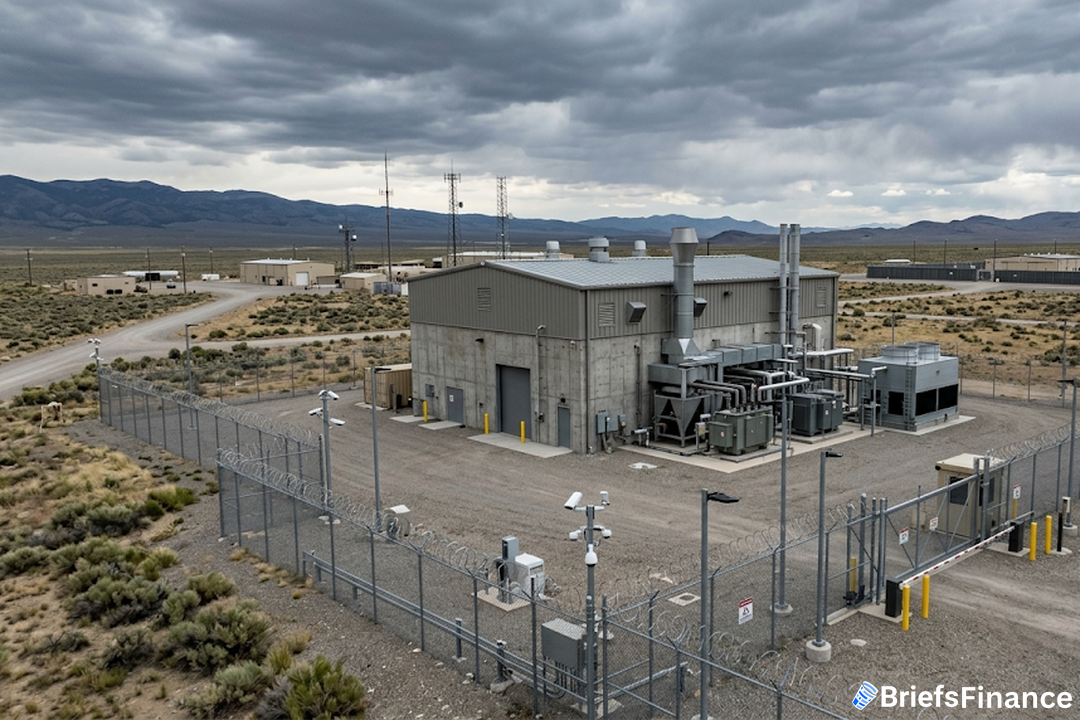
The startup is developing microreactors - tiny reactors small enough to be built in a factory and shipped to where they are needed. Each one has a capacity of no more than 1 megawatt. Compare that to a standard nuclear plant, which typically has a capacity of 1 gigawatt.
Other startups working on similar technology are developing reactors typically smaller than 20 megawatts. Antares is betting that going smaller - and cheaper - will make it easier to get these things deployed in places where a full-size plant would never fit.
The company just proved it can get a self-sustaining fission reaction going, hitting that milestone in June 2026. Getting a reaction is one thing. Turning that heat into electricity is the next big step, and Antares doesn't anticipate getting a unit that produces power until 2027.
Get the market news that matters in a five-minute read with Market Briefs, our free daily newsletter
Why the Military Is Front and Center
The U.S. military is a natural first customer for this technology. Bases often sit in remote locations where the power grid is unreliable or vulnerable. A reactor that runs without constant fuel deliveries is a pretty attractive backup.
The company's CEO, Jordan Bramble, says the military is just the start. He expects to announce more military projects during 2026.
The reactors are built at the company's headquarters in Torrance, California, where Antares is expanding production. The U.S. Energy Department has a program designed to speed up nuclear power deployment, and Antares is part of it.
The catch: no microreactors are currently operating in the United States. The technology has not been proven at commercial scale.
Bramble put it plainly: "Our focus now is proving a pathway to commercialization." The funding round was headed by Paradigm and Caffeinated Capital, which included $370 million from equity investors and $100 million in debt.
Even with this cash and a committed customer, Antares faces a long approval process. The Nuclear Regulatory Commission has not licensed any microreactor design yet, and the company will need to demonstrate safety and reliability through extensive testing. The Energy Department's program offers some support, including access to test facilities and potential cost-sharing for regulatory reviews.
Military bases also have unique security and waste-handling requirements that could add further checks. These requirements mean Antares will need to coordinate closely with military officials to ensure the reactors meet strict standards. For now, Antares has the capital and a clear target, but the hardest work - proving the technology in the real world - still lies ahead.
Antares must first complete a detailed safety analysis, build a prototype that meets rigorous standards, and then subject it to months of testing before applying for a license. The Energy Department's assistance can help shorten that timeline, but regulatory hurdles remain significant. Meanwhile, the company's deal with the Air Force provides a concrete end user, giving investors confidence that demand exists for these small, portable power sources.
Join Market Briefs, our free daily newsletter, for a quick daily rundown of the markets