Free NewsletterPro Login
S&P 500 6,287 +0.42%
DOW 44,521 -0.18%
NASDAQ 21,103 +0.71%
S&P 500 +12.4%
Briefs Finance Fund +24.8%
JOIN THE FUND →

Finnish Town's Sand Silo Stores Heat for Weeks

Published Jul 27, 2026
[tts_player]
Share:
Summary:
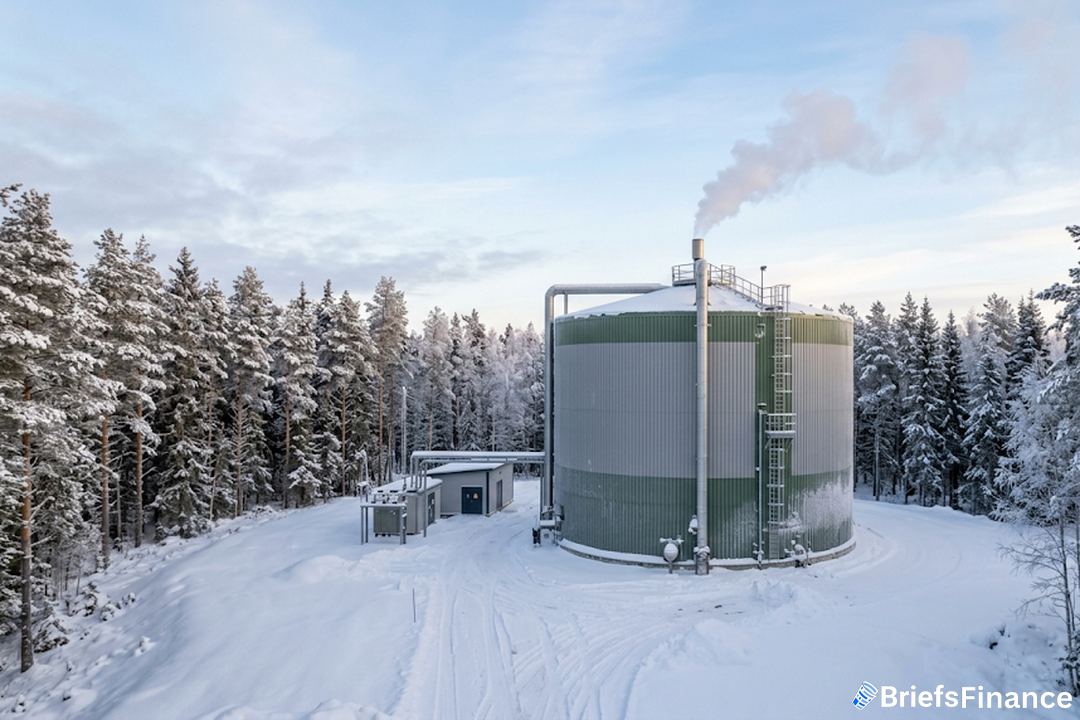
  • The Finnish town of Pornainen now heats part of its network from a thermal storage silo.
  • The 13-meter silo holds 2,000 metric tons of crushed soapstone.
  • Polar Night Energy built the system for local heating company Loviisan Lampo.

How a Silo Full of Sand Keeps a Town Warm

Renewable energy has a stubborn flaw. The sun does not always shine. The wind does not always blow. That leaves a gap between when power is made and when people actually need it.

A small town in Finland just rolled out a fix that looks oddly clever. The town of Pornainen, home to about 5,000 people, now runs part of its heating network from a silo. The silo measures 13 meters in height and 15 meters in width. Inside it holds 2,000 metric tons of crushed soapstone, a material that holds heat very well.

Polar Night Energy built the system. Loviisan Lämpö, the local heating company, commissioned it. The idea is simple: use excess renewable electricity to heat the stone to very high temperatures, then let that heat radiate back into the town's hot water pipes over days or weeks.

During summer, one full charge can cover the town's heating needs for almost a month. In winter, it still lasts as much as one week. That is a long time compared to a typical battery.

This approach leverages the existing district heating infrastructure common in many northern European towns. The facility provides 100 megawatt-hours of thermal energy.

Get the market news that matters in a five-minute read with Market Briefs, our free daily newsletter

According to Jan Rosenow, a University of Oxford professor specializing in energy and climate policy, "you can store energy for long periods, not just two hours or four hours like lithium-ion batteries, but potentially for days and maybe even weeks."

Why It Could Change How We Think About Energy Storage

The real trick is timing. Electricity prices swing during the day. Electricity prices fall during times of abundant wind and solar generation. It is expensive when demand spikes.

The sand battery lets the town heat the sand when electricity is cheap, and use the steam later when buying power off the grid would be very expensive. Annette Höglund-Dönnes, Chief Commercial Officer at Polar Night Energy, compared it to charging a cell phone overnight when it is less expensive than during the day.

That business advantage adds up fast. In 2025, the system supplied roughly 30% of the municipality's district heating. Through the first few months of 2026, Loviisan Lämpö aims to produce between 55% and 60% from the sand battery.

A wood-chip power plant that was already in place continues to serve as a backup and for peak demand.

The catch: This sand battery only provides heat, not electricity. But Finland's Climate Minister, Sari Multala, said after visiting the plant that Polar Night Energy is also exploring ways to possibly generate electricity in the future, which she described as "groundbreaking."

What This Means for Your Energy Costs and Investments

For now, this is one town in Finland. But the technology is being watched closely around the world. Polar Night Energy has received inquiries from teams on every continent, especially from communities that rely on fossil fuels like coal and oil.

Polar Night Energy's CEO, Tommi Eronen, expressed optimism that a large share of future energy storage might consist of sand battery-like systems that do not require rare earth materials, contrasting with many chemical batteries like lithium-ion ones.

No stock tickers are involved here yet. But the underlying idea that you can buy electricity when it is cheap and use it later is something every investor can appreciate. Finland just found a way to do that with a pile of sand.

Join Market Briefs, our free daily newsletter, for a quick daily rundown of the markets
Disclosure

Recent News

1 2 3 42

Get Market Briefs delivered to your inbox every morning for free!

No fluff. No noise. No politics. Just finance news you can read in 5 minutes.

Blogs

June 29, 2026
Portfolio Diversification: Why Putting All Your Eggs in One Basket Destroys Wealth
  • Real diversification means spreading investments across all 11 economic sectors plus bonds, alternatives, and cash so no single bet can sink the portfolio.
  • Different sectors perform at different times, so a diversified portfolio captures upswings while smoothing the brutal drawdowns that wipe out concentrated bets.
  • Total market index funds offer the simplest path to diversification, and annual rebalancing is what keeps the structure working over time.
Read More
June 29, 2026
Non Taxable Income: What It Is and Why It Matters
  • Non taxable income is money you receive that you don't owe income tax on.
  • The tax code treats workers, investors, and business owners very differently, and investors often come out ahead.
  • Learning how income is taxed is a quiet superpower for keeping more of what you earn.
Read More
June 29, 2026
Semiconductor Stocks: A Simple Guide for Investors
  • Semiconductor stocks are companies that design and make computer chips, the brains inside nearly every modern device.
  • The AI boom has turned chips into one of the market's most important and most watched groups.
  • They offer big growth potential, but come with high valuations and a notoriously cyclical history.
Read More
June 25, 2026
How Stocks Work: A Simple Guide for Beginners
  • A stock is a slice of ownership in a company - buy one, and you own a piece of the business.
  • You make money two ways: the share price rising over time, and dividends paid to shareholders.
  • The simplest path for most beginners is buying into the whole market through a low-cost index fund.
Read More
June 25, 2026
Stop Loss vs Stop Limit: What's the Difference?
  • A stop loss order sells your stock once it hits a trigger price, prioritizing getting you out.
  • A stop limit order only sells within a price range you set, prioritizing price over a guaranteed exit.
  • The trade-off: a stop loss almost always executes; a stop limit might not if the price moves too fast.
Read More
June 25, 2026
Energy Stocks: A Simple Guide for Investors
  • Energy stocks are companies that produce and supply the power the world runs on, from oil and gas to newer sources.
  • They make up one of the 11 sectors of the market and tend to move with energy prices and big-picture shifts.
  • Like any sector, the key is diversification and understanding the forces driving demand.
Read More
June 18, 2026
What Is a Stop Loss Order? A Simple Guide
  • A stop loss order automatically sells a stock once it falls to a price you set.
  • It's a tool to cap losses or lock in gains without watching the market all day.
  • It works best for active strategies, and can backfire if used carelessly on long-term holdings.
Read More
June 18, 2026
Best S&P 500 Index Fund: How to Choose One
  • The best S&P 500 index fund for most investors is simply the cheapest, most established one that tracks the index well.
  • Funds like VOO, IVV, and SPY all hold the same 500 companies, so the biggest difference is the fee.
  • Pick one, automate your buys, and let time do the heavy lifting.
Read More
June 17, 2026
What Are Penny Stocks? Risks and Rewards Explained
  • Penny stocks are very low-priced shares of very small companies, often trading for just a few dollars or less.
  • They promise huge gains but carry huge risks: low liquidity, high failure rates, and wild price swings.
  • Most investors are better served by quality companies and funds than by chasing cheap shares.
Read More
June 17, 2026
Best Stocks for Beginners With Little Money
  • The best stocks for beginners with little money usually aren't individual stocks at all - they're low-cost index funds.
  • You can start with $100 or less and use small, regular investments to build wealth over time.
  • Focus on diversification and consistency, not on picking the next big winner.
Read More
1 2 3 24
Share via
Copy link












