Free NewsletterPro Login

Free Live Investors Workshop

Seats limited

Tue, Sep 29

The dollar is losing value.

Here’s how investors can still profit.

Hosted By

Jaspreet Singh

Founder, Briefs Finance

X

Warning: Undefined variable $stocks in /var/www/briefs.co/htdocs/wp-content/plugins/oxygen/component-framework/components/classes/code-block.class.php(133) : eval()'d code on line 448

Warning: foreach() argument must be of type array|object, null given in /var/www/briefs.co/htdocs/wp-content/plugins/oxygen/component-framework/components/classes/code-block.class.php(133) : eval()'d code on line 448

Warning: Undefined variable $funds in /var/www/briefs.co/htdocs/wp-content/plugins/oxygen/component-framework/components/classes/code-block.class.php(133) : eval()'d code on line 472

Warning: foreach() argument must be of type array|object, null given in /var/www/briefs.co/htdocs/wp-content/plugins/oxygen/component-framework/components/classes/code-block.class.php(133) : eval()'d code on line 472
/* the link was here */

10-Year Treasury Yield Ends at 4.7%, Driving Up Borrowing Costs

Published Jul 25, 2026
[tts_player]
Share:
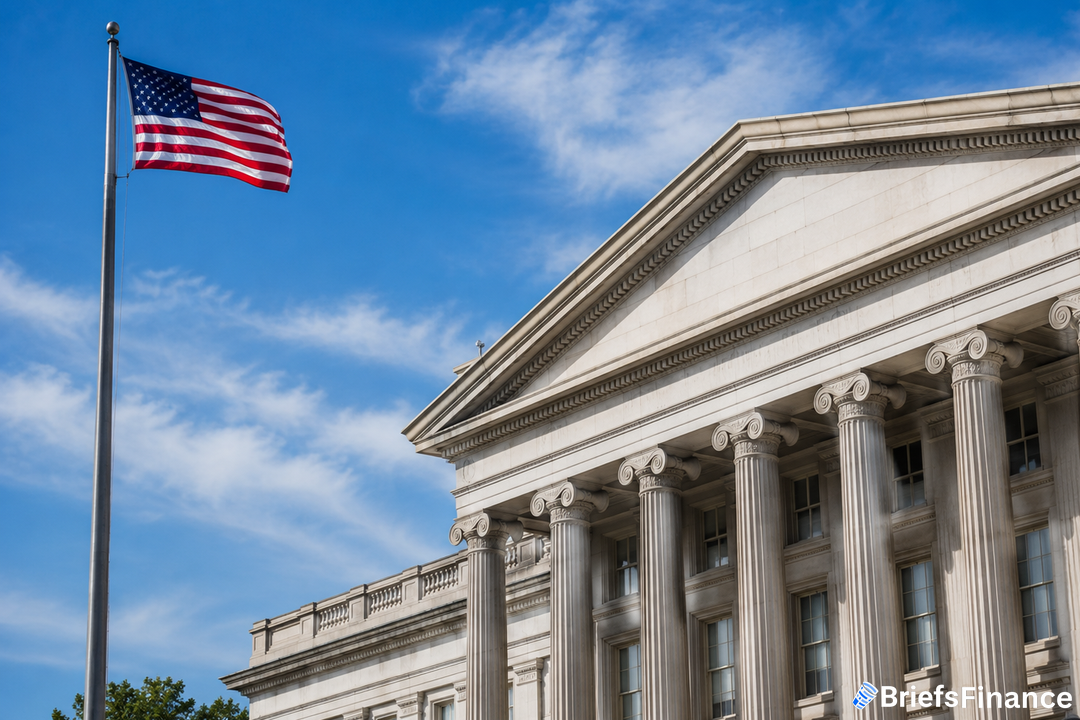
Treasury building with U.S. flag
Summary:
  • The 10-year Treasury ended Thursday at 4.7%, a mark not reached since January 2025.
  • Average mortgage rates on a 30-year fixed loan hit 6.6%, the highest since last August, as bond investors react to inflation fears.
  • Capital Economics forecasts the Fed will hike its benchmark rate three times in 2026, possibly pushing mortgage rates above 7%.

Bond Investors Are Calling the Shots

If you have been wondering why your mortgage or car loan keeps getting more expensive, look at the bond market. That number matters more than a lot of people realize.

Here is how it works. The Federal Reserve sets a short-term interest rate that banks use as a benchmark. That directly affects things like credit card rates and home equity lines.

But longer-term loans, especially mortgages and auto loans, move with the bond market. Investors buying and selling 10-year Treasuries are basically voting on where they think inflation and the economy are headed. Right now, they are voting that prices are not cooling down.

This dynamic has been building for months as inflation data consistently surprised to the upside, forcing investors to adjust their expectations for the path of monetary policy.

Why It Matters for Your Monthly Payments

A 15-year fixed mortgage averaged 6% that week, the highest since June 2025. For perspective, current mortgage rates are roughly double what they were during the pandemic.

Get the market news that matters in a five-minute read with Market Briefs, our free daily newsletter

It is not just housing. Gas prices topped $4 a gallon that week, driven by renewed tensions in the Iran war. The Energy Information Administration reported the spike, which adds another layer of cost for households. Capital Economics' North America economist Thomas Ryan did not mince words: "just another drag for households when you've got affordability hits elsewhere." He added, "And we don't see much relief in terms of the borrowing cost side of things."

So what is pushing bond investors to demand higher yields? A few things. Oil prices jumped sharply in July 2026 because of the Middle East conflict.

The Trump administration placed new tariffs on dozens of countries. And overall, inflation has stayed above the Fed's target for more than five years now. Investors are pricing in the reality that prices are not coming down soon.

As Ryan said, "It's investors pricing their own reality, and that has a big knock-on effect on consumers in terms of what [rates] they can borrow at."

What Comes Next for Your Wallet

Chad NeSmith, a certified financial planner at Tobias Financial Advisors in Florida, explained what that means. Homeowners who locked in low rates during the pandemic have little reason to sell and take on a much more expensive loan. "It will increase the lock-in effect in the housing market, where they feel trapped," he said.

That has consequences beyond housing. When people stay put, they are less likely to buy new homes. And when borrowing costs stay high, people hold off on big purchases like cars. "It just slows spending, because people have to borrow so much more," NeSmith added.

The bottom line: the bond market is sending a clear signal that cheap money is not coming back anytime soon. If you are planning to take out a loan or buy a house in the next year, expect to pay more for it. The numbers may inch higher before they level off, and there is no quick fix on the horizon.

Join Market Briefs, our free daily newsletter, for a quick daily rundown of the markets
Disclosure

Recent News

1 2 3 70

Get Market Briefs delivered to your inbox every morning for free!

No fluff. No noise. No politics. Just finance news you can read in 5 minutes.

Blogs

September 8, 2026
Why Is Everything So Expensive? Why Prices May Never Come Back Down
  • Official inflation is 3.4% and prices are up 32% since 2020, but rent (41%), gas (47%), car insurance (64%) and ground beef (79%) all outran the 28% median wage.
  • The Federal Reserve targets 2% inflation on purpose. Rising prices push extra dollars to investors and shrink the real cost of a $40 trillion national debt.
  • Investors who simply owned the S&P 500 gained about 150% over the same six years, and the Fed's September 16 decision will show whether it protects the dollar or the economy first.
Read More
September 7, 2026
The U.S. Housing Market Just Flipped: Renting a Home Now Beats Buying One
  • The US is in a buyer's market in 41 of the 50 largest metro areas, but prices sit near record highs and mortgage rates are close to 7%.
  • The same median house costs 27% more than it did in 2021 while the monthly payment costs 90% more, and incomes rose a little more than 10%.
  • A 2008-style crash is not showing up in the data, so the pressure is landing on buyers instead of prices.
Read More
September 4, 2026
An Interest Rate Hike in 2026? The Fed Just Broke Its Own Script
  • The Federal Reserve spent a year signaling cheaper money, and its new chairman just warned that an interest rate hike may be coming instead.
  • The Fed is stuck between high inflation and a weak job market, and fixing one makes the other worse.
  • Higher rates also reprice roughly a third of America's $40 trillion national debt this year, which is why Washington wants cuts so badly.
Read More
September 3, 2026
5 Passive Income Ideas That Pay You Whether You Work or Not
  • School teaches one formula: work, earn, spend. Stop working and the money stops, so the wheel never ends.
  • Five assets pay you without your labor - dividends, rent, interest, royalties, and the things you already own.
  • $80,000 a year of cash flow takes about $1 million invested at 8%, or roughly 20 years of $1,000 a month.
Read More
September 2, 2026
The Best Way to Invest 10k: Three Options To Transform 10K into 10 Million
  • Passive investing in stocks or real estate targets around 10% a year, and time in the market matters more than the price you get in at.
  • Active investing means putting your time in alongside your money, which raises the target to roughly 20% a year and raises the risk of losing it all.
  • Investing in yourself has no ceiling, because a new skill can create a new income that no market return can match.
Read More
September 1, 2026
The Tax Write Offs the Rich Are Using in 2026 While the IRS Shrinks
  • The 2026 tax brackets landed lower than they were headed, and the standard deduction jumped from a planned $8,350 to $16,100 for single filers.
  • New write offs for overtime, tips, seniors and car loan interest are live now, and most of them are written to expire in 2028.
  • About a third of IRS auditors have been fired, and four assets do most of the work for people who want income without a matching tax bill.
Read More
August 31, 2026
America Is Running Out of Debt Buyers. Treasury Bills Are the Government's Fix
  • The government took in about $5 trillion in taxes in 2025 and spent about $7 trillion, and the national debt is now over $40 trillion.
  • Investors, banks, and foreign countries are all lending less to the U.S., so starting September 9 the government plans to sell more short-term treasury bills and use that cash to buy back its long-term debt.
  • Government interest rates set the floor for your mortgage, your car loan, and your credit card, and short-term Treasury ETFs like SGOV are one way investors are playing it.
Read More
August 23, 2026
How to Get the Most From Your Guideline 401k
  • Guideline is a company that provides low-cost 401k plans, popular with small businesses and their employees.
  • A "Guideline 401k" follows the same core rules as any 401k: tax-advantaged growth, contribution limits, and often an employer match.
  • The biggest results come from capturing the full match, choosing low-cost funds, and picking Roth or traditional to fit your situation.
Read More
August 23, 2026
Principal 401k: What to Know About Your Plan
  • Principal is one of many companies that manage workplace 401k plans, so a "Principal 401k" is simply a 401k where Principal is the provider.
  • The rules of a 401k are the same no matter who runs it: pre-tax or Roth contributions, tax-advantaged growth, and often an employer match.
  • The biggest wins come from grabbing the full match, picking low-cost funds, and knowing whether Roth or traditional fits you.
Read More
August 23, 2026
What a Tariff Dividend Means for Your Money
  • A "tariff dividend" is the idea of taking money the government collects from tariffs and paying some of it back to citizens.
  • To judge the idea, you first need to know what a tariff is: a tax on imported goods, usually paid by the companies bringing them in.
  • Tariffs ripple through prices, businesses, and your investments, so the smart move is understanding those ripples, not just the headline.
Read More
1 2 3 26
Share via
Copy link











