What Actually Just Happened
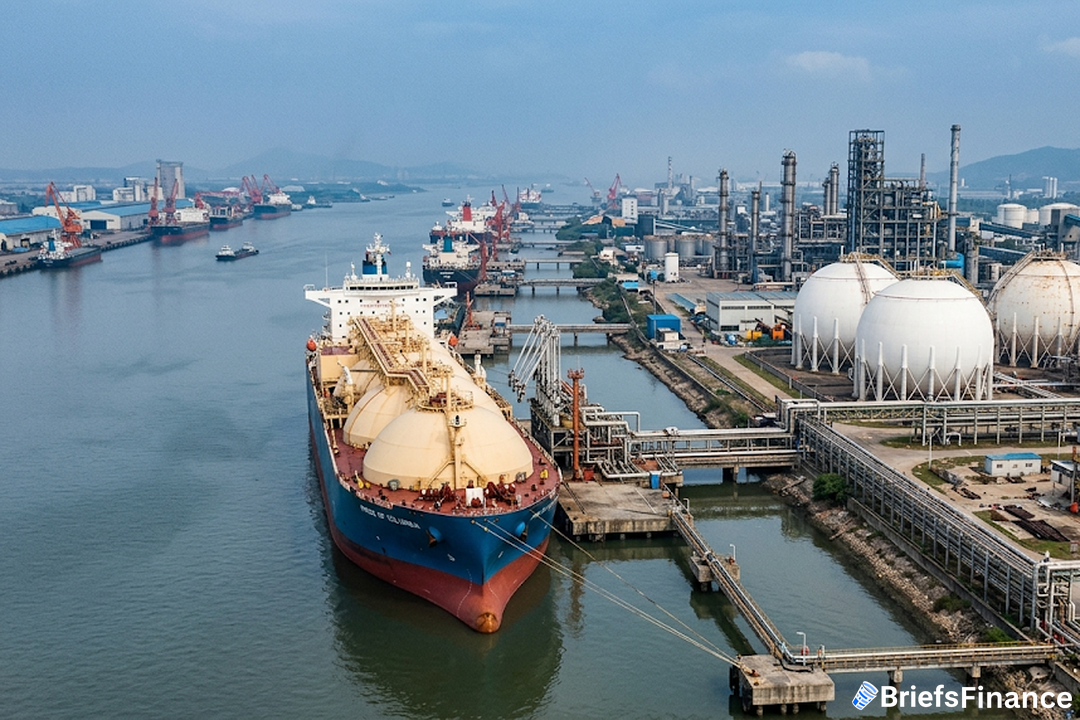
This month, a ship carrying US liquefied natural gas pulled into Yangpu port, a facility in southern China. Local companies are getting it ready to be sent to another market for sale.
The cargo came from Venture Global's Plaquemines LNG facility in Louisiana. Bloomberg confirmed the shipment using ship-tracking data. At first glance, it looked like a thaw in trade between the two countries. The real story is a lot more strategic.
Chinese buyers are re-exporting the gas because of a 25% tariff that would hit them if they brought it into their own market. The tariff was enacted in February 2025 as a Chinese response to American levies on Chinese products under the Trump administration. Paying that tax would eat into any profit, so it makes more sense to sell the gas somewhere else.
Get the market news that matters in a five-minute read with Market Briefs, our free daily newsletter
The Strategy Behind the Re-Export
This is not a random move. Global LNG prices have climbed over the past month, so Chinese importers can get a better price by selling the gas abroad than they could at home.
Additionally, China feels no urgency to restart purchasing American LNG at this time. Although Middle East turmoil has disrupted shipments from Qatar and the UAE, Beijing has secured alternative supply routes. That single shipment was unloaded and placed in a tariff-free bonded warehouse, where it is readied for shipment abroad to markets offering better pricing. A tanker with very little cargo recently arrived at Yangpu port, potentially to take on a portion of that American gas.
Why does it matter? This shows how tariffs can twist trade flows even when the physical goods are already on the water. The US LNG is still being sold, just not to the people who originally bought it.
What It Means for Energy Markets and Your Portfolio
China is not in a hurry to get back to normal with US LNG imports. It has other suppliers, and it is using them. The country has also been reselling some of its long-term supply contracts from other countries to take advantage of higher global prices. That is a smart play for them, but it keeps the US out of one of the world's biggest energy markets for now.
For your portfolio, the key takeaway is that trade friction is not going away overnight. US energy companies that rely on exports may continue to face headwinds in certain markets. But higher global prices can offset some of that. Meanwhile, higher LNG prices can ripple into other areas - utility stocks, shipping companies, even your monthly energy bill if the trend lasts long enough.
The bottom line: a US LNG cargo has reached China for the first time in over a year, yet it underscores the persistent trade divide between the two nations. Until the tariff comes down, expect more of these one-off shipments that land in China and leave again.
Join Market Briefs, our free daily newsletter, for a quick daily rundown of the markets